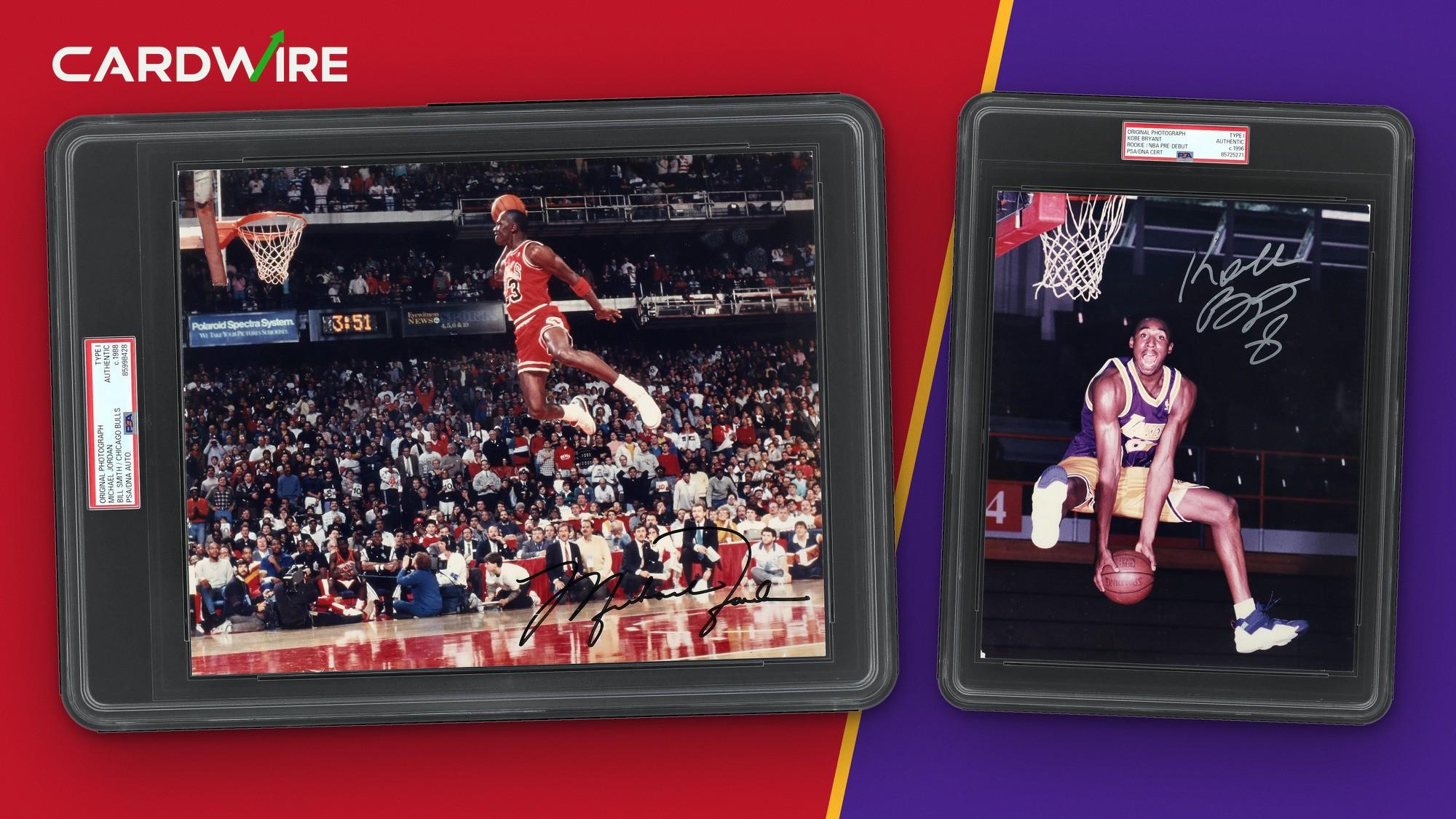
Original photographs of Michael Jordan and Kobe Bryant star in Goldin's photo auction
Jordan's signed 1988 dunk print sold for $180k, while Kobe's $65k is the most paid for any Bryant photo at public auction.
Before photography became largely digital, film cameras were the way to go. Nowadays, photographs of key players sell for record amounts as collectibles.
Background
When taking photos, photographers had to be meticulous because each roll of film had only a certain number of ‘exposures,’ the number of photos you could take. The settings on the camera had to be perfect: the shutter speed, which is the amount of time it takes for the photo to be taken, whether that is a few seconds, a few hundredths of a second, or even faster, as well as the aperture of the lens, how wide or narrow the opening of the lens is (think of it as your eyes opening or squinting/winking), will depend on how much light is let in. If the aperture is a lower number, more light gets in, making the photo brighter; the opposite is true for higher numbers. In addition to shutter speed and aperture, the third component is ISO, which, during the film era of photography, was controlled by the film's sensitivity. Film rolls with lower numbers (like ISO 100) are used when the area you’re shooting in is well lit and doesn’t need much light. The higher the number, the more likely you’d use it in darker environments. Shutter speed, aperture, and ISO work together to create the photograph's exposure.
Collectible Photographs
Today, photography is highly digitized. Yes, some people still shoot film photography as an art form, but at sporting events, digital won out because it gets photos to editors much faster. Photographers have digital cameras with memory cards that can hold thousands of high-resolution photos, and with film photography in sports a thing of the past, original photographs have become highly desired and collected.
There are four types of original photographs, which you can read about on PSA’s website here. Essentially, the types are named Type I, Type II, Type III, and Type IV; they all carry different price points, and Type I’s hold the most value. PSA’s website describes the qualification for Type I as “A 1st generation photograph, developed from the original negative, during the period (within approximately two years of when the picture was taken).”
For many collectors, holding an original hard-copy photo of a sports legend is very cool and shows a desire for analog products in a digital world. A photo from a digital camera can be printed as many times as possible for years after the photo was taken, so long as you still have the high-resolution file, but a Type I photograph, which only applies to film photographs, can only be made within about two years of when the photo was taken, by developing it in a darkroom, which is a whole, long, and tedious process for producing a film photo.
Recent Sales
Recently, two Type I photos of basketball legends Michael Jordan and Kobe Bryant, each signed, sold at Goldin, Kobe’s for a record amount.
The Kobe Bryant photo, from 1996 and his Lakers shoot before his NBA debut, sold for $65,011, a record for any photo of the Lakers’ legend sold at public auction. The fact that the photo is signed by the now-deceased Hall of Famer in his rookie-era signature adds significant value, and over time, we can see the value of other early-career Type I photographs of sports legends increasing, not just in basketball.
The other sale was of probably the most recognizable and famous name in all of basketball history: Michael Jordan. A signed Type I Photo of Jordan doing his iconic foul line dunk from the 1988 Slam Dunk Contest sold for $179,340.
My Thoughts
I am a photographer, sports fan, and collector. While I do digital photography myself, I like printing out photos I take to have tangible items. There is something so pure about holding a film photo authenticated by PSA, especially one of a sports legend. It is a collectible asset class that will only increase in value over time, and it is a piece of sports history, since Type I’s can’t be printed forever, and there is no true equivalent for digital photographs.
These photos will always be collected by high-end collectors, and they're super pricey, especially when they're of the GOATs of each sport, and even more so when they are signed. For lower-end collectors who still want a piece of sports history, Types II, III, and IV might be the way to go; you can learn more about them on PSA’s website. I personally hope to own at least one original photograph from one of the three lower types, combining my love of sports, collecting, and photography.