
Your Kid Shouldn't Need Comps to Enjoy a Pack of Cards
The hobby has never been better at teaching a child what a card is worth, and it may be getting worse at teaching them why a card is worth keeping.

I recently took my seven-year-old son to a card show. This should be one of the easiest ways in America to get a seven-year-old excited about collecting.
Within a few minutes we had walked past a five-thousand-dollar SpongeBob card, adult-oriented Japanese anime cards I did not particularly want to explain, and table after table of grown men negotiating four- and five-figure Pokémon trades.
There is nothing inherently wrong with any of this. In fact, much of it is evidence of how extraordinary the card market has become. Adults care enough about cardboard that a dealer can put a five-figure cartoon card in a showcase and reasonably expect someone to ask about it. Card shows are crowded. New products sell out. Grading companies have eight-figure backlogs. Entire companies now exist to tell collectors what their collections are worth by the minute.
But standing there with a first-grader, I kept thinking about something else.
When did we decide that children should enter the hobby through the same door as investors?
Childhood culture has become an adult asset class
This is much bigger than cards. Near my house in Los Angeles, there is a movie theater that shows cartoons on Saturdays. I took my son once. The audience was almost entirely men over 30.
I am not complaining that adults watch cartoons. I watch cartoons. Nostalgia is fun. Adults are allowed to like things that were originally made for children.
But the experience felt strange because my son seemed almost like the visitor in a space built around something ostensibly for him.
The card hobby increasingly feels the same way.
U.S. Pokémon toy sales in 2025, up 87% year over year (Circana, Feb. 3, 2026).
Share of U.S. adults surveyed in 2025 who had bought Pokémon cards for themselves in the prior six months (Circana, June 3, 2025).
Share of U.S. toy-industry growth through April 2026 that came from adult recipients (Circana, June 15, 2026).
About 1 in 4 of the adults Circana found buying Pokémon cards for themselves said they actually played the game.1 Most were collecting, displaying or buying in bulk to resell.
That is not a failure of the hobby. It is one of its great commercial successes. Pokémon, sports cards, Disney, Marvel and now SpongeBob have become legitimate adult collectible markets.
Consider SpongeBob. A 2025 Topps Chrome SpongeBob triple-autograph 1/1 sold publicly for $21,500 in October 2025.2 A separate Sandy Cheeks and Larry the Lobster dual-autograph Superfractor 1/1, graded PSA 9, carried a $5,000 ask on Fanatics Collect in August 2026; the listing has since come down.3
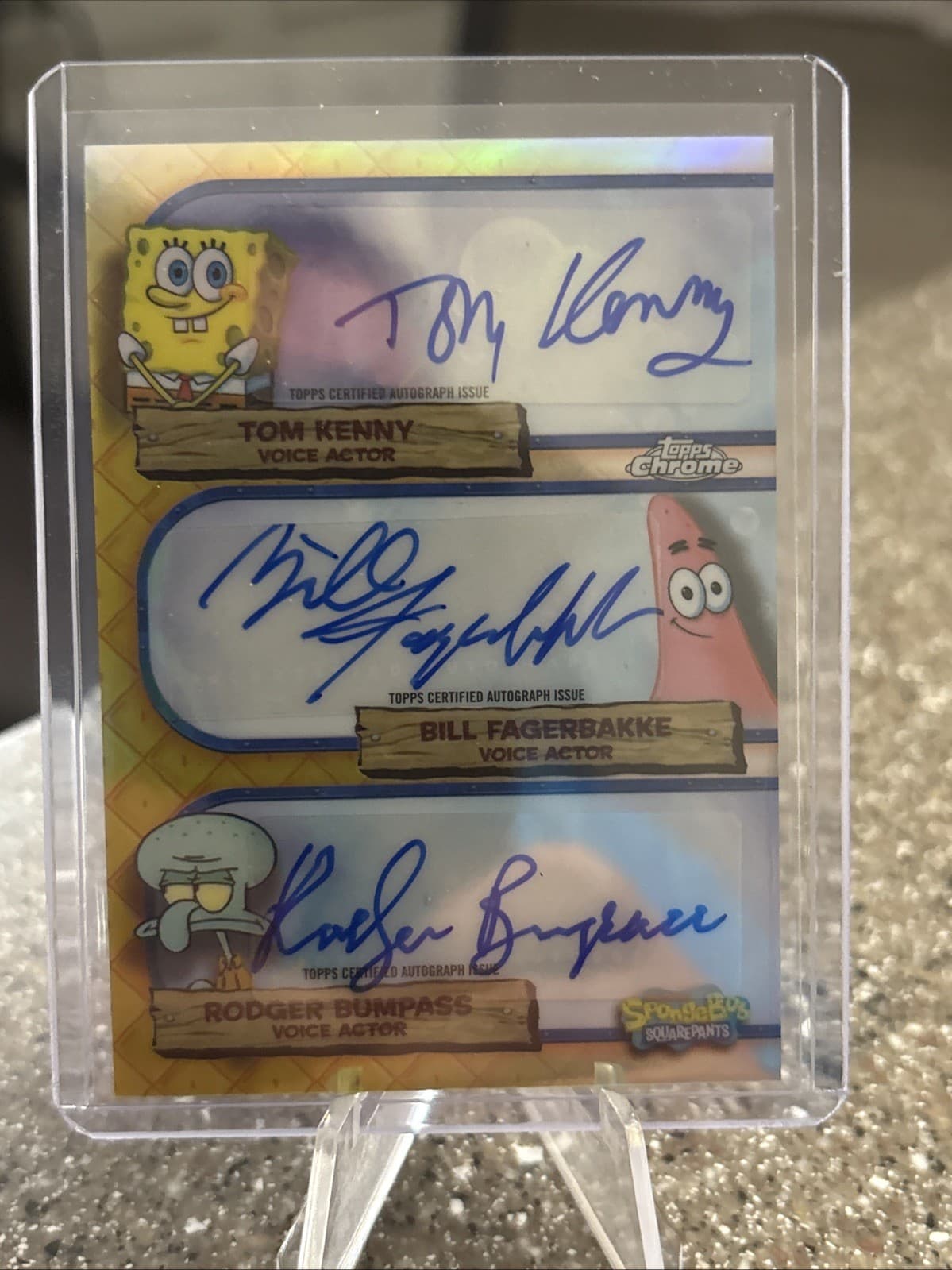
Again, this is kind of amazing. SpongeBob debuted as a children's cartoon in 1999. Twenty-six years later, its cards have a five-figure high-end market.
The question is not whether adults should be allowed to have that market.
The question is whether every part of the hobby needs to become that market.
When I was a kid, most cards were just cards
I collected in the 1990s. There were expensive cards then. There were price guides. Kids absolutely cared when one card was worth more than another.
But information moved slowly. You might see a value in Beckett once a month. A great insert was genuinely unusual to encounter. The expensive end of the hobby mostly existed somewhere else, in card shops, conventions and magazine pages.
What we actually owned were base cards.
Lots of them.
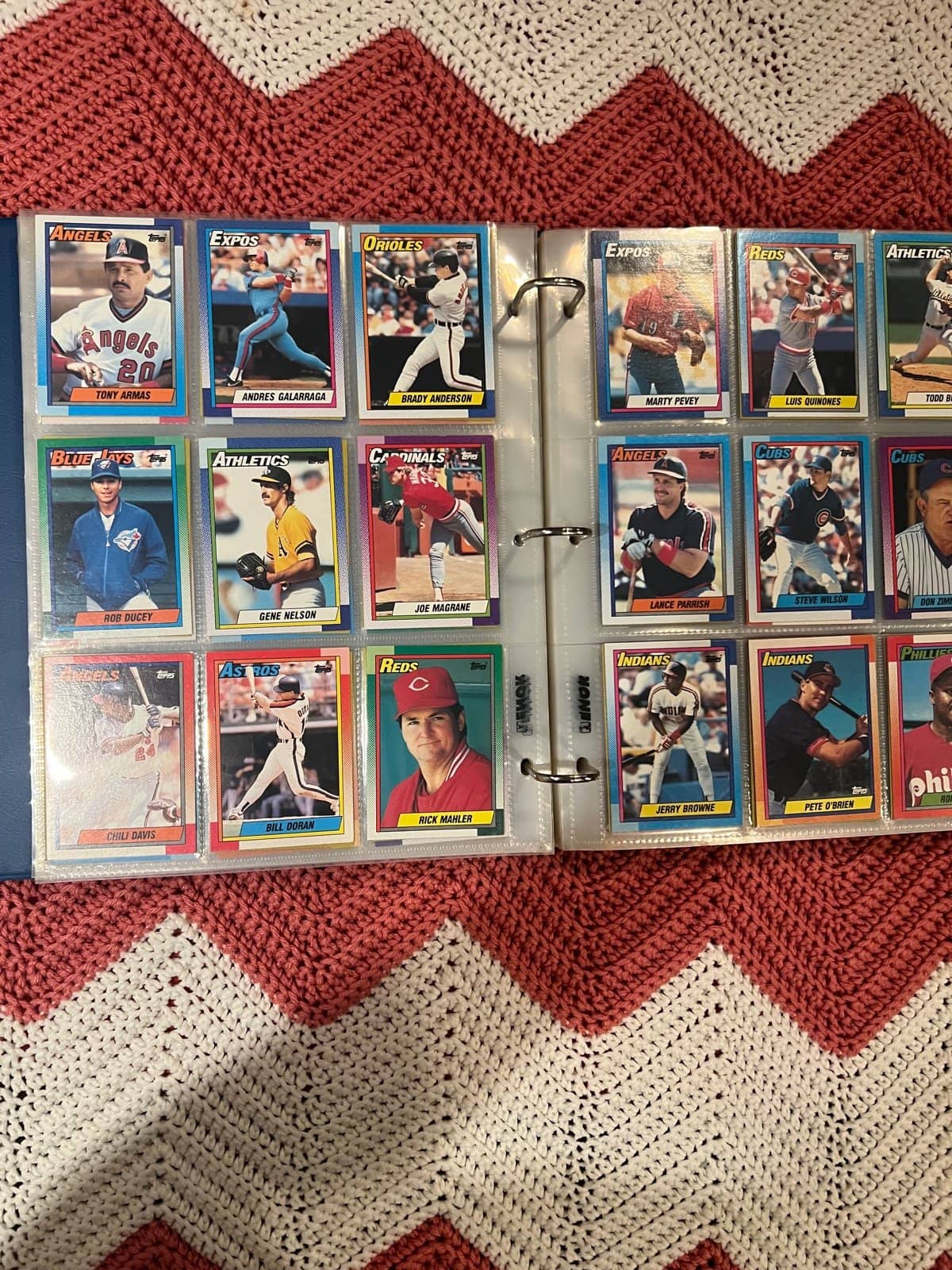
The goal could be finishing a set. You learned players because you kept seeing them. You knew which teams had the best uniforms. You noticed photography and card design. You had players you liked for reasons that had nothing to do with WAR, Hall of Fame probability or recent comps.
You could get weirdly attached to a common.
And because the market was harder to access, there was a kind of protective ignorance built into collecting. You did not know what every card was worth every second. That left more room to decide what the card was worth to you.
Price discovery is useful for investors. A little price ignorance may be useful for children.
Today the price arrives with the card
A kid entering the hobby now can know the last sale of a card before they have finished opening the pack.
The entire modern infrastructure points in that direction. Scan the card. Find the comp. Grade it. Vault it. List it. Trade it. Watch somebody else rip the next box live. There are products where the buying experience and the resale experience are effectively part of the same interface.
Even the language has changed. Hits. Chases. Multipliers. Comps. Liquidity. Pop count. ROI.
These are useful concepts. CardWire exists because adult collectors deserve better information about them.
But a seven-year-old should not need CardWire.
I do not want a child looking at every card and immediately asking, "How much is this worth?" I want that question to occur sometimes. Learning money is useful. Negotiating is useful. Understanding that your friend should not trade you a hundred-dollar card for a two-dollar card is useful.
I just do not want it to be the first question every time.
There is a difference between teaching a kid that cards have value and teaching a kid that value is the purpose of the cards.
We used to have a product for this
Topps Opening Day was never perfect, but the idea was right.
Topps called it the "quintessential entry-level" baseball-card product.4 The original 1998 release was literally base-only, with no inserts or parallels. A hobby box still sold for about $43 in April 2022, held 36 packs and emphasized players, mascots and the game itself, although inserts and rare hits had gradually found their way in.5
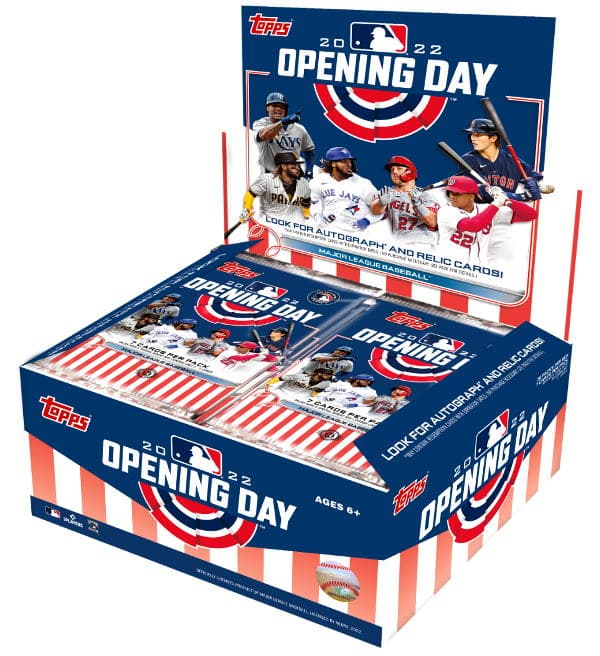
Opening Day is gone. Its closest successor, the Series 1 Celebration Mega Box, is fun and affordable by modern standards, but it still includes short prints, exclusive parallels, cards numbered to 99, 50, 25, 10 and 5, plus 1/1s, autographs and memorabilia cards.6
Topps Big League is explicitly aimed toward younger collectors too. Topps says it "primarily targets young collectors." It also advertises "significant chase value" and includes rarity tiers, short prints, autographs and 1/1s.7
We seem to have reached a point where even a product for children needs an investment thesis.
Make some cards bad investments again
I would like to see a major manufacturer make a product with almost nothing to talk about on a breaking channel.
The product. A big base set. Great photography. Good card backs. Player statistics. Team information. Maybe trivia. Ten cards in a cheap pack. No autographs. No relics. No serial numbers. No redemptions. No one-of-ones. No parallel rainbow. No card that needs to go straight from the pack into a magnetic holder.
The chase is completing the set.
If you pull Aaron Judge, the exciting part is that you pulled Aaron Judge.
If you pull a duplicate, the obvious response is not to check eBay. It is to ask another kid if they need it.
Panini has been selling this product for decades, on stickers rather than cardboard: the Calciatori albums Italian kids have filled since 1961, and the World Cup sticker albums that have run every tournament since Mexico 1970.8 Cheap packets. One big base set. The album is the chase, and a duplicate exists to be swapped with another kid. Swapping doubles has been part of childhood across Europe and Latin America for more than half a century.
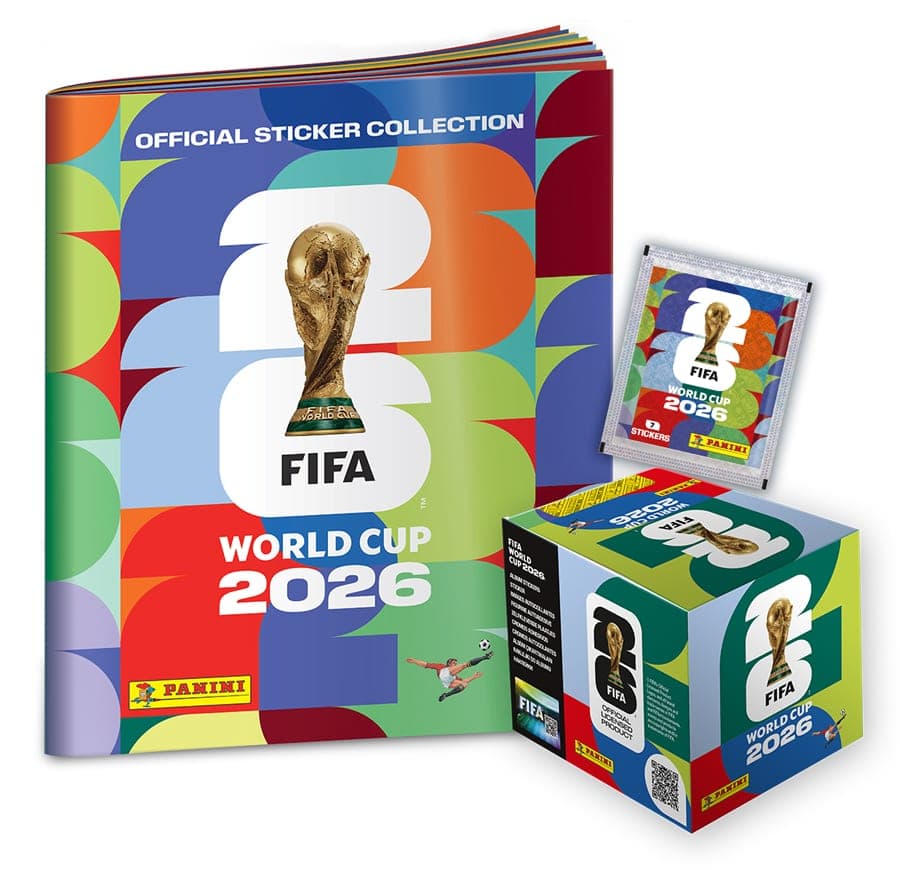
Panini did not leave that model alone either.
The 2026 World Cup collection runs to 980 stickers, the largest album the company has made. A seven-sticker packet sold for about $2 at retail in the United States in May 2026, so a flawless run with no duplicates would come to roughly $280. Nobody gets a flawless run. Buying to the end of the album can take more than 1,000 packets, which at the price they sold for in May 2026 puts a finished album past $2,000.9 Inside those packets sit 68 special-edition stickers, 12 more that arrive only on Coca-Cola bottles, and, in the North American version, a colored-border rainbow: blue at 1 in 2 packets, red at 1 in 25, purple at 1 in 200, green at 1 in 1,400, and a black one-of-one above all of them. A Lionel Messi black one-of-one from the Qatar album sold for a record $139,200 after Argentina won the final in December 2022.10
That is the rainbow I just asked a manufacturer not to print.
The United States is the gap. The album ritual never took hold here at that scale, and no major manufacturer sells its cardboard equivalent at all. So a manufacturer has nothing to invent. Bring the album model here, on cards, and bring the part a kid can finish.
Manufacturers might reasonably say the economics are worse. Of course they are. The financialization of cards works because chase cards sell boxes. Adults will spend far more on the possibility of a five-thousand-dollar card than a child will spend trying to find card No. 217.
But not every SKU has to maximize adult gambling-adjacent excitement. A company that expects children to become customers for the next 50 years can afford to make one product whose purpose is creating collectors rather than monetizing them immediately.
Pokémon has another answer: actually play with the cards
One of the healthiest things about Pokémon is that the cards still do something.
Pokémon's own parent resources promote My First Battle for children ages six and up, Battle Academy for families learning together, and local Pokémon League events where players can meet, trade and play.11
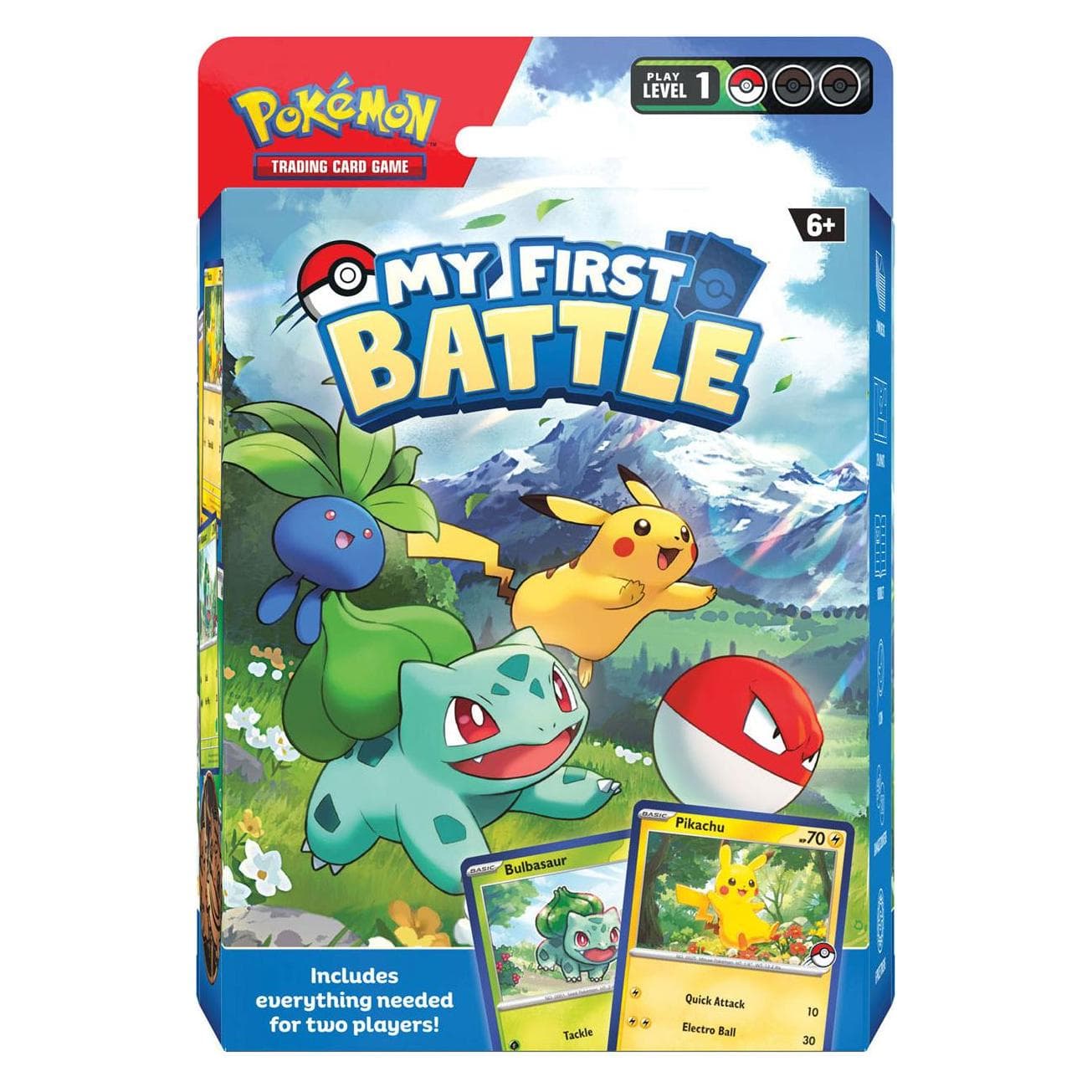
That changes the relationship with the object.
A Charizard in a deck is not merely inventory. It can win a game. A card can be good even if it is not rare. A kid can prefer one Pokémon over another because it fits a deck or because they just like it.
And, occasionally, a card gets bent.
That is probably healthy too.
A child should own at least a few cards that would be worth more in a PSA slab and simply not care.
Card shows do not need fewer kids. They need more kid space.
The modern card show is not the enemy here. I want more of them. The fact that hundreds of dealers can fill convention halls selling sports cards, Pokémon, One Piece and cartoon cards is a sign of a thriving culture.
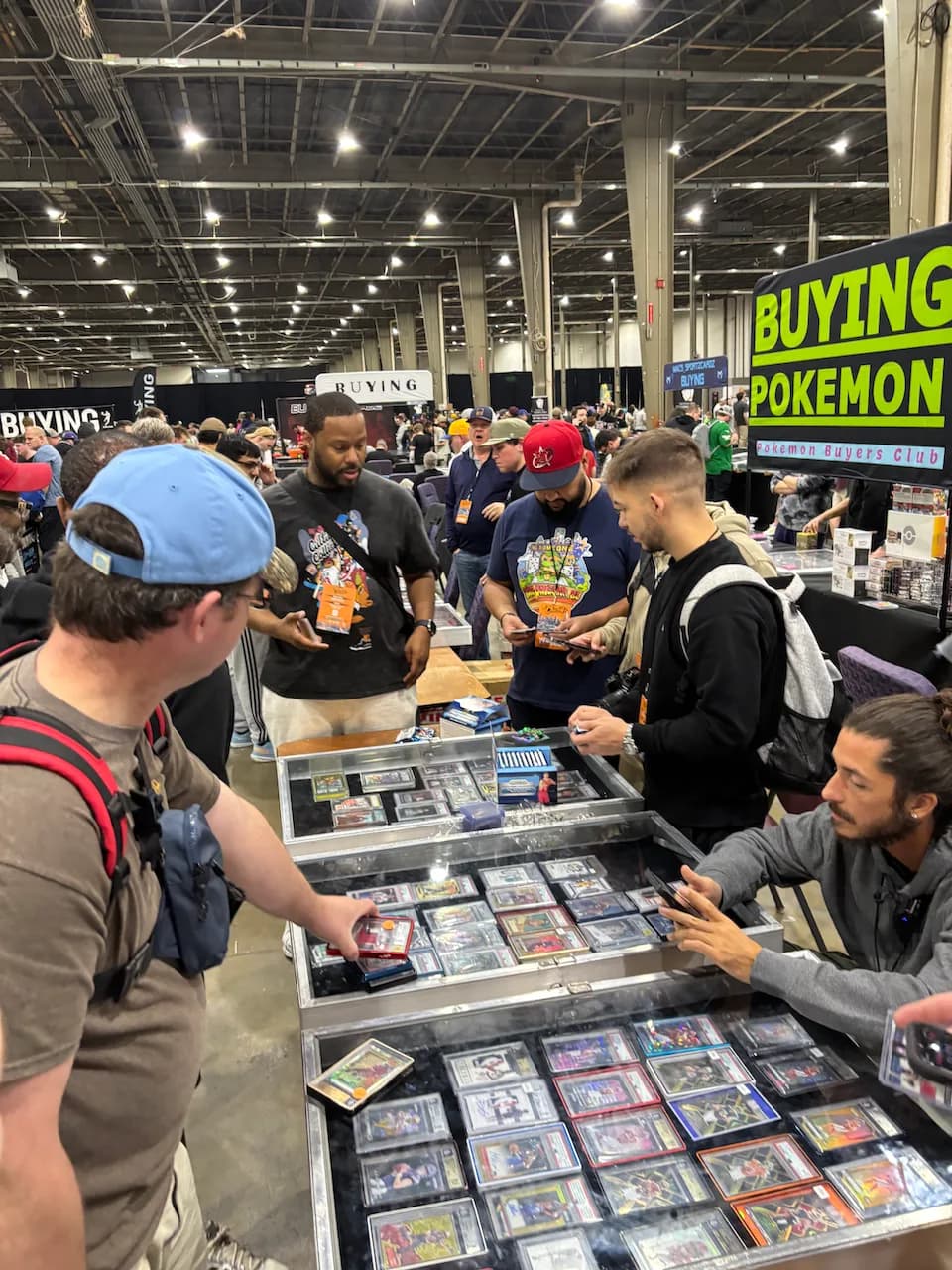
And some organizers are already trying. Fanatics Fest separates a Kids Zone from its Collectors Zone and now advertises kid-friendly collecting experiences in its family programming.12 Front Row Card Show events in Southern California let children 10 and under attend free and run a Hobby Hunt scavenger hunt for them.13
We should do much more of that:
- Kid-to-kid tables. Tables where the expectation is children trading with children.
- Quarter boxes. Common boxes where every card costs a quarter.
- Set-building stations. A place to sit down and get closer to finishing something.
- Learn-to-play corners. Teach Pokémon. The cards do something; show them what.
- Packs with nothing worth grading. Give them away.
- Camera-free zones. Areas where minors are not content for somebody else's livestream.
I have seen videos where children who look like they should be trading on the playground are negotiating spreads with adults while a camera rolls. Some of those kids are incredibly sophisticated. Good for them.
But sophistication should be available to a child, not required of one.
The industry does not have to choose
This is not an argument against investors, dealers, breakers, graders or adults buying SpongeBob cards.
Much of collecting is an investment now. That is fine. In some ways, it is better. Price transparency protects people from terrible trades. Grading gives buyers confidence. Marketplaces let collectors find cards that would have been impossible to locate 30 years ago. The money flowing into the hobby produces better products, better shows and better infrastructure.
But somewhere along the way, collecting became very good at converting affection into a price.
Children need some time before we teach them to do that.
There was real value in spending a summer trying to finish a set that would never be worth anything. You learned the players. You studied the photographs. You organized and reorganized the binder. You traded three duplicates for the one card you were missing.
Eventually the collection became valuable to you for reasons that nobody could see in a comp.
That experience is worth protecting.
The card industry has become exceptionally good at creating assets. It should make sure the next generation still learns how to create a collection.
Notes
- Circana's three reports behind the figures here: "U.S. Toy Industry Returns to Growth in 2025," Feb. 3, 2026 ($2.5 billion in U.S. Pokémon toy sales in 2025, up 87%) circana.com; "Toy Industry US Sales Grow in Early 2025," June 3, 2025 (19% of adults surveyed had bought Pokémon cards for themselves in the prior six months; one-quarter of those said they played the game) circana.com; "US Toy Industry Sales Accelerate in 2026," June 15, 2026 (consumers 18+ accounted for 35% of industry growth through April) circana.com. ↩
- cllct via Yahoo Sports, Oct. 6, 2025. A 2025 Topps Chrome SpongeBob triple-autograph 1/1 sold for $21,500, then the public record for a SpongeBob card. sports.yahoo.com ↩
- Fanatics Collect, 2025 Topps Chrome SpongeBob Sandy Cheeks & Larry the Lobster Bikini Bottom Dual VIP Superfractor Auto 1/1, PSA 9, offered at $5,000 when retrieved in August 2026. The listing has since been removed from fanaticscollect.com. ↩
- Topps, 2022 Topps Opening Day Baseball. Topps described Opening Day as the "quintessential entry-level" baseball-card product. topps.com ↩
- Beckett, "Cheap Wax Wednesday: 2022 Topps Opening Day," April 6, 2022. The 1998 debut was base-only, with no inserts or parallels; 2022 boxes were around $43. beckett.com ↩
- Beckett and Topps, 2025 Series 1 Celebration Mega Box. Beckett described it as a twist on the retired Opening Day line; Topps lists SPs, Confetti parallels, autographs and relics, and the checklist includes numbered parallels down to 1/1. beckett.com ↩
- Topps Ripped, "Topps Big League Baseball Brand History." Topps says Big League primarily targets young collectors while offering chase value. ripped.topps.com ↩
- Panini's first Calciatori collection covered Serie A and B in 1961; the first Panini World Cup sticker album was Mexico 1970. Sports Illustrated, "The Magic, Global Craze and Tradition of Panini's World Cup Sticker Albums," June 6, 2018. si.com ↩
- Sports Illustrated, May 13, 2026, on the cost of completing the 2026 Panini World Cup album. The collection runs to 980 stickers, the largest Panini has made; seven-sticker packets retailed around $2, so a duplicate-free run comes to about $280, while buying to completion can take more than 1,000 packets and pass $2,000. The set holds 68 special-edition stickers plus 12 distributed on Coca-Cola bottles. si.com ↩
- Sports Illustrated, May 21, 2026, on the rarest sticker types in the 2026 album. The North American border parallels pull at blue 1:2 packs, red 1:25, purple 1:200 and green 1:1,400, with the black parallel a one-of-one. The 2022 Lionel Messi black one-of-one holds the record at $139,200, sold after Argentina's championship. si.com ↩
- Pokémon Parents, Pokémon Trading Card Game. My First Battle is designed for children ages 6+, and Battle Academy and Pokémon League provide beginner and in-person play options. parents.pokemon.com ↩
- Fanatics Fest, 2026 show features and ticketing. Programming includes a Kids Zone, a separate Collectors Zone, family bundles and kid-friendly card collecting experiences. fanaticsfest.com ↩
- Front Row Card Show Pasadena, May 2026. Children 10 and under were admitted free with an adult and offered a Hobby Hunt scavenger hunt. leapevents.com ↩