
Cards Used to Come in Soup Cans. Bring That Back.
Pinnacle’s 1997 Inside was bulky, inefficient and unforgettable.
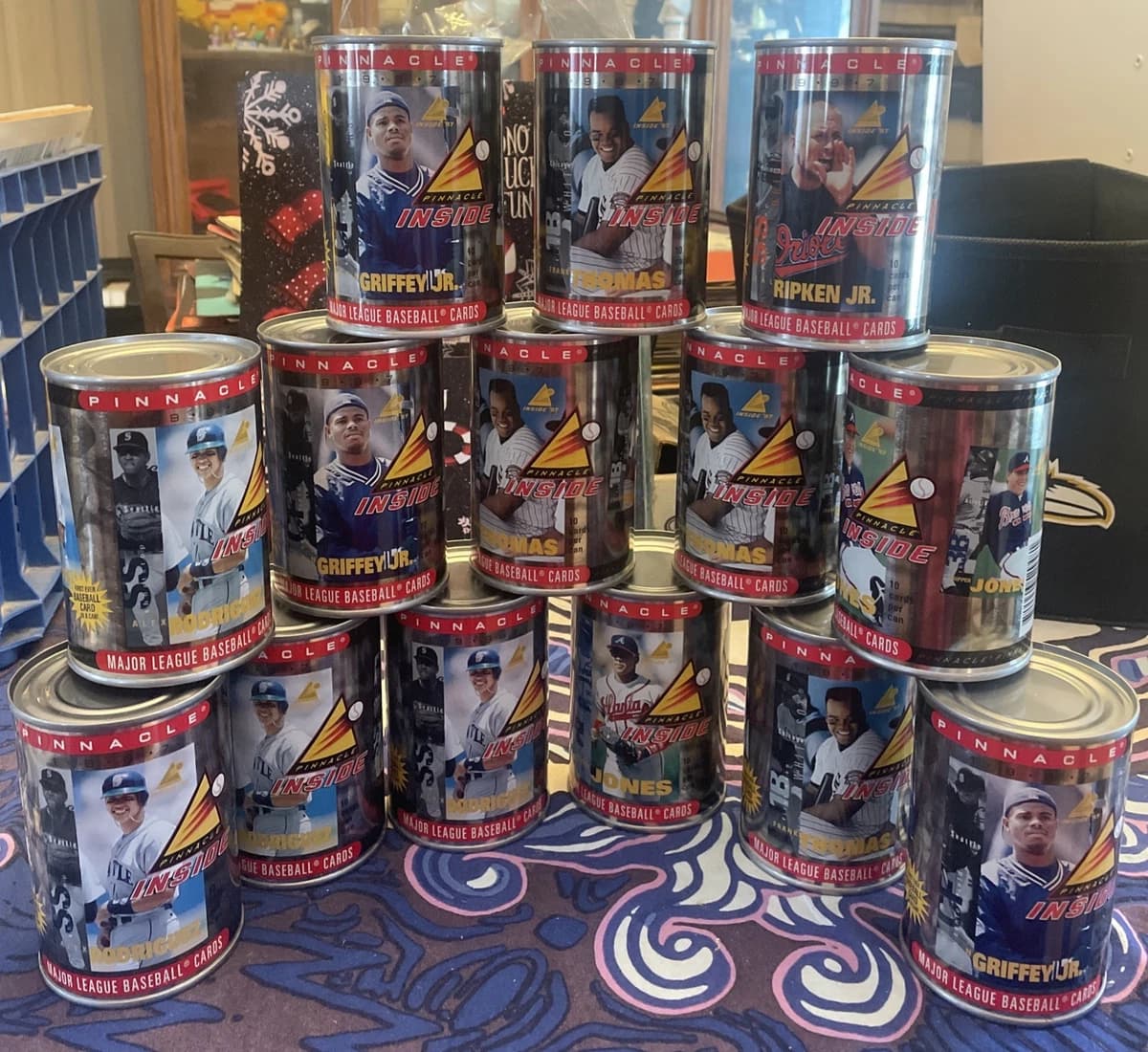
In 1997, Pinnacle decided that a foil pack was not enough. Ten baseball cards went into a cellophane pack, the pack went into a metal soup can, and collectors needed a can opener to get them out.
There were 24 different baseball cans featuring players such as Ken Griffey Jr., Derek Jeter, Barry Bonds, Alex Rodriguez, Cal Ripken Jr. and Tony Gwynn. Pinnacle even supplied branded can openers to hobby dealers.1
It was objectively inconvenient.
It was also the kind of product people still talk about 29 years later.
The year Pinnacle released Inside.
Cards sealed inside every baseball can.
Retail price per can when Inside launched in 1997.
Different player can designs in the baseball release.
The packaging was more memorable than the cards
That sounds like an insult. It may be Pinnacle Inside's biggest accomplishment.
The 150-card baseball set itself is not a major 1990s investment property. Each can sold for $2.99 USD at retail in 1997.1 A raw 1997 Pinnacle Inside Ken Griffey Jr. sold for $1 USD to $2 USD in 2026 sales, and SportsCardsPro tracked a sealed Griffey can at $2 USD in January 2026.2
Yet Beckett published a case-break feature on the product on Aug. 26, 2026, nearly three decades after release, after buying a 48-can case that sold for $100 USD at a card show.3
The cards did not create that nostalgia. The can did.
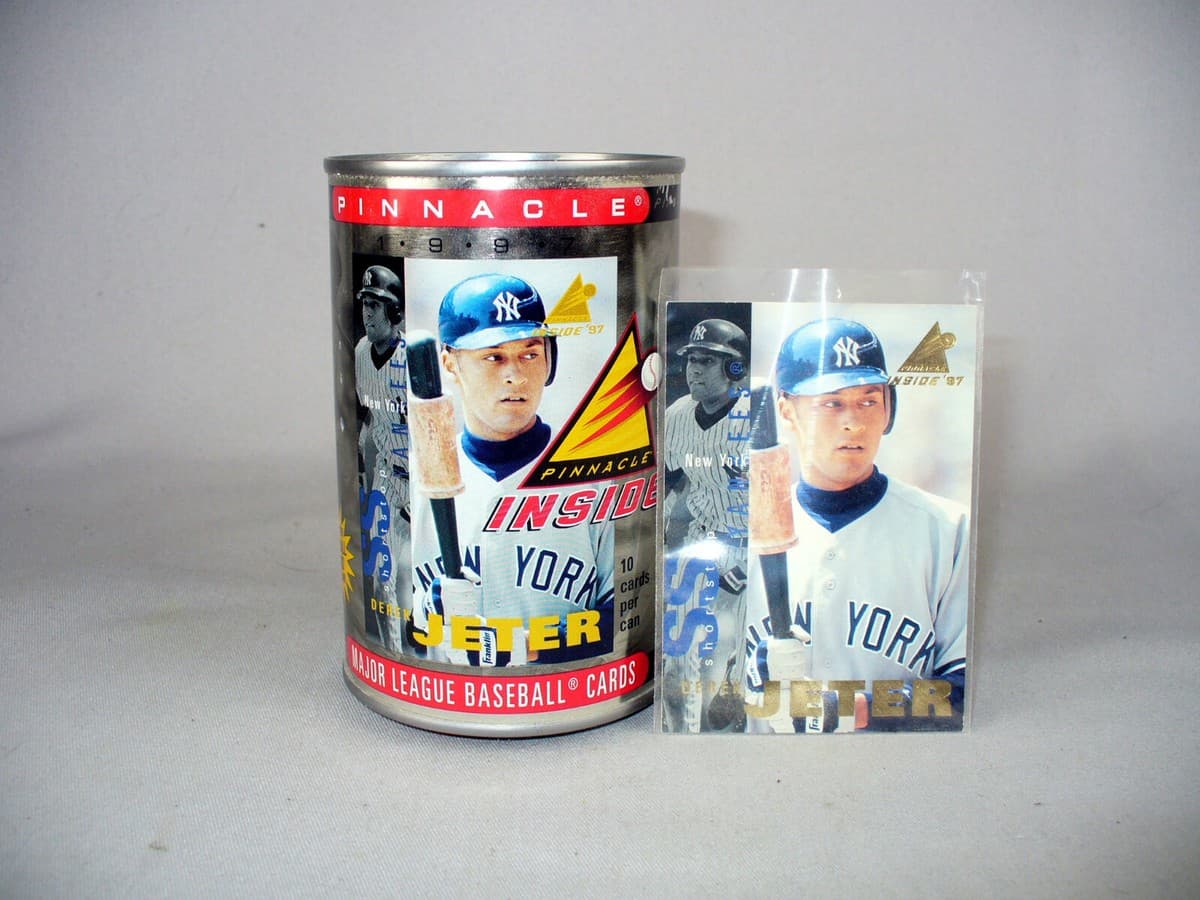
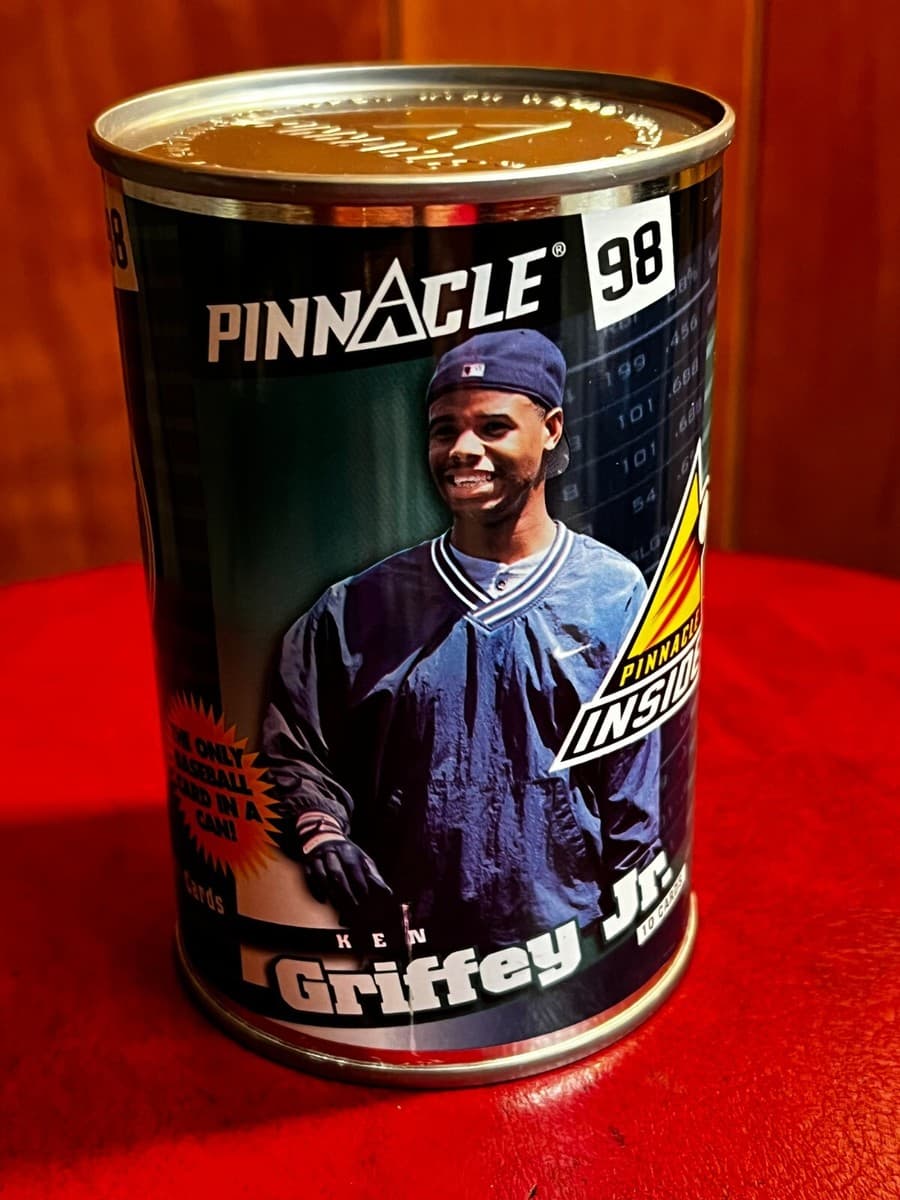
The 1990s treated packaging like part of the product
Pinnacle was not alone. Topps produced Screenplays cards in collectible tins in 1997 and commemorative Roberto Clemente tins in 1998. The Clemente program used four different tins based on classic Topps card designs, with a hermetically sealed commemorative card inside.4
Pinnacle expanded the can concept beyond baseball. Football cards came in 28 different player cans, with autographs inserted roughly one in 251 cans. The inaugural 1997 WNBA set also used player cans, including stars from the league's first season.5
The container gave collectors another object to chase. A Griffey collector could want the Griffey card and the Griffey can. A team collector could display the packaging even after the cards were opened.
Opening the product also required an action that no other release demanded. A can opener became part of the rip.
That sounds absurd until you consider how much money the modern industry spends trying to make an opening feel different on camera.
Why did the can format disappear?
BaseballCardPedia notes that the can format consumed far more shelf space than ordinary packs and boxes, making it difficult for hobby shops and retailers to display and store. Collectors also faced an odd dilemma: leave a favorite player can sealed for display, or open it and possibly discover one of the scarce Diamond Edition parallels inside.1
Those were serious problems in a 1997 retail environment built around card-shop shelves.
The market is different now. Manufacturers sell directly online. Sealed products move through live commerce. Collectors routinely pay premiums for visually distinctive boxes. Shipping a cylinder remains less efficient than shipping a rectangle, but packaging no longer has to win a battle for three inches of shelf space at the local hobby store.
The engineering can improve too. A modern can does not need loose cards rattling around inside. Use a pull tab instead of requiring a kitchen opener. Secure a foil pack in an internal tray. Keep the weird part and fix the dumb part.
Topps already knows collectors still like tins
Metal packaging never completely disappeared.
Topps sold 2025 Series 1 baseball tins with 59 cards per tin, exclusive variations and six tins per box. The product sold out on Topps. Holiday Baseball also used collector tins alongside Advent Calendars and Mega Boxes.6
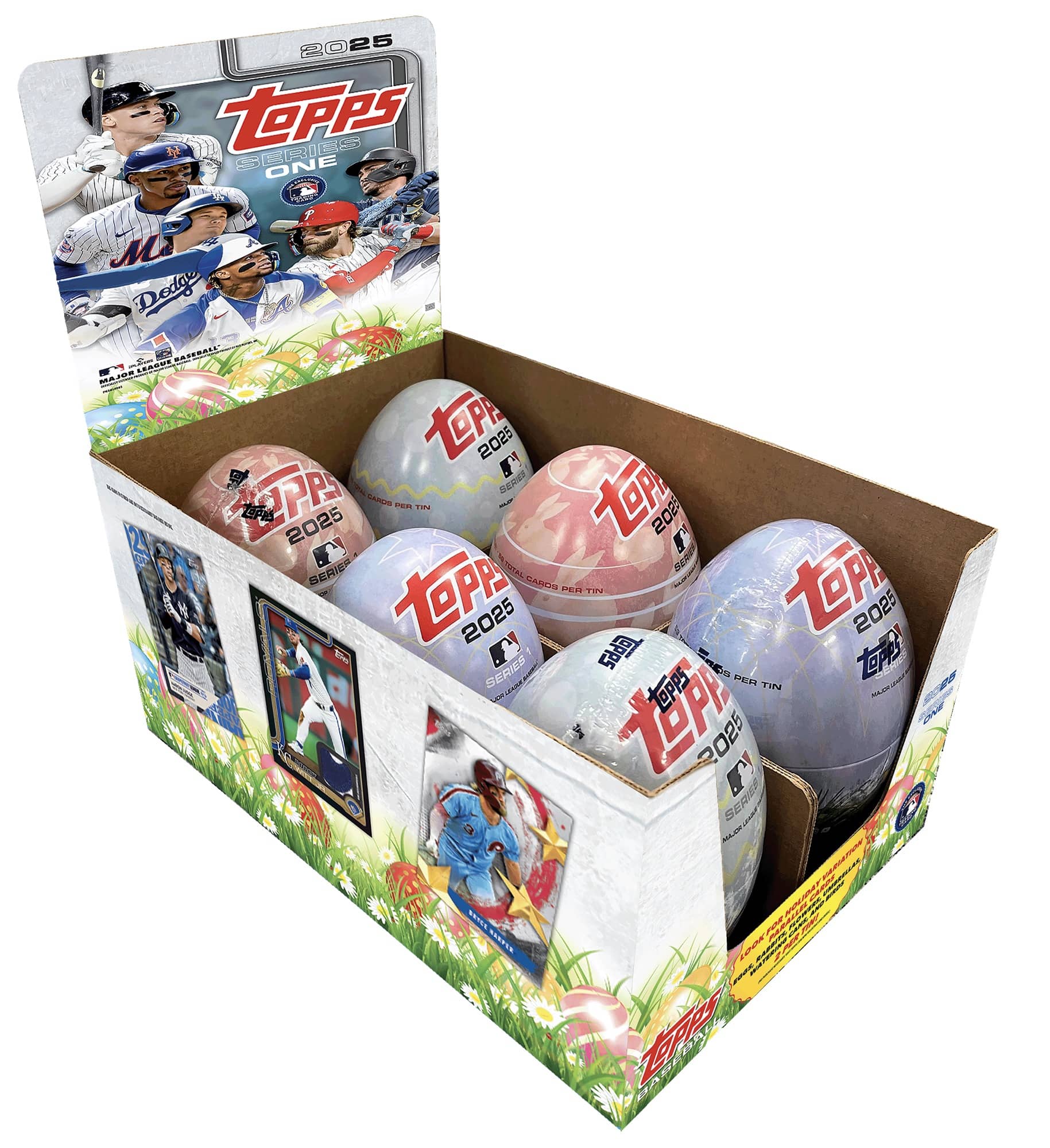
Those products prove metal packaging is not too strange for the current hobby. The Series 1 Celebration Mega Box already carries short prints, exclusive parallels and cards numbered down to 1/1.7 A tin is not competing against a plain checklist.
The missed opportunity is ambition.
A rectangular collector tin around 59 cards is still basically a box. Pinnacle Inside made the container inseparable from the concept. The player artwork, the cylinder, the can opener and the absurdity all belonged to the product.
Do not bring cans back for everything
The worst possible outcome would be another packaging format added to every flagship release.
No one needs Hobby, Jumbo, Breaker, Mega, Blaster, Hanger, Value, Fanatics Exclusive, Sapphire and Soup Can editions of the same 400-card checklist.
This should be rare enough that seeing the package immediately tells you what the product is.
- WNBA 30th anniversary in 2027, best idea. The inaugural 1997 WNBA Pinnacle Inside set already came in cans. A 2027 tribute release would connect directly to league history.
- Topps Archives or Heritage, do it. Nostalgia is already the product on those lines. Player-specific metal packaging fits the concept instead of distracting from it.
- A one-off 1990s insert revival, strong fit. A small premium checklist could use the can as part of the throwback rather than adding another generic hobby box.
- Flagship, leave it alone. Too many formats already compete for the same collector.
- Four-figure ultra-premium products, wrong use. The charm disappears once a soup can becomes luxury packaging theater.
Bring back the card can for one or two releases a year. Use 10 to 12 cards, 12 to 24 player-specific can designs, a pull-tab lid and an internal pack that cannot move. Keep the checklist tight and make the container worth displaying after the rip.
The hobby has enough boxes
Modern card packaging has become highly optimized. Rectangular boxes stack efficiently, ship cheaply and look good in breaker walls.
Efficiency is not the same thing as identity.
The 1997 Pinnacle Inside cards are mostly inexpensive. The company that made them went bankrupt the following year. The packaging was awkward enough that contemporary retailers struggled to stock it.8
Still, show a collector a Griffey soup can and the product is instantly recognizable.
That is an achievement worth stealing.
Put cards in cans again. Just do it better this time.
Notes
- BaseballCardPedia, 1997 Pinnacle Inside. The 150-card set came in 24 different player cans, ten cards per can, at a $2.99 USD MSRP. The site also documents Pinnacle-branded can openers, the collectible can checklist and the retail-space problems the format created. baseballcardpedia.com ↩
- SportsCardsPro, 1997 Pinnacle Inside Ken Griffey Jr. #19, including numerous 2026 raw sales around $1 USD to $2 USD and a Jan. 30, 2026 sealed Griffey can sale at $2 USD. sportscardspro.com ↩
- Beckett, Aug. 26, 2026, Cheap Wax Wednesday Box Breaks: 1997 Pinnacle Inside Baseball. Beckett described Pinnacle Inside as the first sports cards packaged in cans and reported buying a 48-can case for $100 USD at a card show. beckett.com ↩
- Beckett, 1997 Topps Screenplays Tins and 1998 Topps Clemente Tins. Topps used collectible metal packaging for both programs, including four Clemente tins based on classic Topps cards. Screenplays · Clemente ↩
- Beckett, 1997 Pinnacle Inside Football and WNBA Cans. Football used collectible player cans, while the inaugural WNBA release included 17 can designs. Football · WNBA ↩
- Topps, 2025 Topps Baseball Series 1 Tins and 2025 Topps Holiday Baseball Hobby Tins. Series 1 tins contained 59 cards each and are listed as sold out on Topps. Series 1 · Holiday ↩
- Beckett and Topps, 2025 Series 1 Celebration Mega Box. Beckett described it as a twist on the retired Opening Day line; Topps lists short prints, exclusive parallels, autographs and relics, with the checklist including numbered parallels down to 1/1. beckett.com ↩
- BaseballCardPedia, 1998 Pinnacle Inside. Pinnacle repeated the can concept in 1998 shortly before the parent company went bankrupt that July. baseballcardpedia.com ↩