PSA Lost Your Cards. Who Is Legally Responsible?
After thieves stole nearly $1 million in graded cards from a FedEx truck, PSA promised to compensate affected collectors. But who is legally responsible when a grading company loses your cards, and what happens if you disagree about their value?
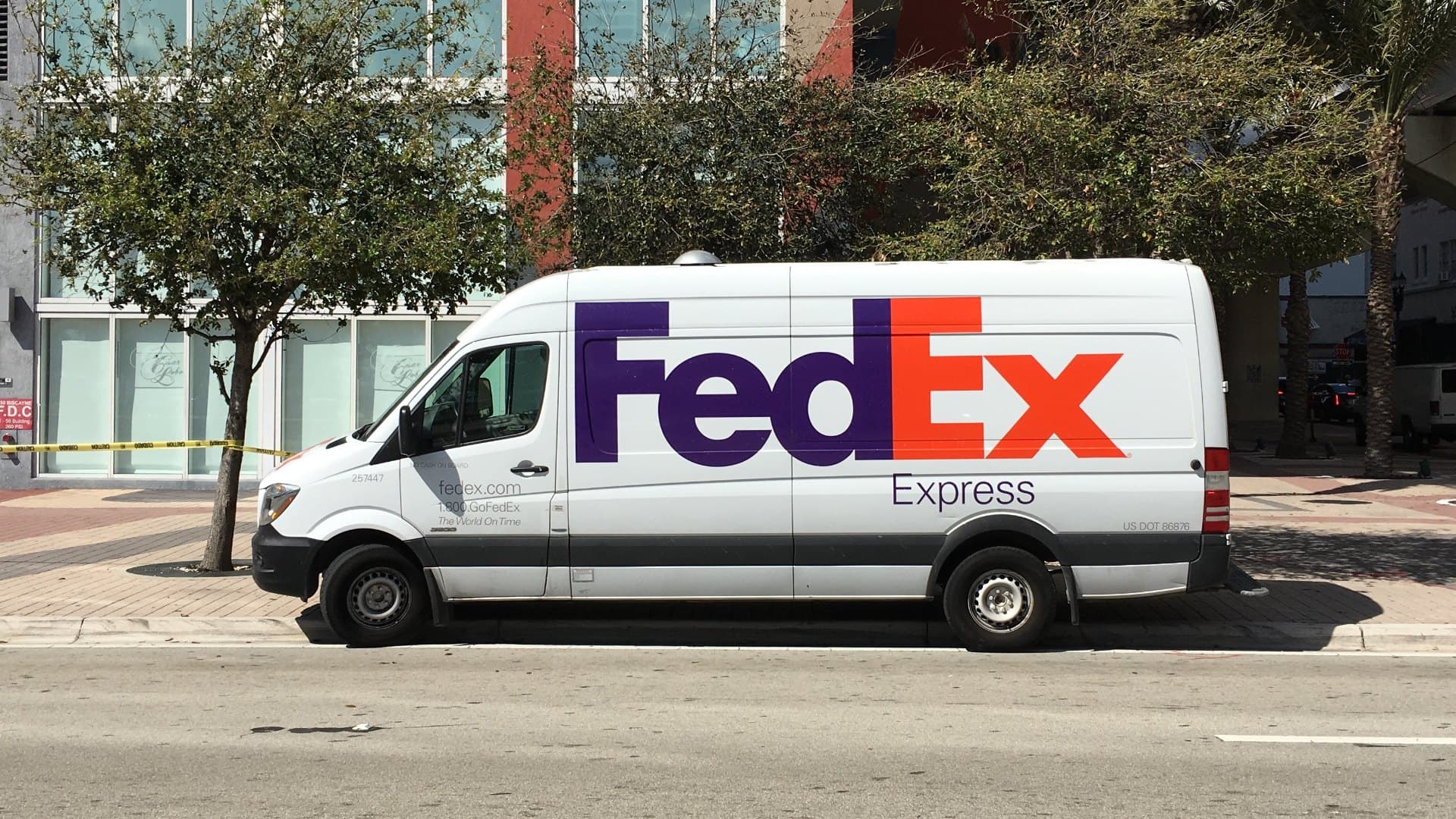
On Oct. 13, thieves broke into a FedEx truck parked near PSA's Santa Ana, California facility and stole roughly 250 packages of freshly graded cards being returned to collectors. Police estimated the loss at approximately $963,000. One collector reported losing 104 cards valued at more than $100,000.
PSA responded by deactivating the stolen certification numbers, notifying marketplaces and auction houses, and promising to compensate affected customers based on the fair market value of their cards, up to certain limits.
That is a welcome response. But it also raises a legal question that extends well beyond this particular theft. When you send a valuable card to PSA for grading, what responsibility does the company have to return it safely? And if the card disappears, who decides how much you are owed?
The answers are more complicated than most collectors probably expect. They depend on how the cards were shipped, what PSA agreed to when it accepted them, and legal protections that exist independently of PSA's contract.
What PSA Promises When You Submit a Card
Most collectors probably assume that if PSA grades their cards and FedEx loses them on the way home, PSA is responsible. Its actual contract offers a more complicated answer.
Under PSA's Submission Services Terms and Conditions, the company agrees to exercise reasonable care when handling cards and to compensate customers if their property is lost, stolen, or damaged while in its possession or control.1
But PSA places several limits on that promise.
First, compensation cannot exceed the card's fair market value or the Maximum Insured Value associated with the service level the collector purchased, whichever is lower. PSA also reserves the right to determine the card's fair market value. And before receiving payment, a collector must sign a release giving up additional claims against the company.
Standard, $60
$1 to $1K
90 to 100 business days
Priority, $80
$1K to $1.5K
70 to 80 business days
Express, $199
$1.5K to $2.5K
20 to 30 business days
Super Express, $349
$2.5K to $5K
10 to 15 business days
Premier, $599
$5K to $10K
7 to 10 business days
Premium 1, $999
$10K to $25K
5 to 7 business days
Premium 2, $1,999
$25K to $50K
5 to 7 business days
Premium 3, $2,999
$50K to $100K
5 to 7 business days
Premium 5, $4,999
$100K to $250K
5 to 7 business days
Premium 10, from $9,999
$250K to $350K
5 to 7 business days. The price rises $399 for each $10,000 over $350,000.
PSA trading card grading prices, Oct. 21, 2026
Perhaps most importantly, PSA's terms disclaim responsibility once a card has been handed over to a shipping carrier.
At first glance, that last provision would seem to resolve the October theft. The cards were in a FedEx truck, not PSA's facility, when they were stolen.
But there is an important exception.
PSA offers several ways for collectors to arrange return shipping. Customers can purchase return shipping and coverage through PSA, arrange their own insurance, or use their own shipping account. When PSA provides the return-shipping coverage, its terms expressly preserve the compensation protections described above, even after the cards have been handed to the carrier. PSA's published coverage information also says that protection continues until the cards reach their destination.2
In other words, a collector who paid PSA for covered return shipping can still seek compensation from PSA even though FedEx physically possessed the cards when they were stolen.
A collector who arranged shipping independently may have a more difficult case against PSA. But even then, the contractual disclaimer does not necessarily excuse mistakes PSA may have made before handing over the property, such as improperly preparing or securing the shipment.
The distinction is important because the company responsible for physically losing a package is not always the only company that can be legally responsible for the loss.
PSA Has Legal Responsibilities Beyond Its Contract
There is another layer of protection that collectors may not realize exists.
When you send a card to PSA, you are not selling it to the company. You remain its owner, and PSA takes temporary possession to perform a service. Lawyers call this relationship a bailment.
The concept is familiar even if the name is not. When you leave your car with a mechanic or check an expensive coat at a restaurant, you entrust someone else with property that still belongs to you. The law imposes responsibilities on the business accepting that property.
PSA's terms generally select California law to govern its grading services. Under California Civil Code Section 1852, a business paid to hold another person's property must exercise at least ordinary care to protect it.3
This does not mean PSA automatically becomes responsible whenever a card is lost or stolen. But if a business accepts property and cannot return it, California law generally requires the business to explain what happened. Courts have recognized this principle for decades, including in a 1979 case involving property entrusted to a bank, Vilner v. Crocker National Bank.4
There is another California statute that is particularly interesting when applied to the grading industry. Civil Code Section 1840 generally limits a business's liability for negligently losing entrusted property to the value the owner disclosed, or the value the business had reason to believe the property was worth.5
That second part could be significant for PSA.
Imagine a collector submits a card with a declared value of $500. PSA grades it a 10, and comparable sales show that the newly graded card is worth $15,000.
PSA's contract may give it a strong argument that compensation remains limited to the $500 value selected by the collector. But California's statute presents a separate question. If PSA just graded the card and had access to market information showing its value, can it reasonably claim that it had no reason to believe the card was worth more than $500?
The issue becomes even more interesting because PSA reserves the right to increase a submission's service level and charge additional fees when it determines that a card is worth more than originally declared.
That practice makes commercial sense. A company handling a $15,000 card is assuming greater risk than one handling a $500 card, and it may reasonably charge more for that service. But it also demonstrates that PSA is not simply relying on a collector's original valuation. The company makes its own judgments about card values and can charge customers accordingly. Those judgments could become important evidence if a dispute arises over what PSA knew, or reasonably should have known, about the value of a lost card.
Not All Insurance Is Actually Insurance
One of the most confusing aspects of PSA submissions is that several different forms of protection can apply to the same card.
PSA uses the term Maximum Insured Value to describe the limit associated with its grading service. But this is not necessarily an insurance policy purchased for the benefit of the collector. It is principally a contractual promise about what PSA will pay under specified circumstances.
That is different from the insurance available when shipping cards to PSA. For certain FedEx shipments, customers can purchase coverage through Cabrella, a third-party insurance provider. If a card is lost during that inbound shipment, the applicable insurance policy governs the claim.2
FedEx's declared value is something different again. Despite how it sounds, declared value is not insurance. It establishes a limit on what the carrier may have to pay if it is legally responsible for the loss.
Finally, collectors may have their own insurance. Some homeowners or renters policies cover collectibles, although often with special limits or exclusions. Dedicated collectibles policies may offer broader protection, including when cards are being shipped or held by a grading company.
PSA's Maximum Insured Value is insurance
- It's a promise in PSA's contract about what PSA will pay.
- The limit rises with the service level you pay for.
Does not hold up. Takeaway
PSA pays up to your level's limit, on PSA's terms.
Coverage you buy for the trip to PSA is insurance
- On certain FedEx shipments to PSA, you can buy coverage through Cabrella, a third-party insurer.
- If a card is lost on the way in, that policy decides the claim.
Holds up. Takeaway
File with Cabrella under its policy.
FedEx declared value is insurance
- Declared value sets the most FedEx may have to pay.
- FedEx pays only when it's legally responsible for the loss.
Does not hold up. Takeaway
Treat it as a cap on what FedEx pays.
Your homeowners or renters policy covers your cards
- Some policies cover collectibles, often with special limits or exclusions.
- A dedicated collectibles policy can cover cards in the mail or at a grader.
Caution. Takeaway
Read your policy's limits before you need it.
Bottom line
Of the four, only the coverage you buy for the trip to PSA and your own policy are insurance.
PSA's submission terms and shipping coverage page
These distinctions become especially important when multiple companies could be responsible for the same loss. For example, a collector who receives payment from a personal insurance policy may discover that the insurer has acquired the right to pursue PSA or FedEx to recover what it paid. This is known as subrogation. If that collector has already signed a broad release giving up claims against PSA or FedEx, it could create a problem with the insurer.
The practical lesson is straightforward: collectors with their own insurance should speak with their insurer before signing a settlement agreement relating to lost cards.
What Happens If You Disagree With PSA's Offer?
For one collector whose cards were on the truck, that question is no longer hypothetical. On Oct. 19, PSA offered him $4,223 for 169 cards, an amount that included the grading and shipping fees he had already paid. PSA's email said its valuations were limited to the Maximum Insured Value he had selected. The collector responded that his fees alone came to $4,997 and that he valued the cards at about $20,000. He said he would not sign PSA's release, which includes a confidentiality provision, until PSA provided a card-by-card valuation.6
The collector does not necessarily have to accept PSA's number. But challenging it involves a process that is different from an ordinary lawsuit.
PSA's broader Collectors User Agreement generally requires disputes to be resolved through binding arbitration. Instead of taking the dispute before a judge and jury, the parties present their arguments to a private arbitrator who issues a binding decision.7
Arbitration is common in consumer contracts, although many customers do not realize they agreed to it. PSA's agreement also prevents collectors from joining together in class-action litigation.
Collectors can opt out of both arbitration and the class-action waiver by emailing Collectors within 30 days of becoming bound by the agreement. For a collector who has submitted to PSA for years, that window has long since closed.
There are, however, some important protections for collectors.
The agreement preserves the ability to bring qualifying cases in small claims court. It also requires Collectors, PSA's parent company, to pay the filing, administrative, and arbitrator fees in consumer arbitrations, subject to exceptions for frivolous or improper claims. A collector who prevails on a qualifying claim under $75,000 may also recover reasonable attorneys' fees and costs after following the required dispute process.
This could make a valuation dispute more practical than collectors might assume. A collector with strong evidence that a card was worth substantially more than PSA's offer may have a realistic avenue to challenge that determination without spending more on arbitration than the card itself is worth.
But the agreement also contains strict deadlines.
PSA generally requires customers to report missing return shipments within 17 days of the estimated delivery date, or within 30 days after shipment if no estimated delivery date was provided.1 Before starting a formal dispute, the customer must also provide written notice identifying the cards involved and explaining the amount sought, followed by at least 60 days of attempted negotiation.7
Collectors who discover a missing shipment should therefore act quickly, preserve their records, and carefully follow the contract's notice requirements.
Can PSA Legally Limit Its Responsibility?
PSA's contract contains several provisions limiting what the company may have to pay. Even outside its specific lost-card compensation program, PSA attempts to limit its liability to the amount the customer paid for the service.
Are those limitations enforceable? In many circumstances, yes. Courts generally allow businesses and customers to agree on reasonable limits of liability, particularly when the customer has an opportunity to purchase additional protection. These arrangements help businesses manage risks that would otherwise be difficult to predict or insure.
But there are limits to how much responsibility a company can avoid through a contract.
California law, for example, generally prohibits businesses from prospectively excusing themselves from liability for gross negligence. Unlike ordinary negligence, which might involve a relatively routine mistake or failure to exercise reasonable care, gross negligence involves a much more serious departure from the care expected under the circumstances.
In City of Santa Barbara v. Superior Court, the California Supreme Court held that advance releases of liability for gross negligence are generally unenforceable.8 California Civil Code Section 1668 also restricts agreements that excuse certain forms of wrongful conduct.9
That does not mean every contractual limitation disappears whenever gross negligence is alleged. Courts distinguish between agreements that eliminate liability altogether and agreements that limit the amount of damages. The enforceability of PSA's particular provisions would depend on the facts and the legal arguments presented.
PSA also requires collectors who accept compensation to sign a release, including of gross-negligence claims.1 A release signed after a loss to settle an existing dispute is legally different from one signed in advance to excuse future misconduct, and courts are generally more willing to enforce negotiated settlements.
The publicly reported facts indicate that thieves broke into a FedEx truck while the driver was away. Whether PSA could bear additional responsibility would require information that has not been made public, including how the shipments were prepared, who selected the transportation arrangements, and what precautions were taken to protect the valuable packages.
What About FedEx?

FedEx may also have legal responsibility for the stolen cards.
Claims against shipping companies are often governed by federal transportation law rather than the ordinary negligence rules that apply to other businesses. The applicable rules depend partly on the nature of the carrier and how the shipment was transported.
For qualifying ground shipments, the federal Carmack Amendment generally allows recovery when goods accepted by a carrier are lost or damaged during transportation.10 Air shipments may be governed by a different federal liability framework.
Under either framework, a carrier may be able to limit the amount it must pay through an enforceable agreement establishing the shipment's declared value.
This is why a collector should not assume that FedEx would automatically owe the full market value of every card stolen from the truck.
There is another complication. PSA appears to have arranged the return shipments involved in the theft. Depending on the shipping agreement and applicable law, PSA may be the party entitled to pursue compensation from FedEx, rather than the individual collector.
That does not necessarily leave collectors without a remedy. PSA may have a separate obligation to compensate them under its return-shipping coverage, even if PSA subsequently seeks reimbursement from FedEx or an insurer.
In practice, the dispute between PSA and FedEx may be largely separate from the collector's claim against PSA. But the details of the shipping agreement and any settlement release could affect the rights of everyone involved.
What If the Stolen Cards Are Recovered?
There is one other important legal issue raised by the theft: what happens if someone unknowingly purchases one of the stolen cards?
As a general rule, a thief cannot transfer valid ownership of stolen property, even to an innocent buyer who pays full market value. The rule is reflected in Section 2-403 of the Uniform Commercial Code, which has been adopted in substantially similar form across the country.11
That means a collector who purchases one of the stolen cards may be required to return it to its rightful owner, even if the buyer had no idea it was stolen.
But determining the rightful owner can become more complicated after compensation has been paid. Depending on the terms of a settlement or insurance policy, the original collector may have transferred ownership or recovery rights to PSA or an insurer.
PSA's decision to deactivate the stolen certification numbers should help marketplaces and prospective purchasers identify affected cards. Collectors purchasing particularly valuable or serialized cards should also make reasonable efforts to verify their history.
What Collectors Should Take Away
The October theft is an unfortunate reminder that valuable collectibles face risks beyond changes in market prices. Even professionally graded cards can be lost or stolen while moving through the companies responsible for handling them.
Before sending valuable cards for grading, collectors should understand the Maximum Insured Value associated with their service level and consider whether it reflects what the cards might be worth after grading. They should also understand their return-shipping arrangements, consider whether separate collectibles insurance makes sense, and preserve photographs, purchase records, and comparable sales that could help establish value if something goes wrong.
And if cards do disappear, collectors should pay close attention to PSA's reporting deadlines and carefully review any settlement release before accepting payment.
PSA occupies an unusual position in the collectibles market. It takes custody of customers' valuable property, assigns grades that can substantially affect that property's value, establishes the maximum compensation it will pay if the property disappears, and reserves significant discretion to determine fair market value when a claim arises. Its contract then directs most disputes over those decisions to individual arbitration.
There are legitimate reasons for a grading company to limit its liability and charge more to handle more valuable cards. But those contractual protections are not necessarily absolute. The law imposes independent obligations on businesses that take possession of other people's property, and not all of them can be eliminated through contractual fine print.
The collectors whose cards were stolen may ultimately receive fair compensation without needing to challenge any of PSA's provisions. For everyone else, the incident is a reminder that grading a card and protecting its value are two different services, even when they are purchased from the same company.
PSA Submission Services Terms and Conditions. psacard.com↩↩2↩3
PSA, Coverage. psacard.com↩↩2
California Civil Code Section 1852. leginfo.legislature.ca.gov↩
Vilner v. Crocker National Bank (1979) 89 Cal.App.3d 732.↩
California Civil Code Section 1840. leginfo.legislature.ca.gov↩
Collectors User Agreement. collectors.com↩↩2
City of Santa Barbara v. Superior Court (2007) 41 Cal.4th 747.↩
California Civil Code Section 1668. leginfo.legislature.ca.gov↩
49 U.S.C. Section 14706 (the Carmack Amendment). law.cornell.edu↩
Uniform Commercial Code Section 2-403. law.cornell.edu↩