
Whatnot Is Changing Which Sports Cards Become Valuable
Live commerce is creating a new premium for sports cards.
For most of sports-card history, cards became important gradually. Price guides, dealers, auction results and collector consensus established a hierarchy over time. Whatnot compresses much of that process into a few seconds.
Whatnot's own reporting puts the platform's 2025 sales above $6 billion USD, more than double the year before.1
At that scale, Whatnot is no longer just another marketplace. It can influence which cards attract attention and, eventually, which cards command a premium.
The format matters. Buyers often have only a few seconds to decide whether to bid. Whatnot's seller guide recommends keeping singles auctions to 15 seconds or less, with five-second counter-bids or a "Sudden Death" format. The platform also recommends equipment such as panel lights, card turntables and custom card stands to make cards easier to present on camera.2
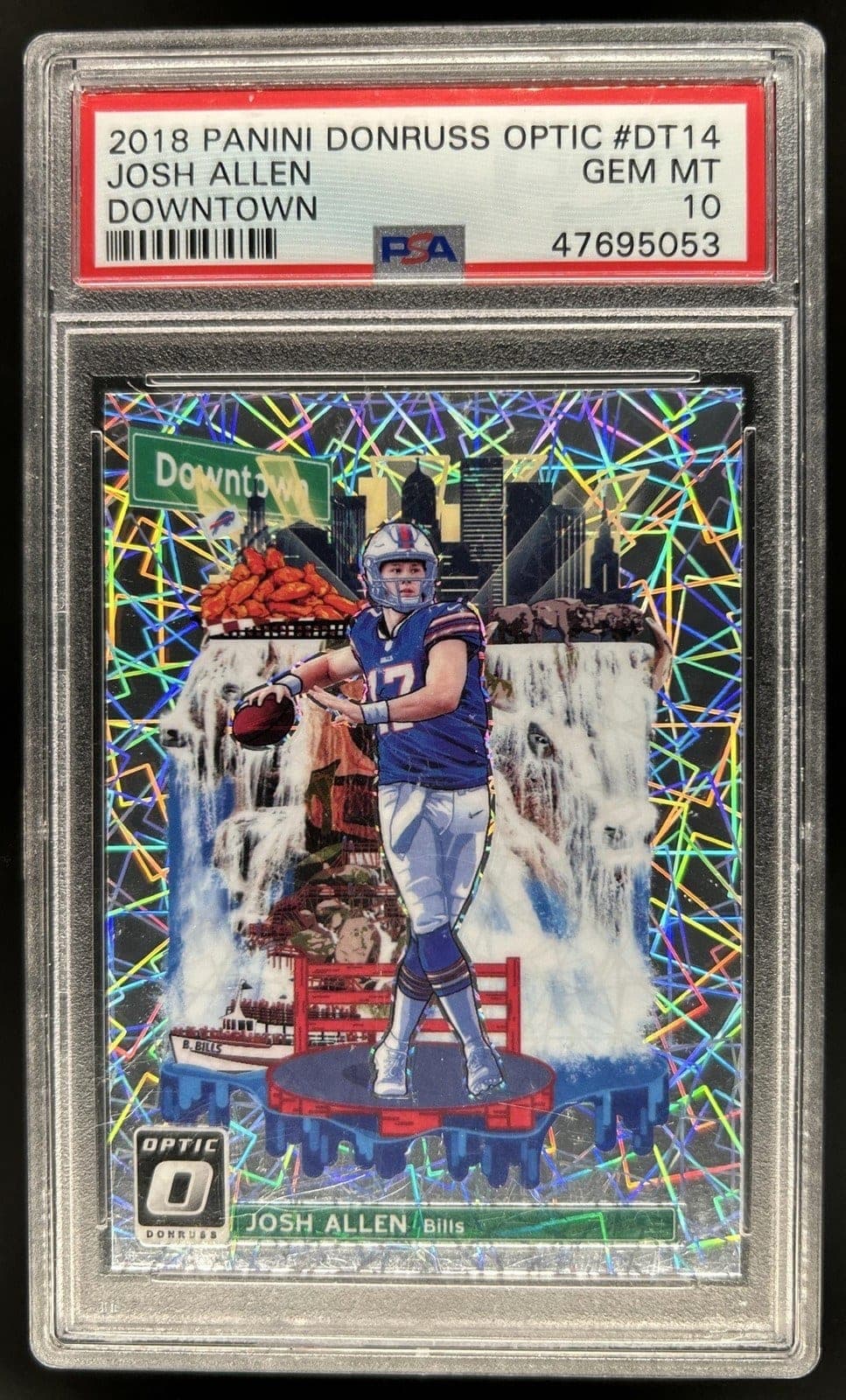
That environment favors cards with an immediate visual identity. A Downtown or Kaboom does not require much explanation. The artwork fills the screen, the design is recognizable and a breaker can reveal the card while the audience immediately understands that it is a significant hit.
A serial-numbered parallel of the same player may be scarcer, and a historically important rookie may have a stronger traditional investment case. Neither necessarily creates the same instant reaction. That difference may be creating what could be called a camera premium.
Whatnot is already showing which cards work
Whatnot's own data supports this idea. In its 2024 trend report, the company said searches for Kaboom cards had doubled year over year, attributing the increase to their comic-inspired designs and rarity.3
The platform's current sports-card marketplace reflects that interest. Live shows regularly advertise "DOWNTOWNS," "KABOOMS" and "COLORBLASTS" in their titles. Some promote specific chases, such as a Matt Stafford PSA 10 Downtown, while others use combinations of Downtown, Kaboom and Color Blast to attract buyers.4
Repack products are built around the same cards. Some listings advertise boxes containing multiple Kabooms, Color Blasts and Downtowns, with stated values ranging into the thousands. In these cases, the cards are not simply being sold on Whatnot. They are being used to sell the show itself.5
A Blue Scope /99 is scarcer, but Downtown card is easier to identify and make a connection with in five seconds. "ooo pretty colors."
A 2018 Prizm Blue Scope /99 may be a stronger card than a common insert by many traditional measures, but "Blue Scope /99 chase" does not have the same immediate meaning for a broad audience as "Downtown chase." The latter is easier to understand without knowing the checklist or parallel structure.
Josh Allen shows how the premium works
Josh Allen's 2018 rookie market provides a useful example. Card Ladder data gathered in August 2026 shows his 2018 Prizm PSA 10 recently sold for around $545 USD, while his Select Field Level Silver PSA 10, with a population of roughly 216, sold for around $1,035 USD. His 2018 Contenders Rookie Ticket Autograph PSA 10, from one of football's most established rookie-autograph products, recently sold for $5,802 USD with a PSA 10 population of 187.6
Allen's chase inserts have sold for considerably more. His 2018 Optic Downtown PSA 10 has a population of 197, nearly identical to the Contenders autograph, but it most recently sold for $12,000 USD. His 2018 Panini Kaboom! PSA 10 has a population of 47 and sold for $16,644 USD on August 13.7
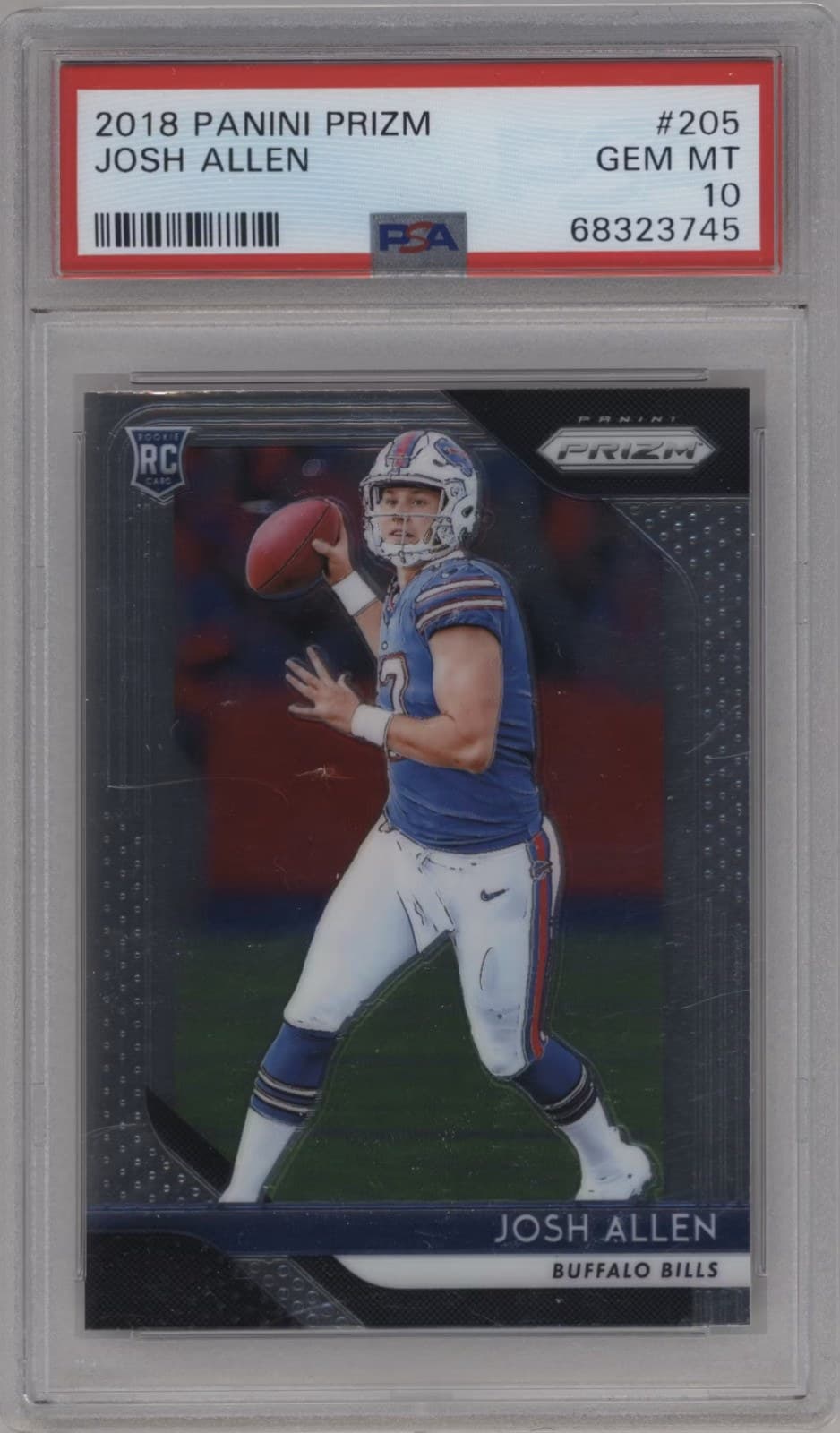
These results do not prove that Whatnot created the premium. Downtown and Kaboom were already popular, and differences in print run, condition, design and collector demand all affect prices. Still, the comparison is notable. A Josh Allen Downtown without an autograph sold for more than twice as much as a PSA 10 Contenders Rookie Ticket autograph with a similar graded population. The Kaboom sold for almost three times as much.
Both cards also have qualities that suit live commerce. They are scarce without relying entirely on a serial number, they have a consistent visual identity and they are recognizable across sports. Most importantly, pulling one creates an obvious moment for the audience.
Cards are collectibles and media objects
In a traditional card market, the main purpose of a card was to be owned. In live commerce, some cards also function as entertainment. A breaker revealing an ordinary rookie card may not create much excitement. A low-numbered parallel can produce a stronger reaction, but viewers may need to understand the product and the parallel structure before appreciating it.
A Downtown or Kaboom is easier to understand immediately. The reaction comes before anyone checks the population report.
This matters because Whatnot is partly an entertainment platform. Whatnot says buyers spend on average ~80 minutes per day on the platform. They are not only purchasing cards; they are watching breaks, chatting with other collectors, bidding under time pressure and reacting to the results.8
Research on livestream commerce points in the same direction. Studies have found that time pressure, interactivity, emotional engagement and visual appeal can increase impulse buying and purchase intention. Sports cards are particularly well suited to this format because the inventory is scarce, prices vary widely and the next pack can produce a much more valuable card than the previous one.9
Some cards also make better content than others. A visually distinctive case hit can be understood in a thumbnail, on a phone screen or in a short social-media clip. That gives it an advantage over a card whose importance depends on a detailed checklist.
Visual identity is becoming part of a card's value
Historically, sports-card importance usually came from rookie status, scarcity, autographs, memorabilia, player significance or historical importance. Visual identity is becoming another factor.
Downtown is a good example because the insert has become recognizable as a category. The design places the athlete in elaborate artwork associated with a city, team or location. A Tom Brady Downtown, Shohei Ohtani Downtown and Josh Allen Downtown look different, but they share a visual language that collectors can identify immediately.
Collectors do not need to know whether a card is Orange /249, Blue /149 or Purple /50 to understand that it is a Downtown. The design itself carries much of the brand value.
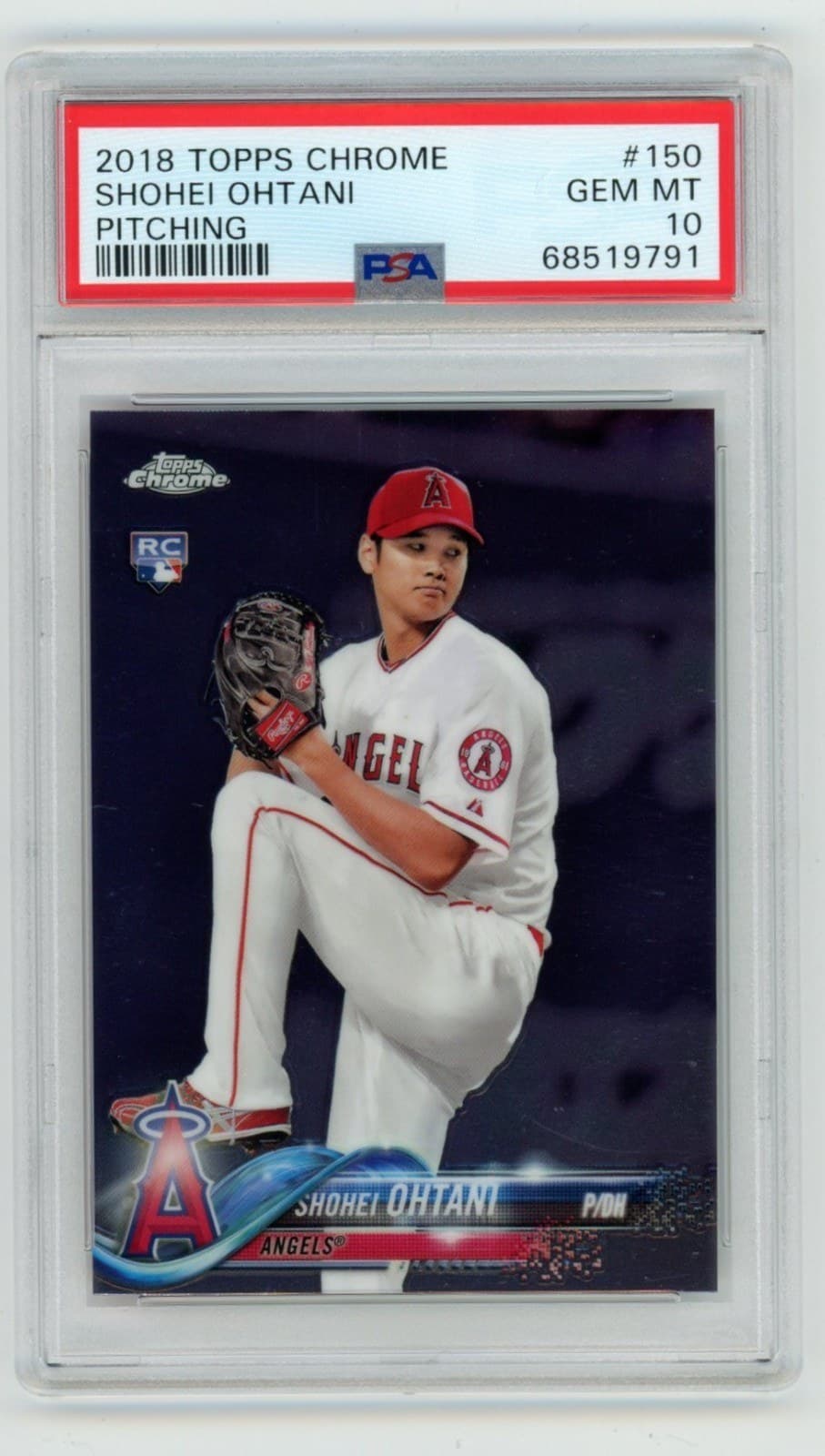
The market has rewarded that distinction. A 2019 Diamond Kings Shohei Ohtani Downtown PSA 10, issued after his rookie season, sold for $16,699 USD on August 23, 2026, with a PSA 10 population of 49. Ohtani's mainstream 2018 Topps Chrome rookie PSA 10 has recently traded at around $1,800 USD to $1,900 USD.1011
Scarcity explains part of the difference, but the broader point is that a non-rookie insert can compete with or exceed a card that has the traditional advantage of rookie status. The insert itself has become a major collectible.
Recognizable scarcity may matter more than complicated scarcity
Modern sports cards contain a large number of serial-numbered parallels. A collector may know that one Purple Shimmer is limited to 35 copies, while another collector prefers a Blue Shimmer /25, Camo /25, Gold /10 or Green Shimmer /5. The scarcity is real, but the identity of each parallel is fragmented.
Downtown approaches the problem differently. The brand communicates importance without requiring the buyer to compare several versions of the same parallel. That may become more valuable as checklists grow more complicated.
Most collectors can remember "Downtown." Fewer will remember the exact distinction between a 2025 Prizm No Huddle Purple Pulsar FOTL Variation /35 and several similar parallels.
This does not mean a Downtown is always scarcer. It means the card has lower cognitive friction. In a traditional card shop, that may be a minor advantage. In a 15-second auction, it can have a direct effect on bidding.
Breakers now influence product demand
Manufacturers have traditionally designed products for collectors and hobby shops. Breakers are now another important audience.
A successful break needs recognizable chase cards that can be featured in a promotional graphic and explained quickly to potential buyers. That creates a feedback loop: collectors want exciting breaks, breakers promote products with obvious chase cards, manufacturers produce more visually distinctive inserts and those cards receive more exposure.
As collectors see the same designs repeatedly, recognition increases. Higher recognition can lead to stronger demand, which gives breakers another reason to promote the same cards.
Whatnot's marketplace shows this process clearly. Sellers often advertise the potential hit before they emphasize the product itself: Downtown, Kaboom, Color Blast, Logoman or Debut Patch. The chase card has become part of the product's marketing.
That can influence value in ways that traditional card analysis does not fully capture.
The risk is overproduction
The main risk is that manufacturers will respond by producing more visually distinctive case hits. There may be more Downtown sets, Kaboom releases, Manga cards, Color Blasts and new insert families designed to become the next major chase.
If that happens, the hobby could recreate the parallel problem under a different name. A card is not valuable simply because it is colorful or labeled as an SSP (super short print). The investment case depends on whether collectors continue to recognize and seek the insert brand over multiple product cycles.
Downtown appears to be approaching that status, and Kaboom may be there as well. Color Blast has strong recognition but may not yet have the same breadth of demand. Most new case-hit designs will not become lasting categories.
The better approach is to identify designs that have developed a durable identity rather than buying every flashy insert. Whatnot's Kaboom search data is relevant because collectors were not only searching for individual players. They were searching for Kaboom itself. The insert had become a category.
The investment case
Live commerce may be creating a premium for cards with three characteristics: visual identity, instant recognizability and scarcity that can be understood without extensive research.
That is different from simply buying the rarest card. A card whose importance depends on a detailed checklist may be disadvantaged in a market driven by phones, thumbnails, short auctions, breaks and social clips. A card that communicates its importance visually has an advantage.
The opportunity is studying the chase design system and commanding the hobby's shared visual language before that status is fully reflected in their prices.
What I would own
- Early Downtowns of established superstars. The thesis is strongest before the brand becomes too common. Josh Allen's rookie Downtown already trades like a trophy card. Earlier Downtowns of players such as Patrick Mahomes, Tom Brady, LeBron James and Shohei Ohtani are worth considering when populations remain manageable and the player has a durable collecting base.
- Early Kabooms. Whatnot's search data suggests that collectors increasingly recognize Kaboom as a category. Its comic-book design also works well in live video and social media. I would focus on early issues and players with lasting legacies rather than buying every current-year release.
- Color Blast, selectively. Color Blast fits the same visual thesis, but I would be more selective because it does not yet have the same broad recognition as Downtown or Kaboom. The strongest players and earliest important issues are more compelling than broad exposure to the category.
- Rookie-year case hits that have become established. These cards combine the traditional appeal of rookie status with the modern advantage of a recognizable insert design. Josh Allen's market shows how powerful that combination can be.
I would avoid generic new SSP inserts whose main selling point is that the manufacturer calls them rare. A successful case hit needs a design that collectors remember and continue to seek after the initial release.
Conclusion
Whatnot did not create Downtown, Kaboom, box breaking, or ripping packs, but it has moved a large amount of sports-card commerce into an environment where visually distinctive cards have a natural advantage.
Whatnot's own reporting puts total platform sales above $6 billion USD in 2025. Auctions can last 15 seconds, buyers spend more than an hour a day on the platform and breakers compete for attention. Cards are shown through phone cameras, shared in clips and discussed in real time.
In that environment, scarcity alone may not be enough. A card also needs to communicate its importance quickly.
The traditional market rewarded cards that looked good in a display case. Live commerce may increasingly reward cards that look good when someone holds them up to a camera. That shift could help explain why certain case hits now command premiums over cards with stronger traditional credentials.
The key question is not simply whether a card is rare. It is whether the hobby recognizes it immediately, and whether that recognition will last.
Notes
- Whatnot reported total platform sales of more than $6 billion USD in 2025, more than double the year before. blog.teamwhatnot.com ↩
- Whatnot's Sports Cards Seller Playbook recommends auctions of no more than 15 seconds with a five-second counter-bid or Sudden Death format, and recommends equipment including panel lights, phone stands, a singles turntable and card stands. selleracademy.whatnot.com ↩
- Whatnot's 2024 trend report said Kaboom card queries doubled year over year and highlighted the cards' comic-inspired aesthetics and rarity. blog.teamwhatnot.com ↩
- Whatnot's sports-card marketplace included live shows explicitly advertising Downtown, Kaboom and Color Blast chase cards in their titles. whatnot.com ↩
- Current and archived Whatnot repack listings have been marketed around guaranteed groups of Downtown, Kaboom and Color Blast cards. whatnot.com ↩
- Card Ladder data places Josh Allen's 2018 Prizm #205 PSA 10 around $545 USD and his 2018 Contenders Rookie Ticket Autograph PSA 10 at $5,802 USD, with a population of 187. cardladder.com ↩
- Card Ladder lists the 2018 Optic Josh Allen Downtown PSA 10 at $12,000 USD with a population of 197 and the 2018 Panini Kaboom! PSA 10 at $16,644 USD with a population of 47. cardladder.com ↩
- Whatnot reported that buyers spend an average of roughly 80 minutes per day on the platform. blog.teamwhatnot.com ↩
- Kong, Zhan and Zhu, in Electronic Commerce Research, found that time pressure promotes impulse buying in livestream e-commerce; related research has found interactivity, affect and visual appeal can strengthen purchase intention. doi.org ↩
- Card Ladder lists the 2019 Diamond Kings Shohei Ohtani Downtown PSA 10 at $16,698.74 USD on August 23, 2026, with a PSA 10 population of 49. cardladder.com ↩
- Recent PSA and market data for the 2018 Topps Chrome Shohei Ohtani #150 PSA 10 showed more than 16,600 copies in the grade and recent sales around $1,800 USD to $1,900 USD. psacard.com ↩