
Is EQL Actually Equal? We Tested Topps' System for Selling Cards
CardWire modeled the EQLizer scoring system Topps uses for scarce drops; the math checks out, but neither company publishes real launch data to prove it.
Anyone who regularly tries to buy a limited Topps release knows the email. You entered. You waited. You were not selected.
For some collectors, that sequence repeats enough times to make the system itself look suspicious. In one recent r/Topps discussion, users self-reported records including 0-for-16, 0-for-30 and 0-for-33. Those are anecdotes from a self-selected group, not evidence that EQL is malfunctioning. They do explain why collectors keep asking the same question about a platform whose pitch is fairness: is EQL actually equitable?1
CardWire approached the question from the opposite direction. Instead of treating long losing streaks as proof of a problem, we modeled the mechanism EQL publicly says it uses. If that mechanism works as described, should it spread scarce inventory among more collectors than a conventional random draw?
The answer is yes. The harder question is whether outsiders have enough information to verify that actual Topps launches produce those results.
What EQL is
EQL is a third-party launch platform that brands and retailers use to sell high-demand products, including sneakers, wine, collectibles and trading cards. Topps says EQL helps it manage limited releases, slow down bots and provide a fairer launch process. Topps says entries go through multi-step security verification and are deduplicated in an effort to enforce one entry per person.2
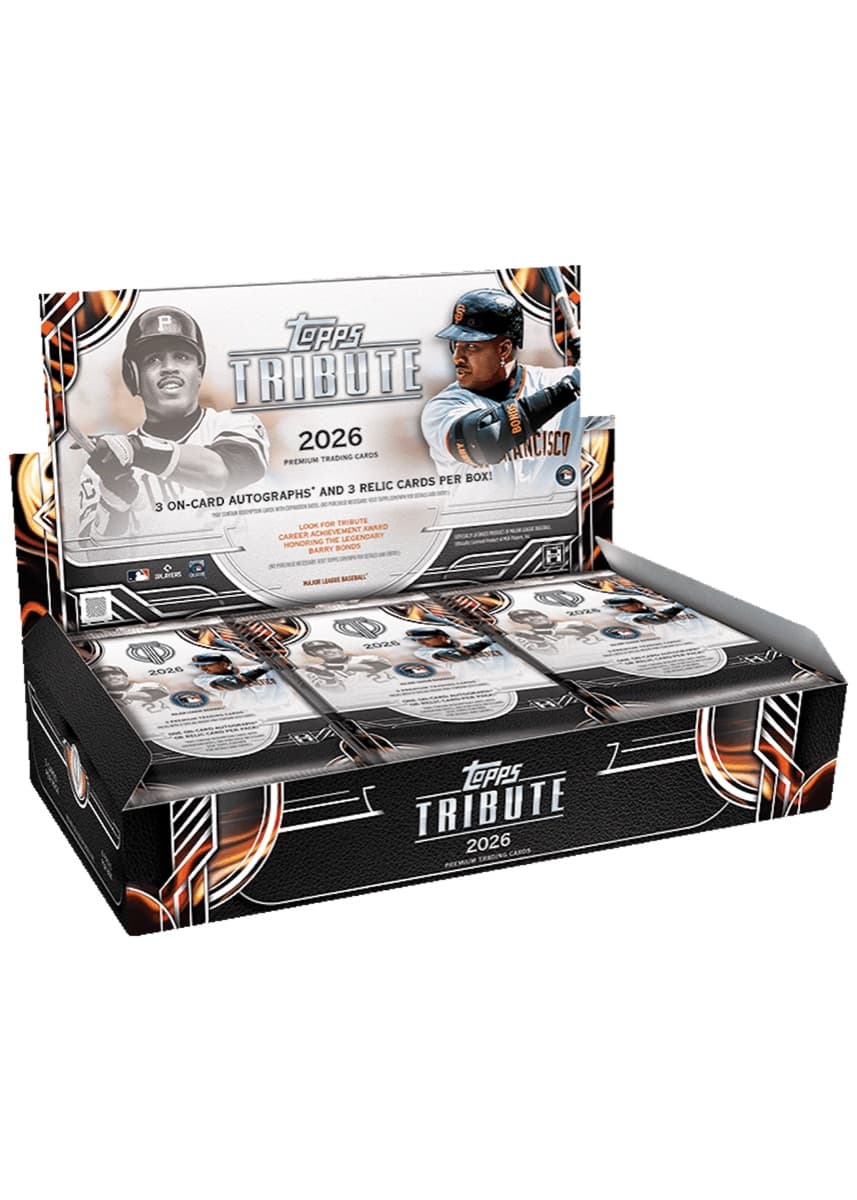
Topps has used EQL since at least September 2023, when the public release of 2023 Topps Chrome Sapphire Baseball was sold through an EQL draw.3 Topps continues to use the platform for current products, including 2026 Topps Tribute Baseball and 2026 Topps Chrome Baseball Sapphire Edition.4
In a typical EQL draw, a retailer opens an entry window. EQL analyzes entries, filters bots and suspicious behavior, assigns and ranks numbers, then works down the ranked list while inventory remains and payments process. The retailer controls the product, inventory and timing, and fulfills successful orders. EQL says it analyzes thousands of signals during and after a launch.5
The EQLizer intentionally gives some collectors better odds
EQL is not a one-person, one-ticket lottery. Its EQLizer Score is designed to reward people who keep entering fairly and losing.
EQL says every account begins with an EQLizer Score of 1. An unsuccessful legitimate entry adds one point. A successful entry resets the score to 1. The score is retailer-specific, so losses with one retailer do not carry over to another.6
EQL explains the score with random numbers. An entrant with a score of 1 gets one number. A score of 3 produces three numbers and keeps the best one. Lower numbers rank better. If the stronger number still does not fall within available inventory, another loss increases the score again for the next launch.6
EQL explicitly describes this as a simplified explanation. Its current fan guide says selection is also subject to "entry quality." It analyzes thousands of signals for bots and bad actors, and suspicious behavior can reduce a user's chances. The company even says virtual credit cards are permitted but can be a "less positive signal" in a high-demand launch.5
So EQL does not promise equal odds. It is trying to produce a more equitable distribution over time by improving the position of persistent losers and resetting winners.
We simulated the system EQL publicly describes
CardWire modeled the simplified EQLizer mechanics using 200,000 hypothetical collectors across 100 consecutive launches. Every collector entered every launch, every entry was treated as legitimate, all payments succeeded, and each launch had enough inventory for 1% of entrants. That is 100 entrants competing for each available unit.
We first ran a conventional random draw in which every collector had the same chance each time and prior results had no effect. We then ran the same launches using the EQLizer rule EQL describes publicly. Everyone began at a score of 1. Each loss added one point. Each point generated another random number, the best number was retained, and winners reset to 1.
This is our simulation of the EQLizer concept EQL describes publicly, not EQL's actual software or any observed Topps draw. The model excludes EQL's proprietary fraud screening, entry-quality adjustments, product variants, payment failures and other undisclosed variables.
Share of 200,000 simulated collectors who finished all 100 launches without a single win under the EQLizer model. A pure random draw left 36.6% winless.
Share who won exactly once under the EQLizer model. A pure random draw produced a 37.0% share.
Share who won twice or more under the EQLizer model, against 26.4% under a pure random draw.
Under the ordinary random draw, 36.6% of collectors finished all 100 launches without being selected once. Under our EQLizer simulation, that fell to 26.3%.
The average number of wins remained one per collector across the entire population because the amount of inventory never changed. What changed was who got it. In our run, 20,000 collectors made up the top 10% of the field. Under the pure random system they captured 30.2% of all wins; under the EQLizer model, their share fell to 23.6%.
On the narrow question we can test, the EQLizer does what it is supposed to do. It takes some wins away from the people who have already been unusually lucky and spreads them across more participants.
At extreme demand, the advantage nearly disappears
EQL cannot manufacture inventory. Its own explanation says some launches can see between 50 and 1,000 entries for every available product, even after bots are eliminated.6
We repeated the 100-launch simulation at several demand levels. The EQLizer mattered a great deal at 50 entrants per unit. It mattered less at 200-to-1. At 500-to-1 and 1,000-to-1, almost everyone who would remain winless in a pure random system remained winless under the EQLizer too.
Winless share under the EQLizer model at this demand level, against 13.3% under a pure random draw.
Winless share under the EQLizer model at this demand level, against 36.6% under a pure random draw.
Winless share under the EQLizer model at this demand level, against 60.6% under a pure random draw.
Winless share under the EQLizer model at this demand level, against 81.9% under a pure random draw.
Winless share under the EQLizer model at this demand level, against 90.5% under a pure random draw.
This is why a collector going 0-for-20, or considerably worse, does not by itself show that EQL is broken. Without knowing the number of legitimate entrants and units available for those releases, the streak is almost impossible to interpret.
The real problem is auditability
EQL does not show users their EQLizer Score. Its current fan guide says it withholds the score because bad actors could try to reverse-engineer the system.5
Collectors also generally do not know the number of legitimate entrants in a Topps draw, or how many entries were downweighted or filtered. Nor do they know how a particular entry was affected by EQL's quality analysis, or how many units a given draw allocated.
That makes two different situations look identical from the user's perspective. A collector who loses 30 times may have been spectacularly unlucky. He may have entered products with overwhelming demand. His EQLizer may have materially improved his position without improving it enough. Or an integrity signal may have lowered the quality of one or more entries.
EQL has much more information than the collector does. Its data product says brands can see entry counts, sell-through percentages, bots versus real fans, conversion rates, demographics and other information. EQL says it captures more than 30 data points per launch. Its current bot-mitigation page says it has analyzed more than 200 million signals across more than 14,000 launches.78
The information needed to evaluate real-world fairness appears to exist. Little of it is public at the individual Topps-launch level.
What about EQL+?
EQL also offers a paid subscription called EQL+. EQL says membership does not improve entry quality or give a member preferential treatment in the core draw. Benefits include covered Run Fair fees, payment protection, priority support and a Second Choice feature on eligible launches.9
Second Choice deserves a little precision. It lets a member identify another acceptable size, variant or product version, an additional path to receiving something when the first choice is unavailable. EQL says membership does not improve the quality of the underlying entry or provide an unfair advantage in the draw.9
We found no public evidence showing that EQL+ members receive preferential ranking. We also found no public Topps dataset that would let an outsider independently test the claim while controlling for EQLizer history and entry quality.
EQL and Topps could make this much easier to verify
Neither company needs to publish the fraud algorithm or disclose personal information. A small set of aggregate numbers for each public Topps EQL launch would answer most of the questions collectors have:
- total submitted entries
- total valid entries after integrity screening
- units allocated through the EQL draw
- selection rate by broad EQLizer-score range
- percentage of selected entrants with no prior Topps EQL win
- distribution of prior Topps EQL losses among selected entrants
- an anonymized comparison of EQL+ and non-EQL+ selection outcomes after controlling for entry history
None of those figures would explain how to defeat bot detection. They would show whether the system is producing the distribution EQL says it was designed to produce.
So, is EQL actually equal?
No, and equal odds are not what the EQLizer promises.
A perfectly unweighted random draw can repeatedly reward the same lucky collectors while another group never wins. EQL intentionally interferes with that outcome. Based on the mechanics EQL publicly discloses, the intervention works. In our simulation it meaningfully reduced the number of collectors who never won and reduced the concentration of repeat wins.
What our test cannot establish is whether real Topps EQL launches produce the same pattern. The system includes undisclosed integrity adjustments, and Topps and EQL do not publish enough launch-level data for outsiders to reconstruct actual selection probabilities.
A brutal losing streak is not evidence that EQL is rigged, especially on releases with extreme demand. The EQLizer helps most when scarcity is high but not absurdly high. If Topps and EQL want collectors to judge the system on more than trust, the next step is publishing the aggregate draw data instead of another explanation of the algorithm.
Notes
- r/Topps, "Another L," Aug. 26, 2026. Self-reported collector outcomes are anecdotal and are used only to illustrate collector sentiment. reddit.com ↩
- Topps, EQL FAQs. topps.com ↩
- Topps, 2023 Topps Chrome Sapphire Baseball EQL launch, stating the public EQL draw opened September 6, 2023. topps.com ↩
- Topps, 2026 Topps Tribute Baseball EQL launch; Topps, 2026 Topps Chrome Baseball Sapphire Edition EQL launch. launches.topps.com ↩
- EQL, "EQL 101 for fans," March 9, 2026. eql.com ↩
- EQL, "How the EQLizer score works," May 2, 2023. eql.com ↩
- EQL, "Data & Insights for Product Launches." eql.com ↩
- EQL, "Bot Mitigation for Product Launches." eql.com ↩
- EQL Support, "What is EQL+ and how can I subscribe?"; EQL Support, "Why isn't EQL+ helping me get selected more?" support.eql.com ↩