How Grail Break Turned Ripping Packs Into a Group Game
Grail Break sells digital packs that pay out graded slabs from a vault, then offers to buy most of them right back. I went through its odds, its buyback rates and two weeks of pulls to see how the game works.

Grail Break went live on Oct. 10. By 1:48 p.m. ET Monday, Oct. 26, its public stats counted 8,739 packs ripped and $1,228,278 worth of cards pulled. The biggest of them came at 10:57 p.m. ET on Thursday, Oct. 22, when a collector pulled a 1st Edition Flareon in a PSA 10 out of a $1,000 pack. When we wrote up that Flareon, we covered the basics. Now we are diving deeper into how the entire app works, from the packs you can rip to the mechanics of the buy backs offered to users.
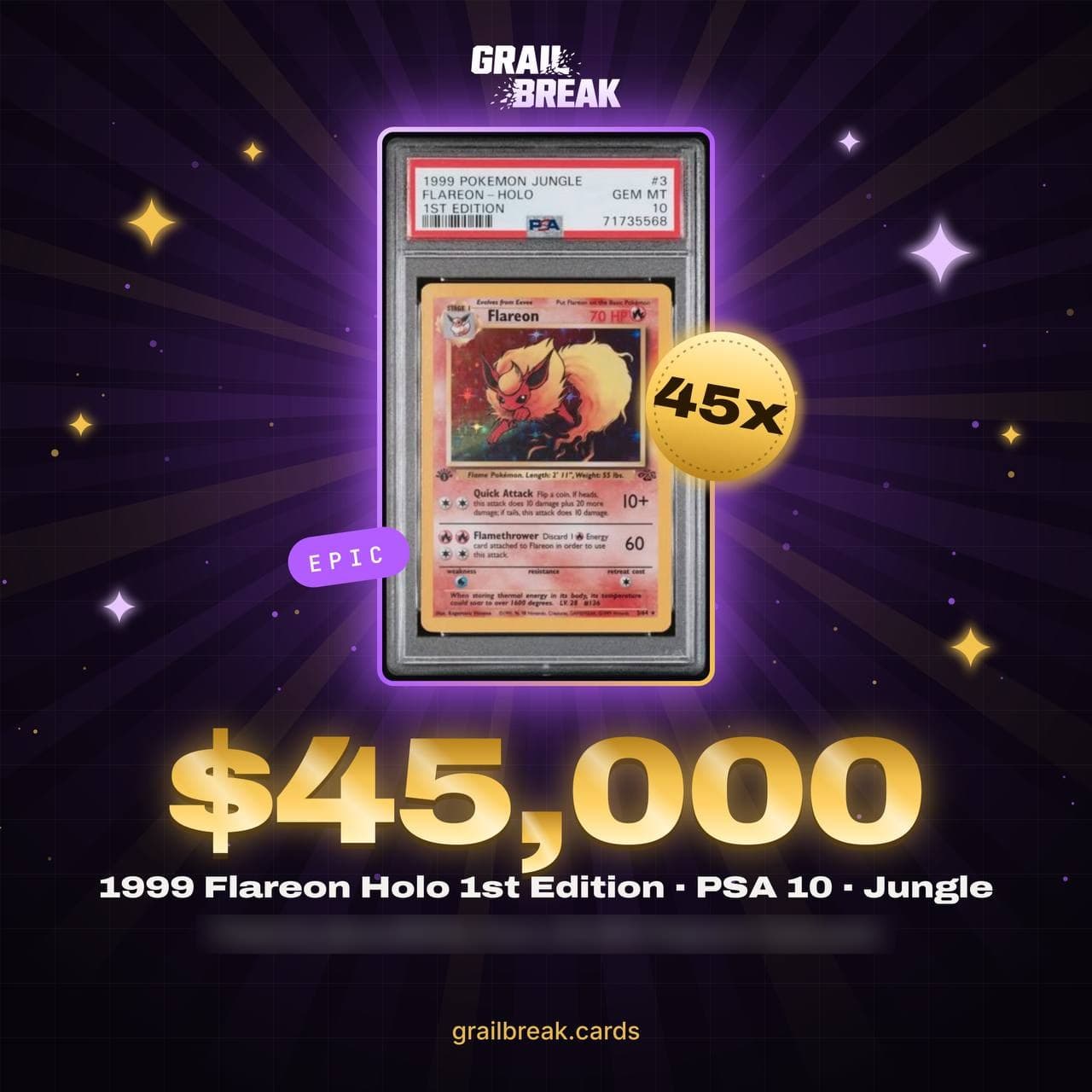
Flareon pull card
Every pack is a vaulted slab from Collector Crypt
Grail Break doesn't make its own packs. Every pack is a Collector Crypt gacha pack, a digital pack tied to a real item, almost always a PSA, Beckett or CGC slab, sitting in Collector Crypt's insured vault. Grail Break runs 41 of those machines, from a $25 Pokémon Starter pack to a $5,000 Pokémon Celestial pack. They offer ripping products across Sports, Pokémon, One Piece, sports, Dragon Ball, Lorcana, and Riftbound.
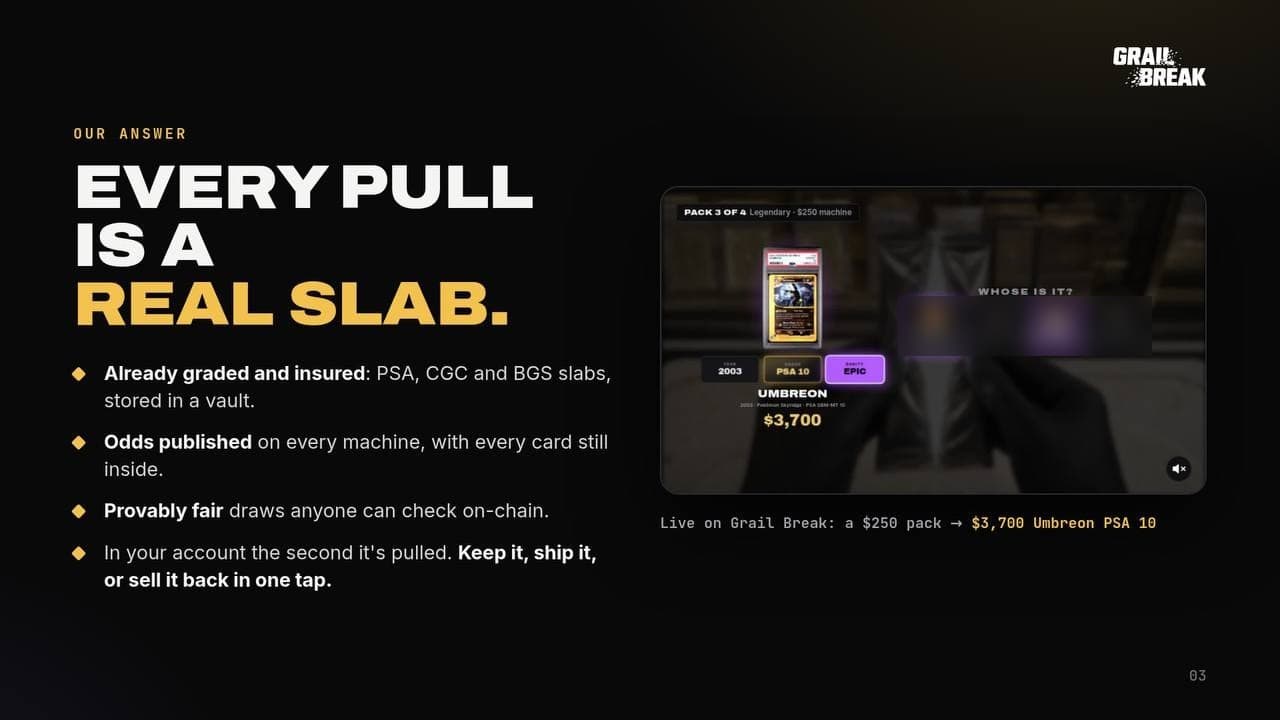
Every machine posts its odds. Most packs send three in four pulls to the common tier, one in five to uncommon, one in 25 to rare and one in 100 to epic, while four of the cheaper machines run 80% common and 15% uncommon. On a $250 Pokémon Master pack, a common pull is a slab worth $150 to $250. The epic tier starts at $2,000.
Grail Break lists an expected value on each machine to help users understand what could come out of the pack when a user rips one. On 38 of the 41 it sits a little above the price. This means that a $250 Pokémon Master pack has an expected value of ~$260. The other three pack products are sports machines priced at or just above their expected value.
Packs are assigned at random once all of the slots are filled for a break
The pull itself is built so no one can rig it. Grail Break buys the packs after every slot has been filled and before anything is dealt, then uses a verifiable random number service to shuffle the packs to the players. Anyone can check the results. Its terms say neither Grail Break nor a host can choose who gets which card. The packs then open one at a time on a live stage while each slab lands in its owner's account.
Seats and pulls are paid in USDC on Solana, a digital dollar you can buy with a card or bank account through outside providers that vary by region. The terms say plainly that Grail Break can't reverse a payment once it goes through.
The buyback is the real product
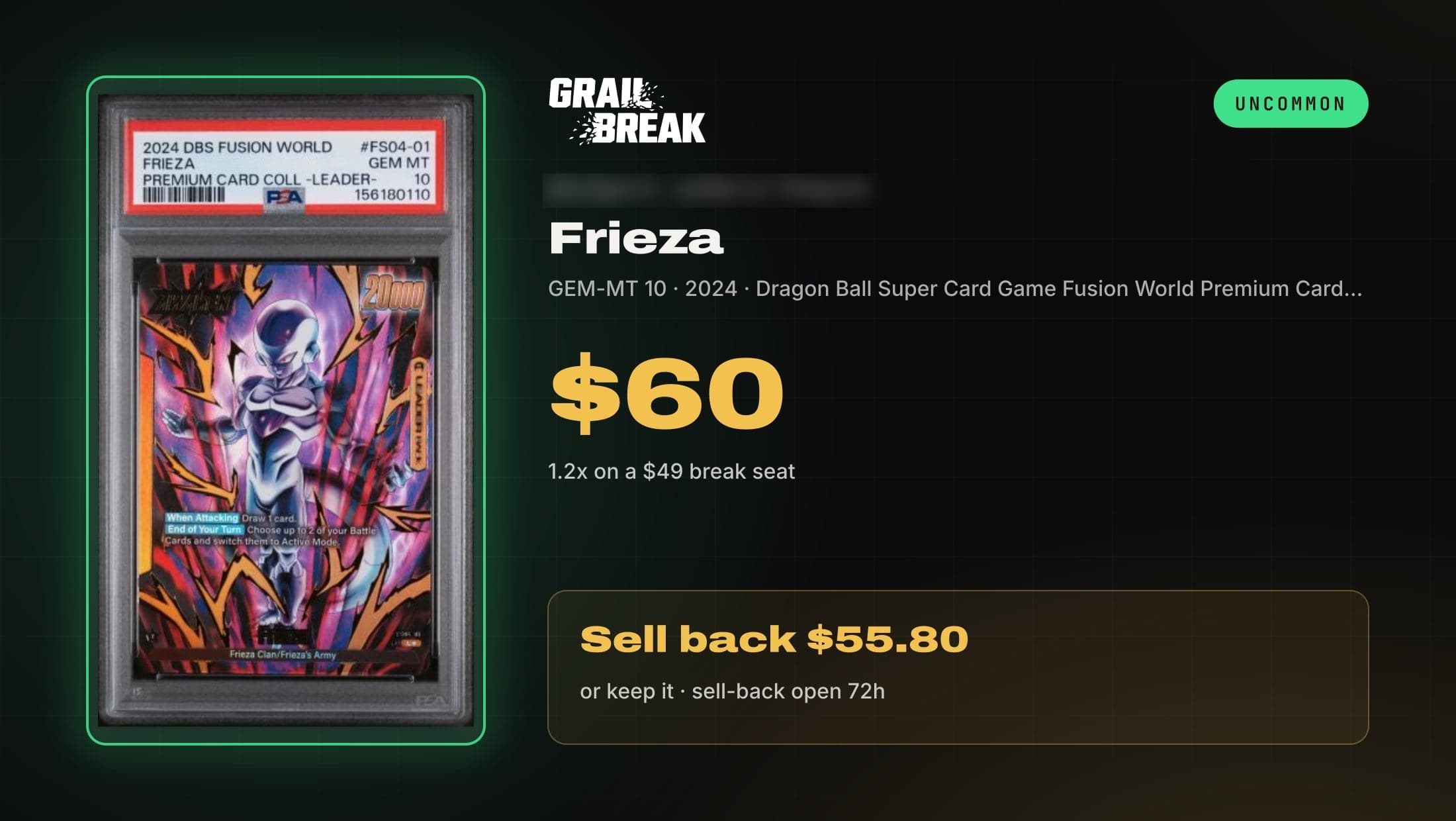
The moment a slab lands, Grail Break shows you a buyback price. It runs 85% to 93% of the slab's value depending on the machine. These buyback offers stay open for 72 hours after a user rips a pack and the slab lands in their account. Accept it and the money lands in your account within seconds. See below for a real screenshot of a buyback screen for a One Piece pack.
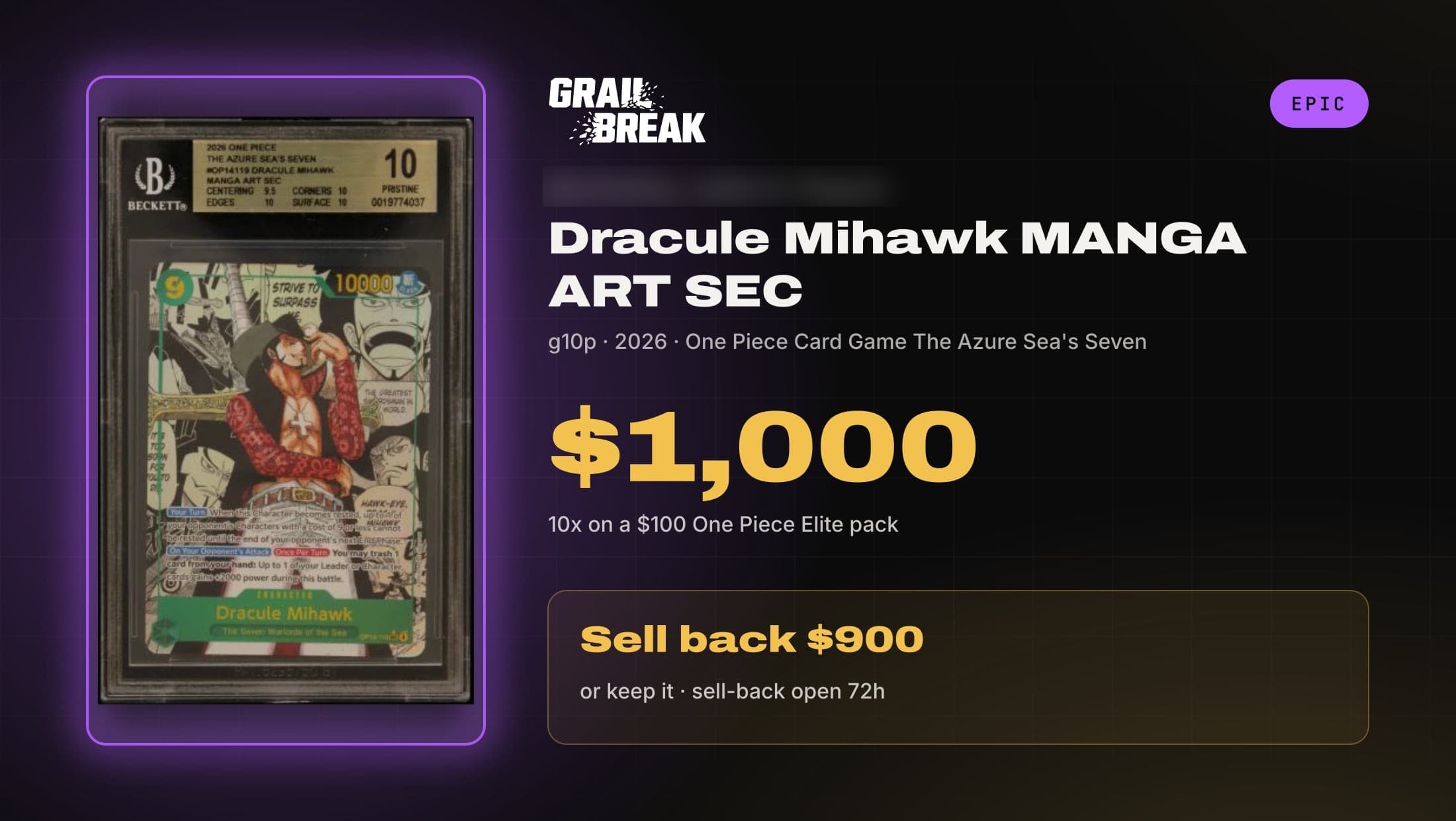
If you keep the slab, it stays in Collector Crypt's vault. You can hold it or sell it back later on the secondary marketplace. If you want the physical card, you start a withdrawal on Collector Crypt, pay for shipping, and the grade arrives at your door shortly thereafter.
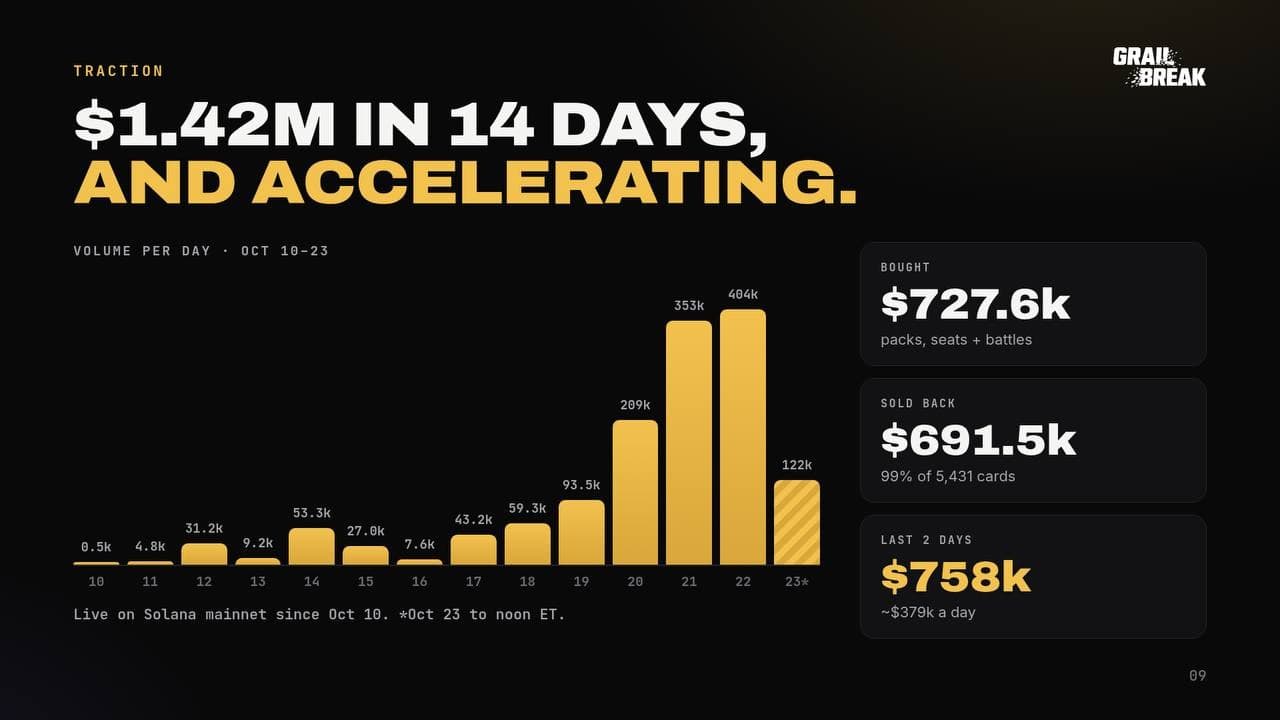
In practice, almost nobody keeps the slab. Grail Break's own pitch deck counts $727,600 spent on packs, seats and battles from launch on Oct. 10 through noon ET on Oct. 23. In that time period, users sold back nearly every slab that was ripped. Grail Break reports $691,500 was bought back totaling 5,431 cards.
Group breaks split one big box
A Grail Break group break is a box of those packs split into seats. The seat price is the packs' cost plus a 3.5% fee, split evenly and rounded up to the next dollar. As mentioned, slabs aren't purchased until every seat sells, with a full refund if a break doesn't fill. One account can hold two seats at most.
The box opens from the cheapest pack to the grand prize, which is a fun mechanic creating suspense with every group break. As each card is unveiled, it gets assigned an owner and the break continues until the last pack is uncovered.
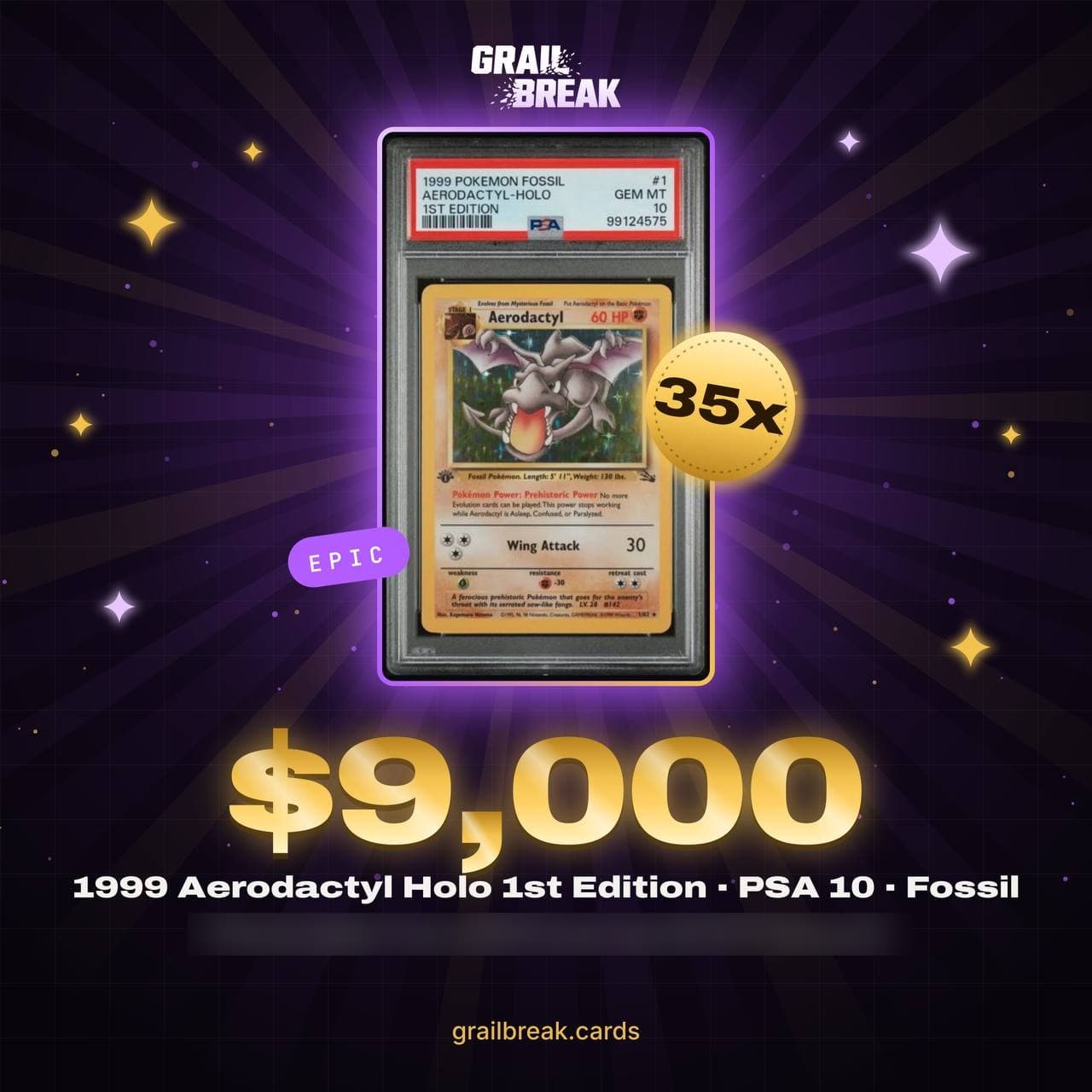
Breaks come in three styles: Chase puts the cheapest pack in every seat but one, Even gives every seat a solid mid-tier pack, and Balanced builds a ladder under the grand prize. Last Friday, a $256 seat in a break built around a $1,000 Grail pack came up with a 1999 1st Edition Aerodactyl in a PSA 10 that Grail Break valued at $9,000.
Grail Break counted 167 finished breaks by Monday afternoon. Any user can host breaks as well and they go live on the site ready for other users to join up. Spend $250 in 30 days and you earn Pro status, which lets you build a box and keep 0.5% to 3% of it when it fills, depending on your breaker level. This creates a flywheel effect giving users extra incentive to bring their communities onto the platform.
Battle Slabs is winner take all
Battle Slabs puts two to 20 players on the same machine at the same moment. Everyone opens one pack, then the highest-valued slab takes every slab in the battle. A tie on value goes to the higher grade. Only a full tie splits the pot. A 1v1 on the $100 Sports pack costs about $104 a seat for a $200 pot. An eight-player battle on the $25 Pokémon Starter pack costs $26 a seat for the same $200 pot.
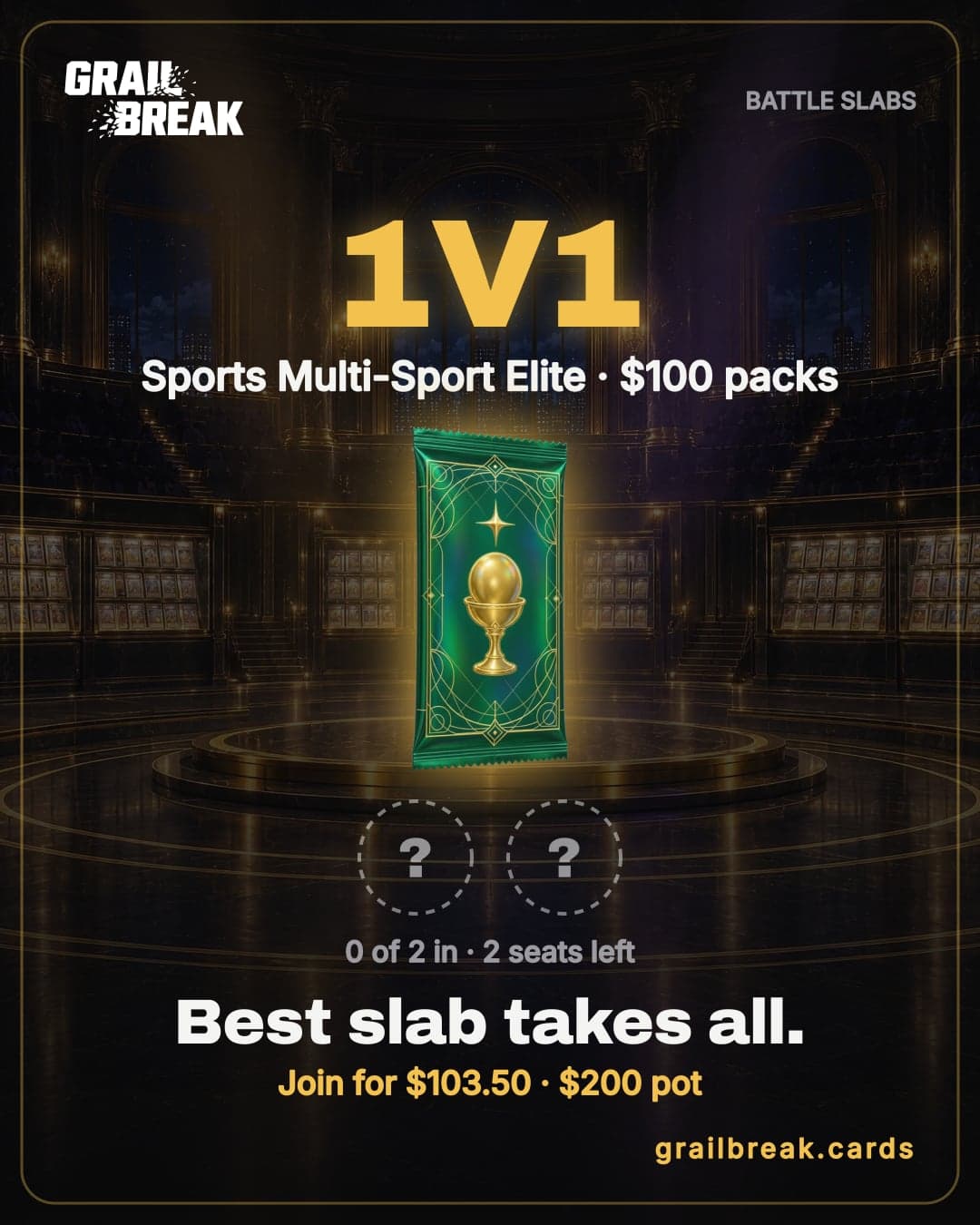
1v1, $100 Sports packs
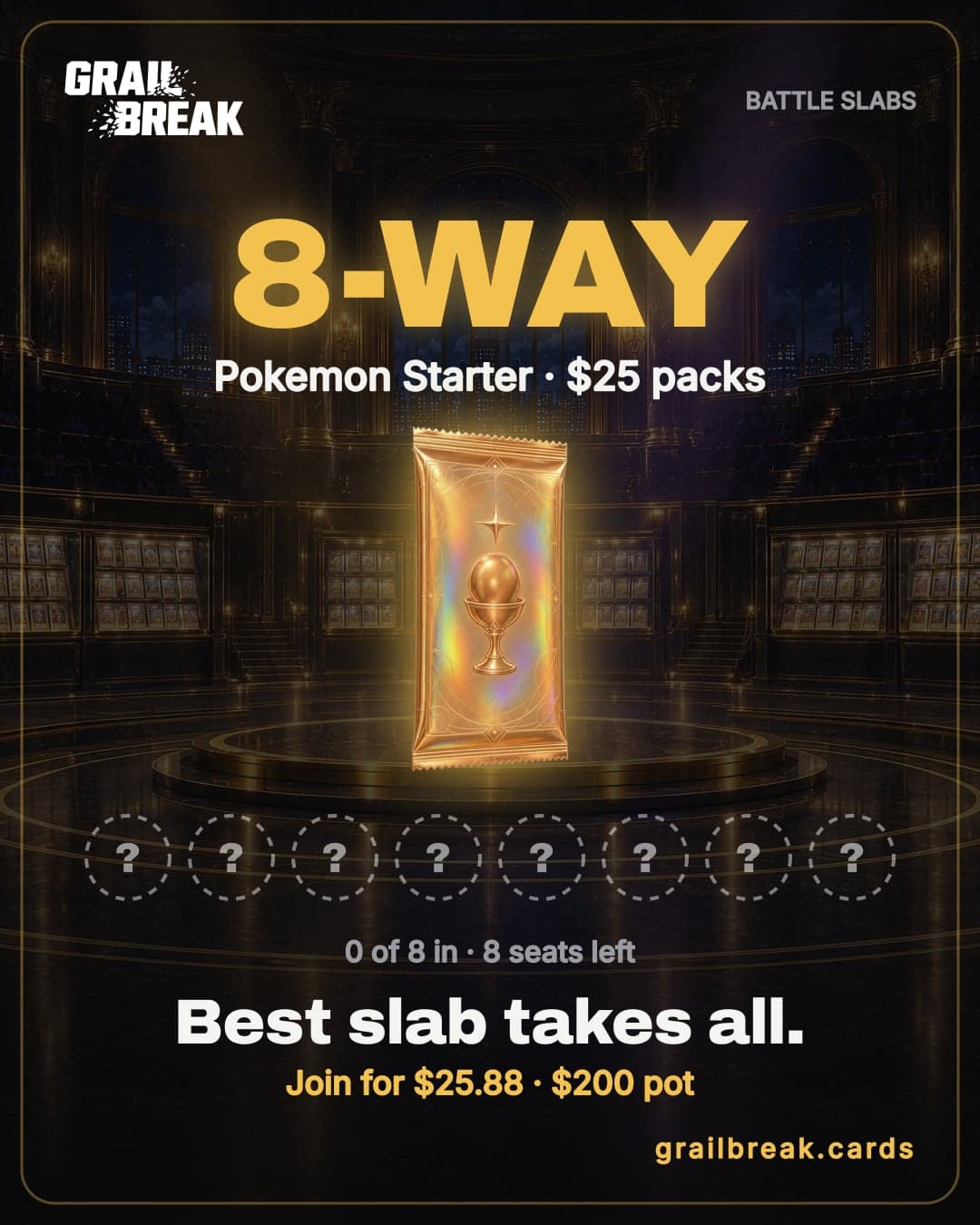
Eight-way, $25 Pokémon Starter packs
You can rip packs from X or Telegram
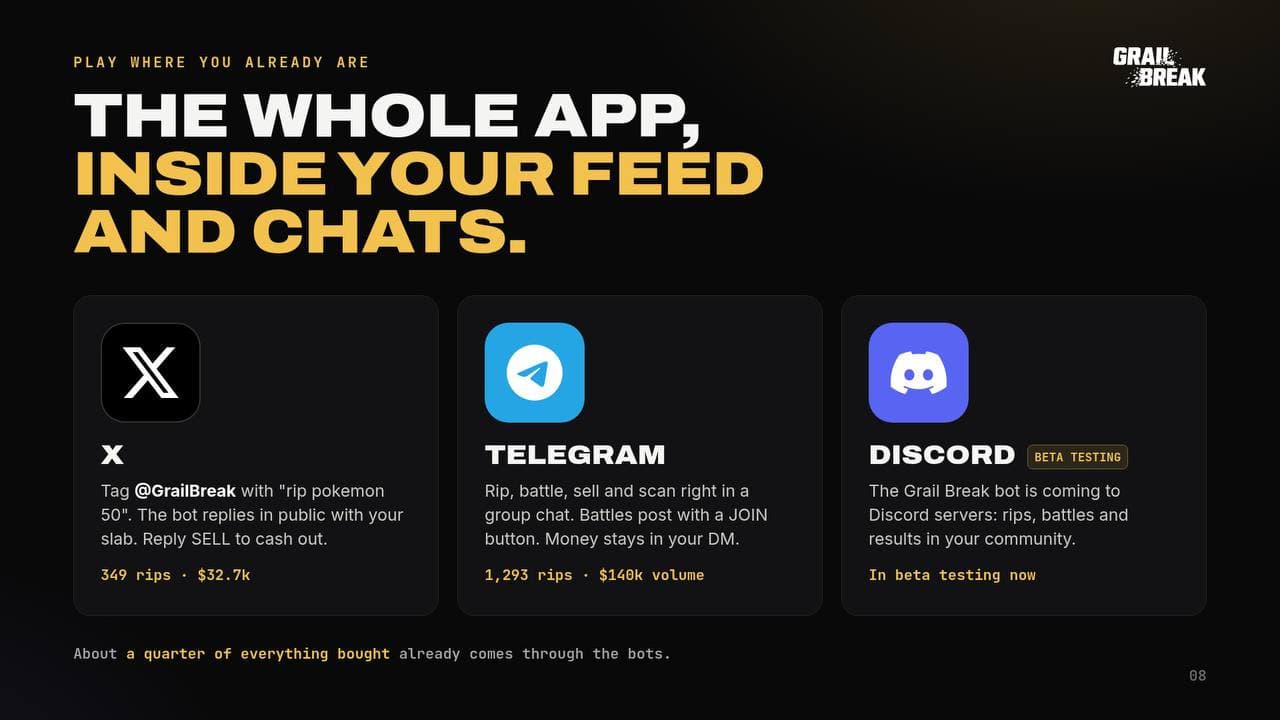
Grail Break built integrations onto popular messaging and social media apps. Grail Break runs a mini app inside of Telegram as a group chat, where battles post with a join button for users to get in on the action. On X, you tag @GrailBreak with something like "rip pokemon 50" and the bot replies in public with your slab. Reply SELL to take the buyback offer. A Discord bot is in beta testing and is expected to release next. Grail Break's credits its bots with about 25% of their total sales volume so far.
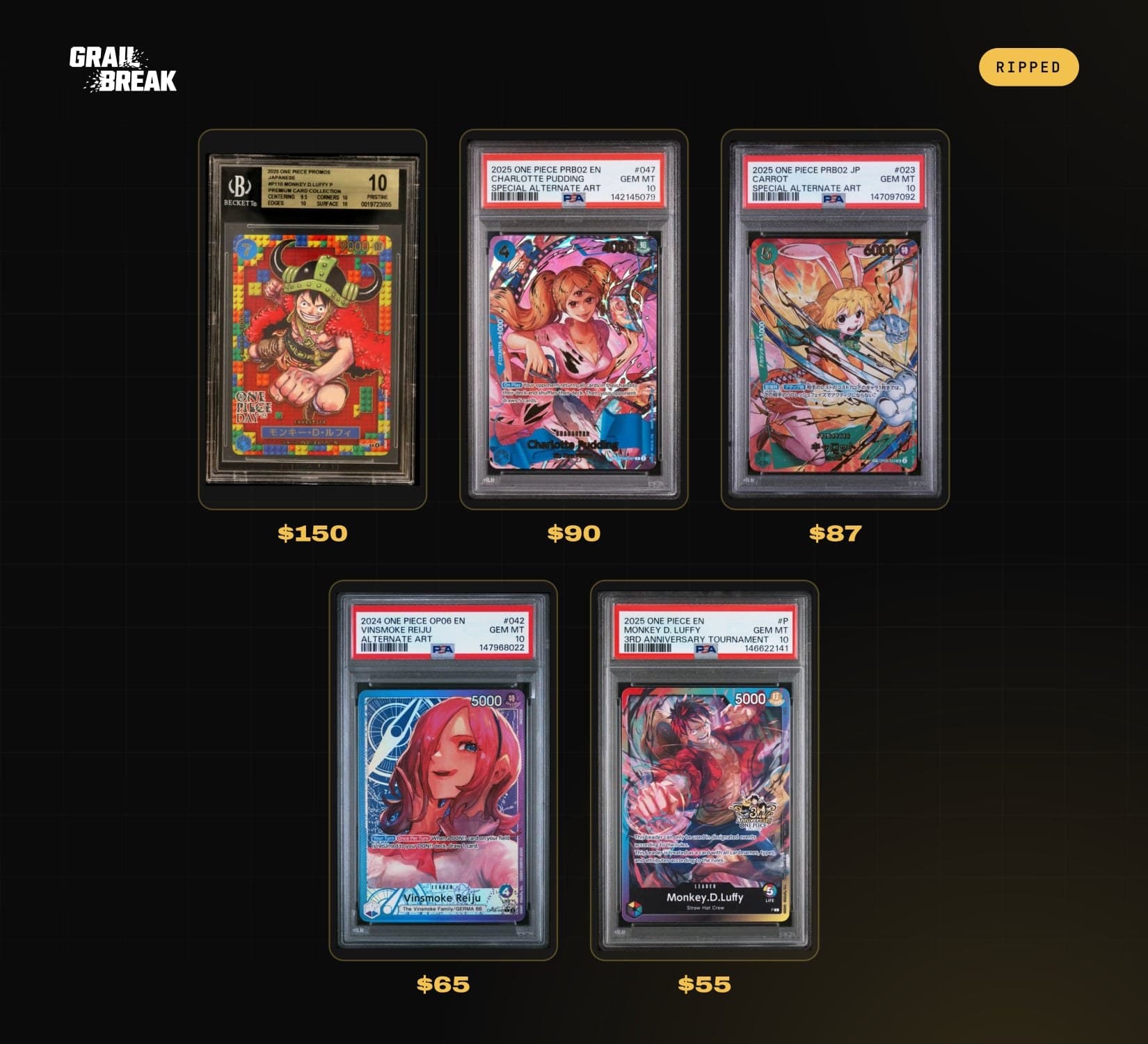
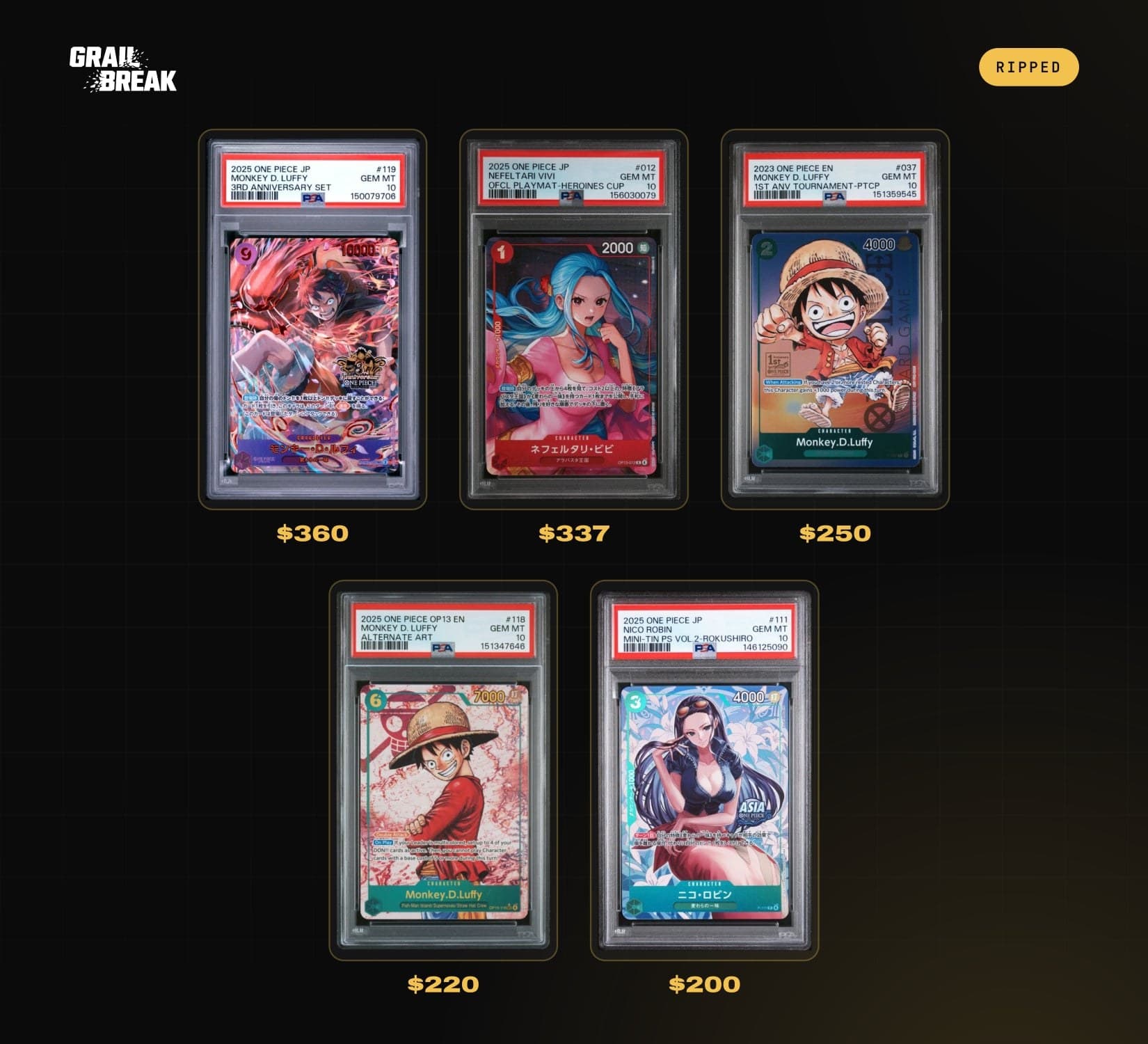
Is a pack worth it?
Grail Break answers that question with data from its own site citing 465 pulls between Oct. 5 to 11. The typical pull was worth about 80% of the pack price. Seven in 10 came in under it, while the big hits pull the average up to 1.09 times the pack. The worst pull in that set was a slab worth half the price of the pack. However you interact with Grail Break's feature, you are pulling a real slab, that at minimum, you can sell back for half of what you paid for the chance to open it.
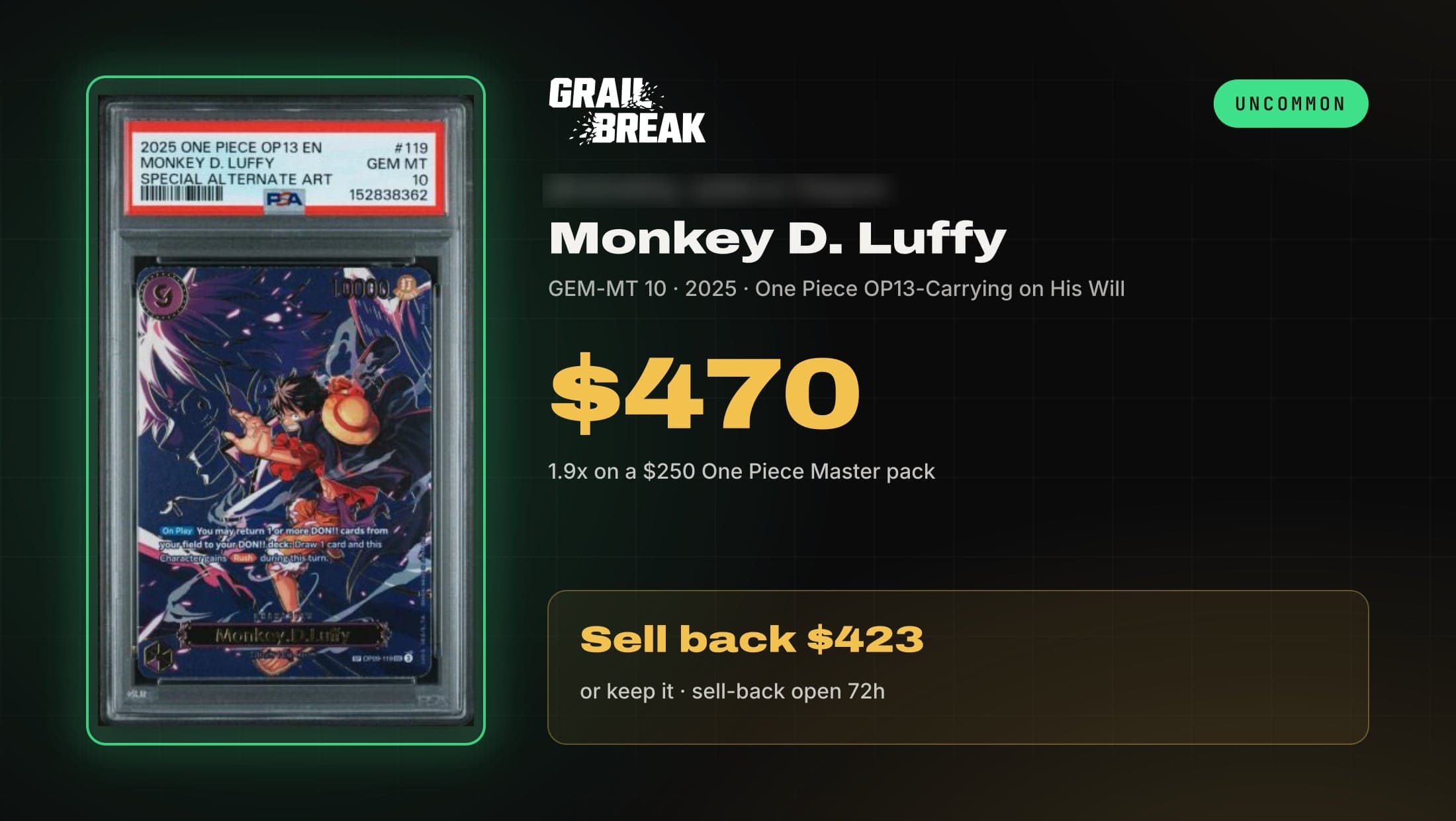
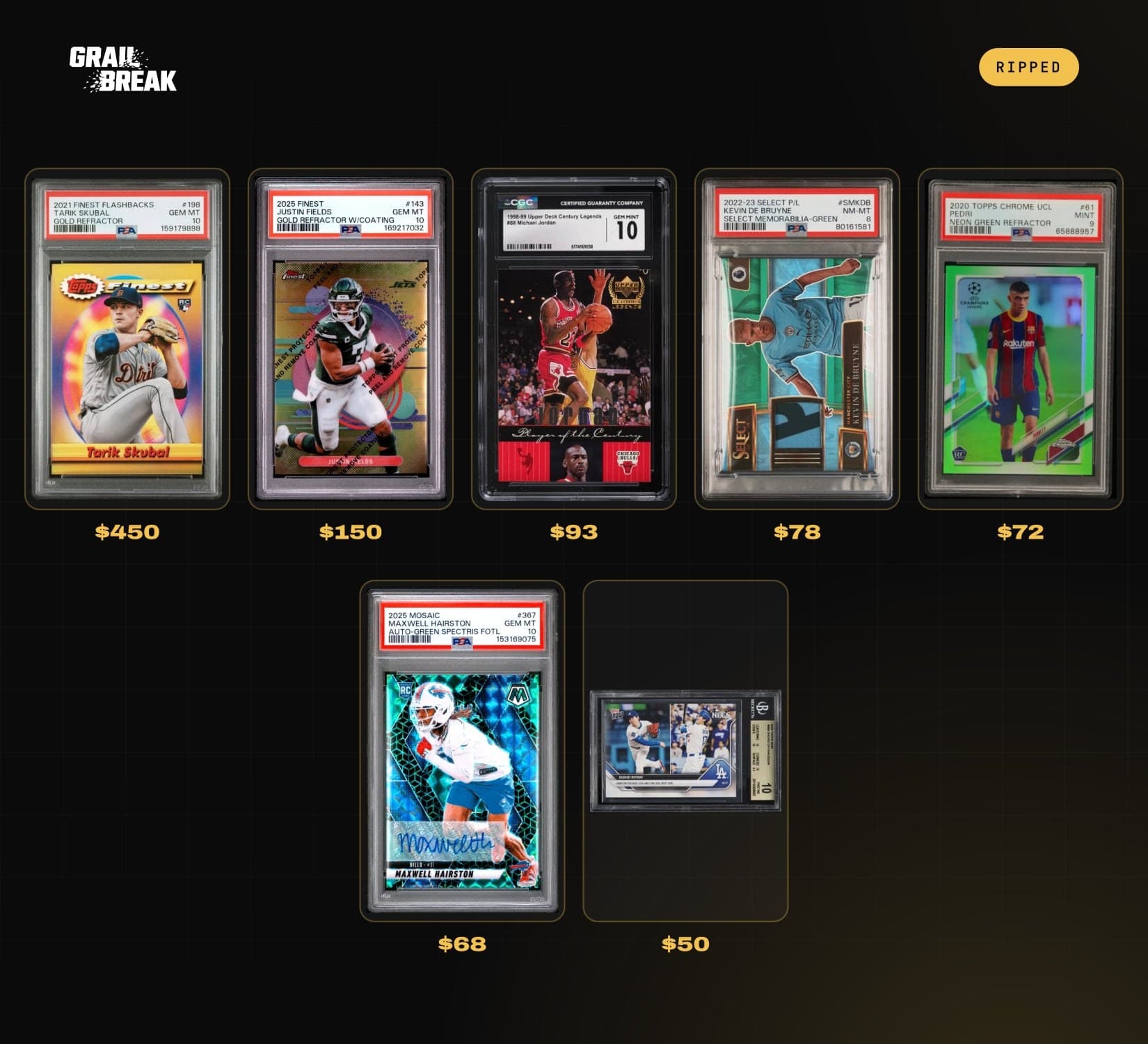
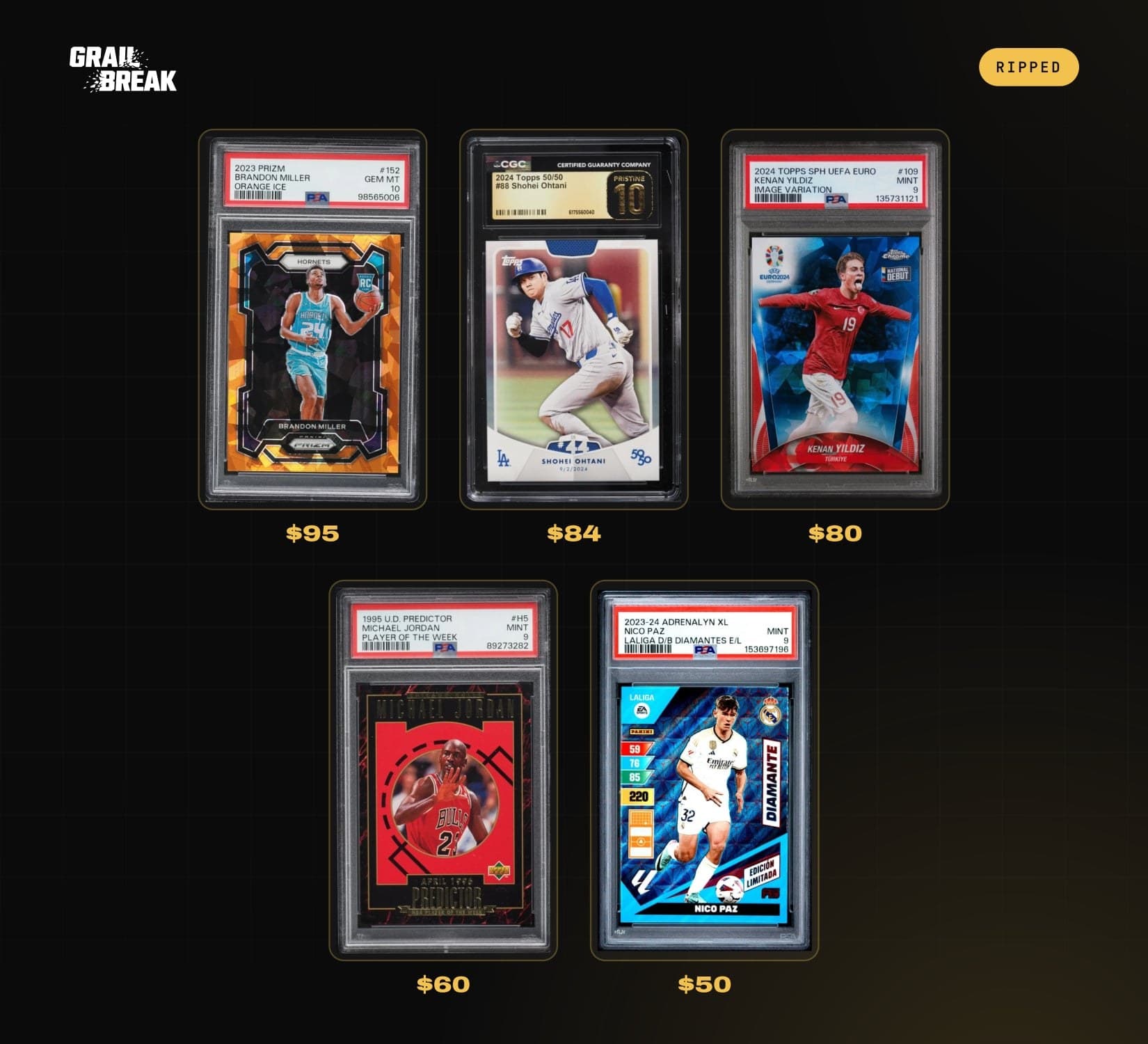
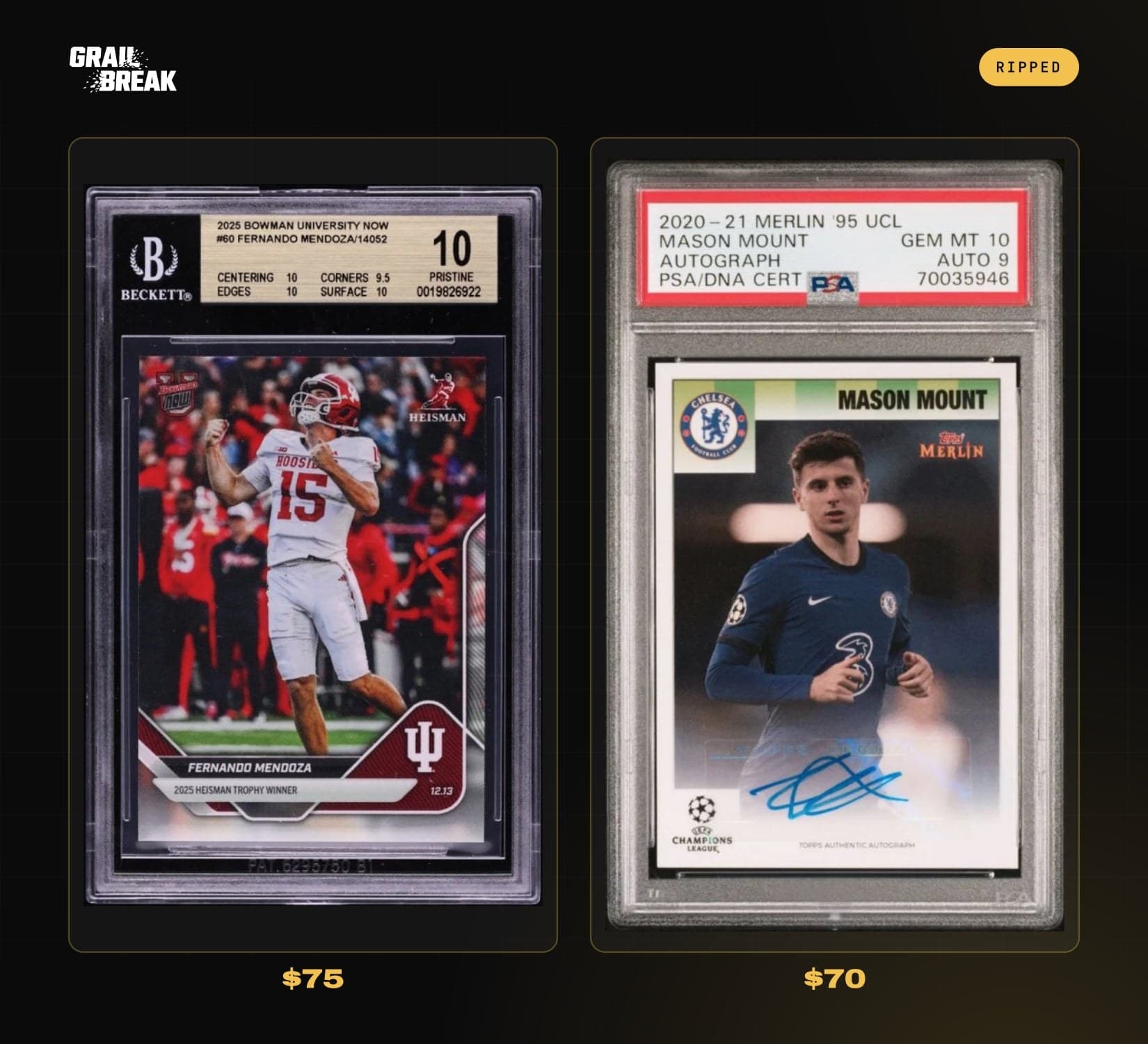
Monkey D. Luffy, PSA 10: $470, buyback $423
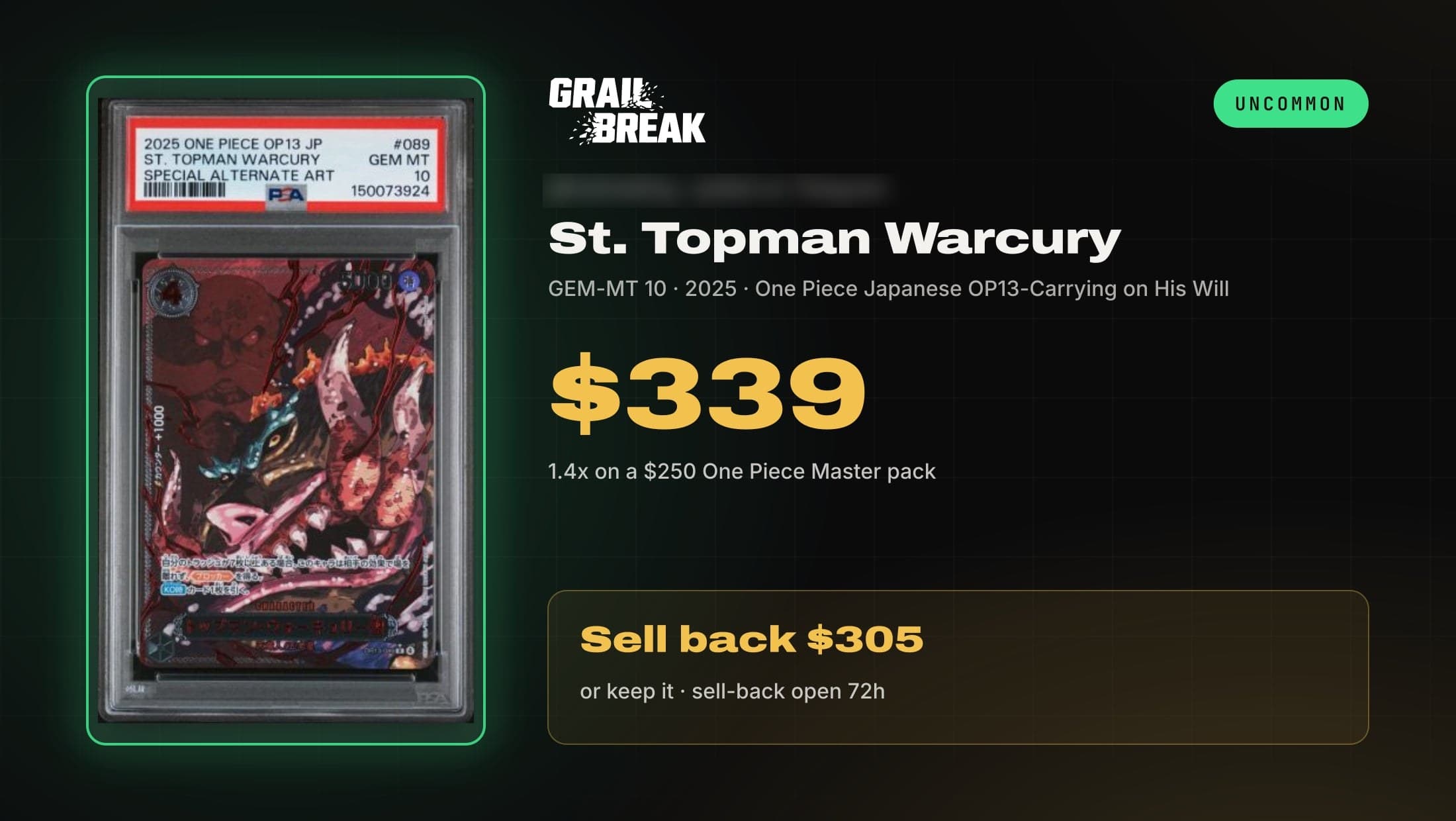
St. Topman Warcury, PSA 10: $339, buyback $305
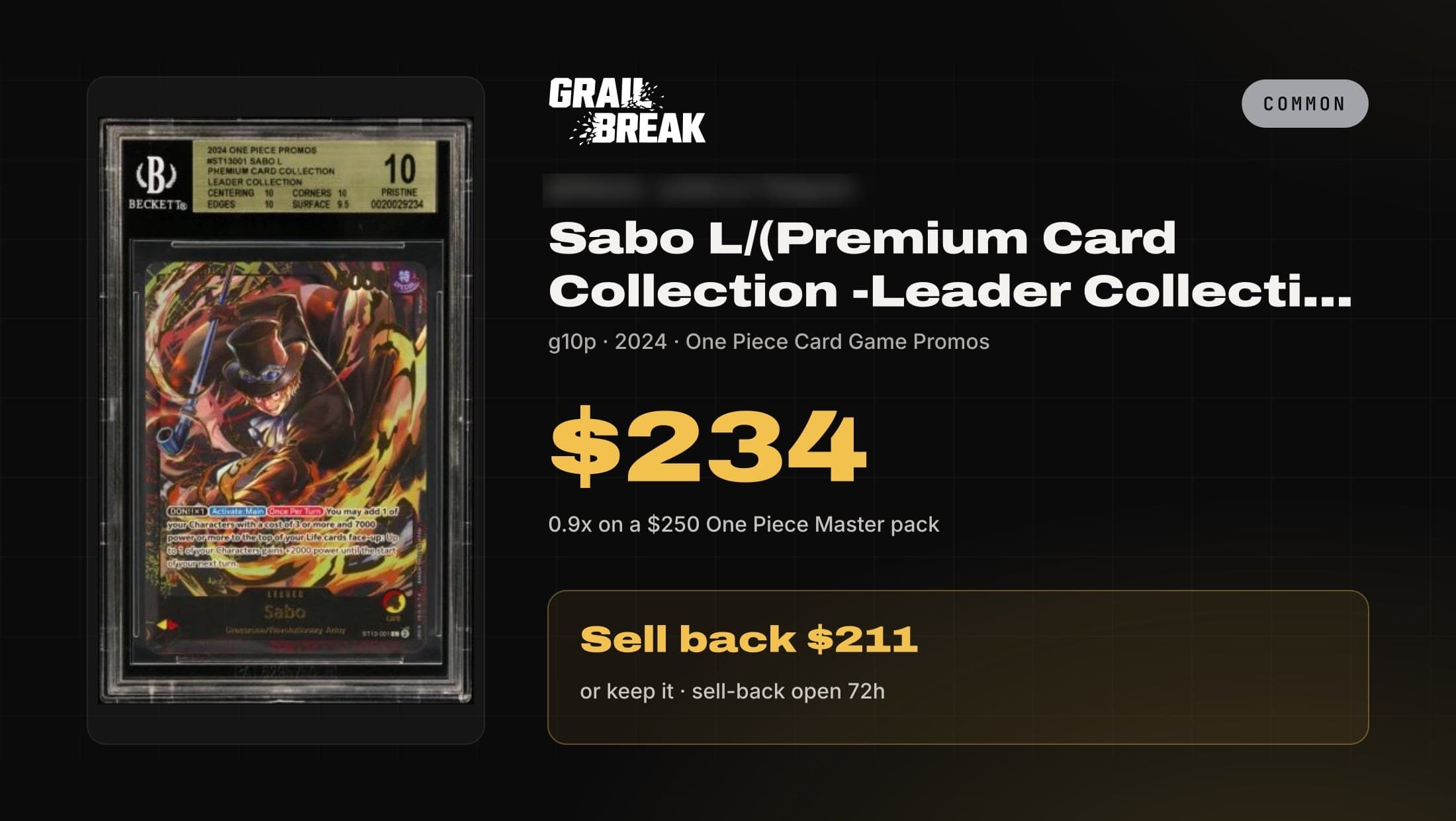
Sabo leader promo: $234, buyback $211
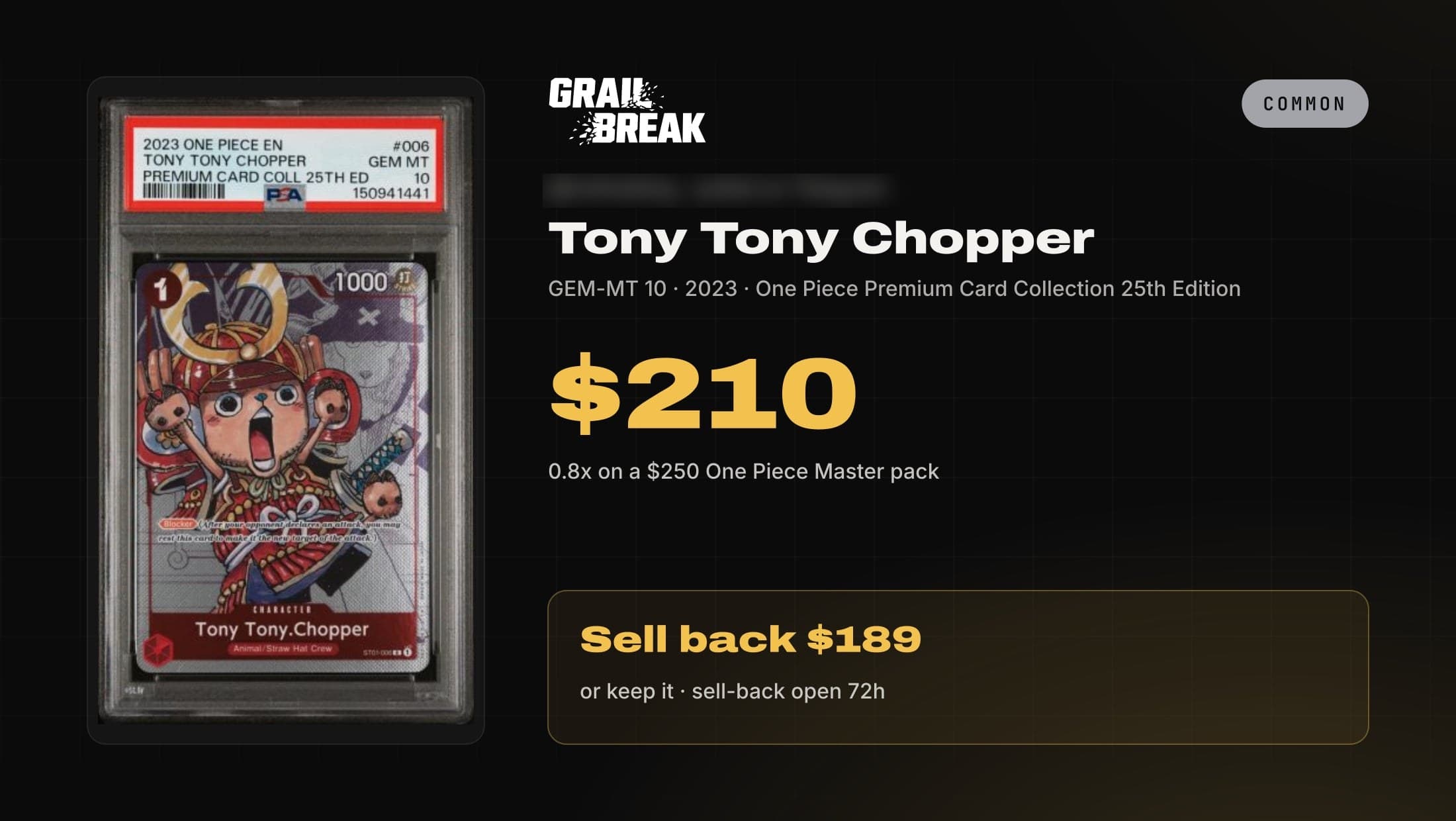
Tony Tony Chopper, PSA 10: $210, buyback $189
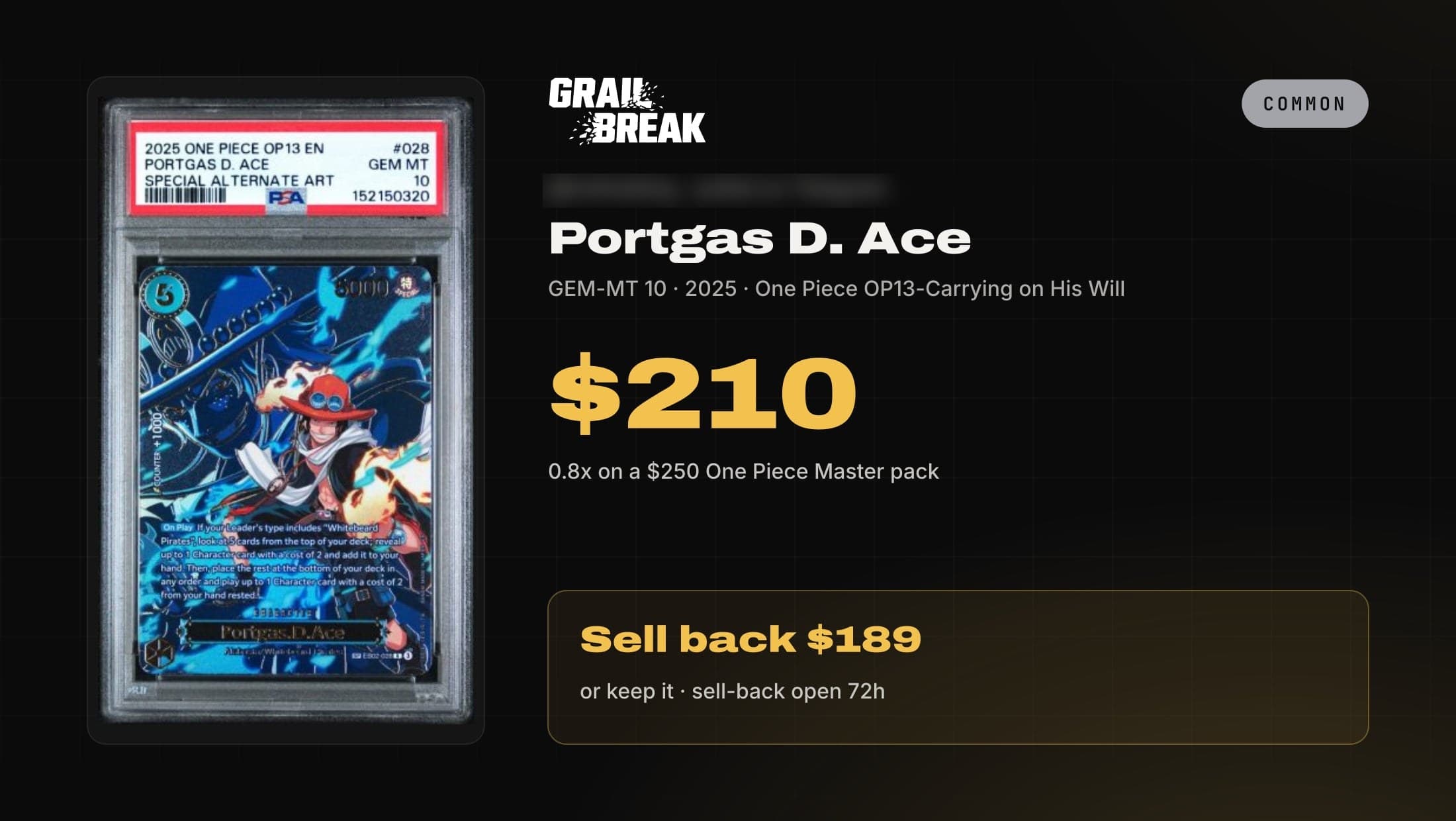
Portgas D. Ace, PSA 10: $210, buyback $189
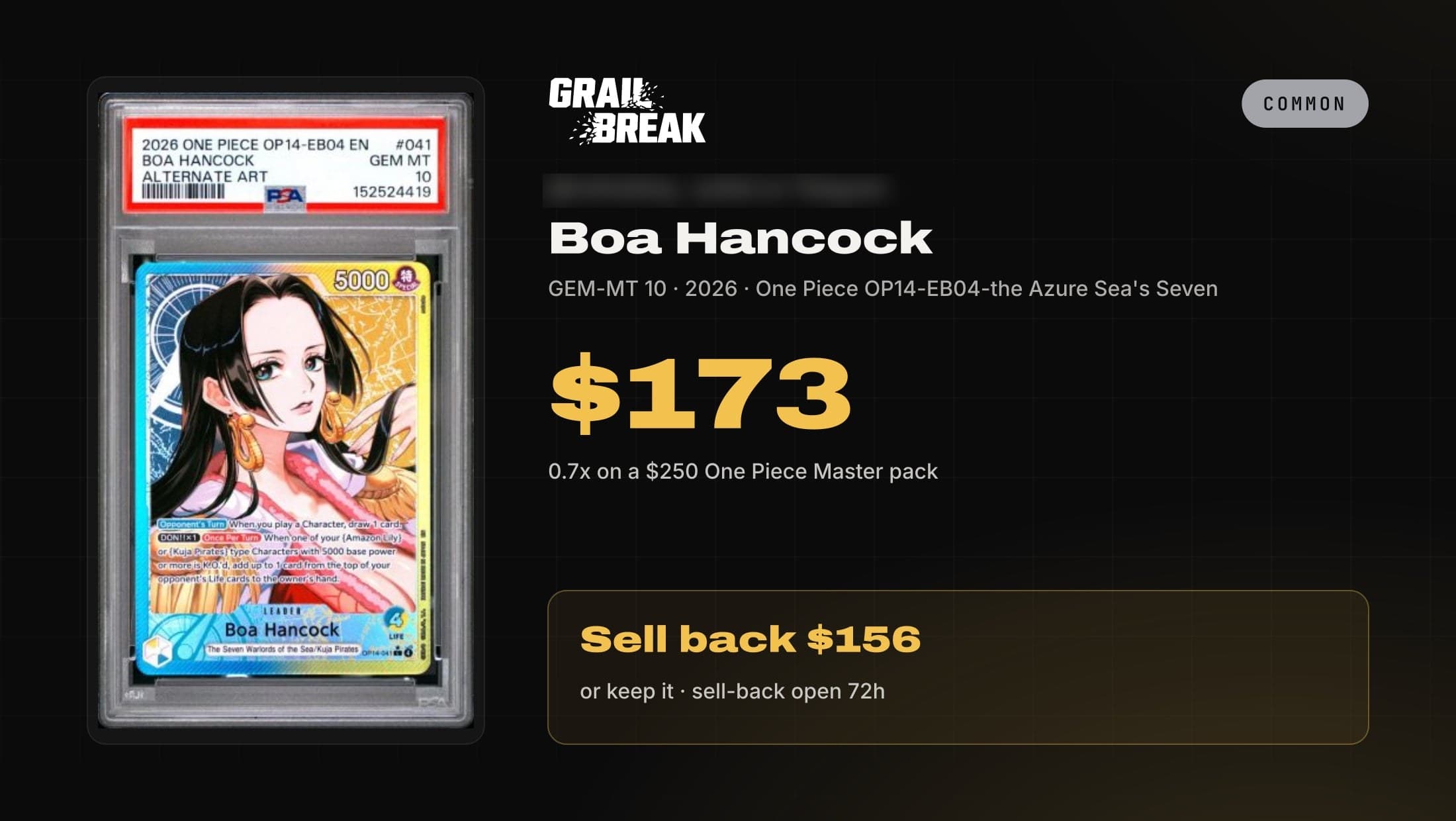
Boa Hancock, PSA 10: $173, buyback $156
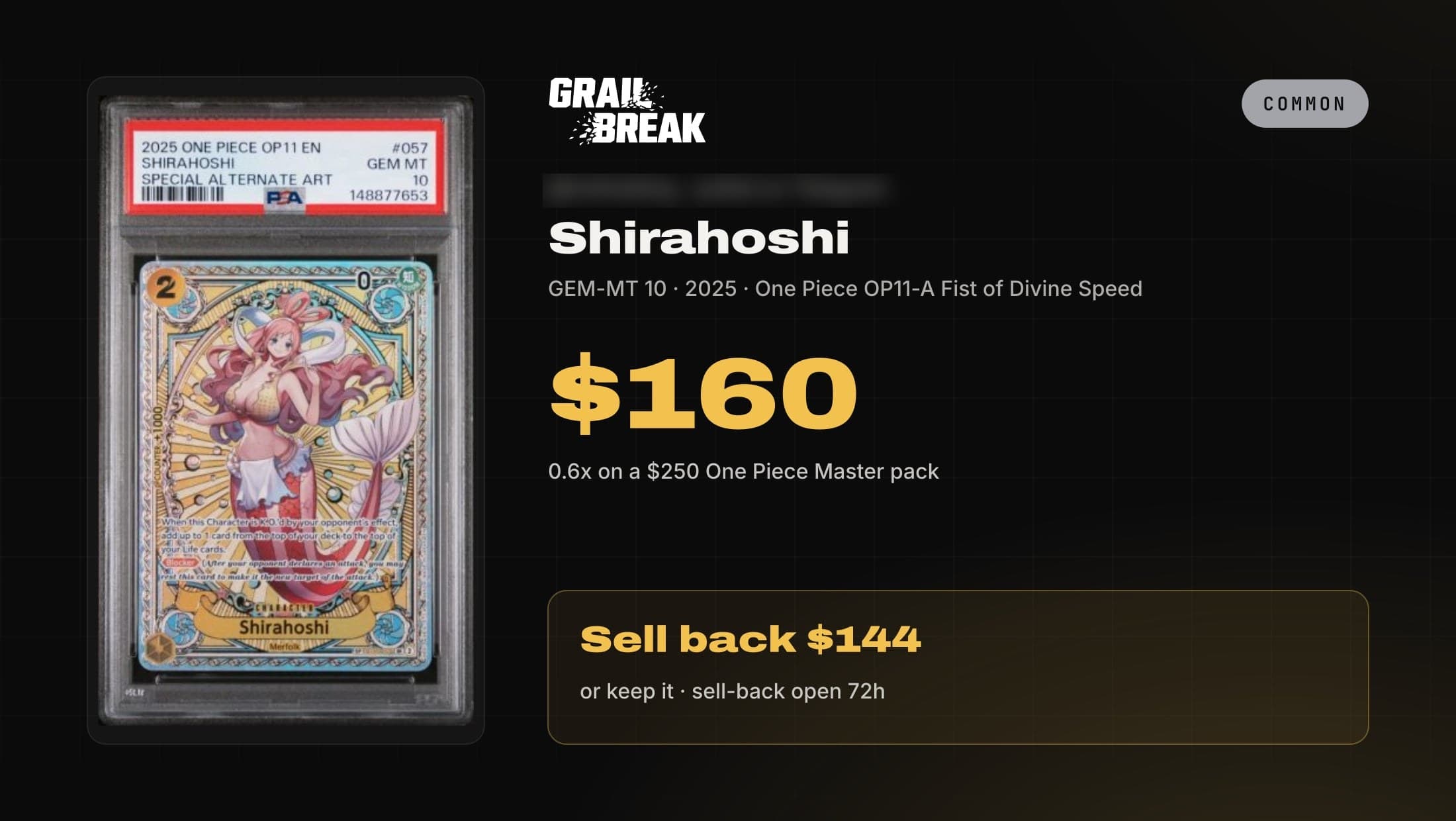
Shirahoshi, PSA 10: $160, buyback $144
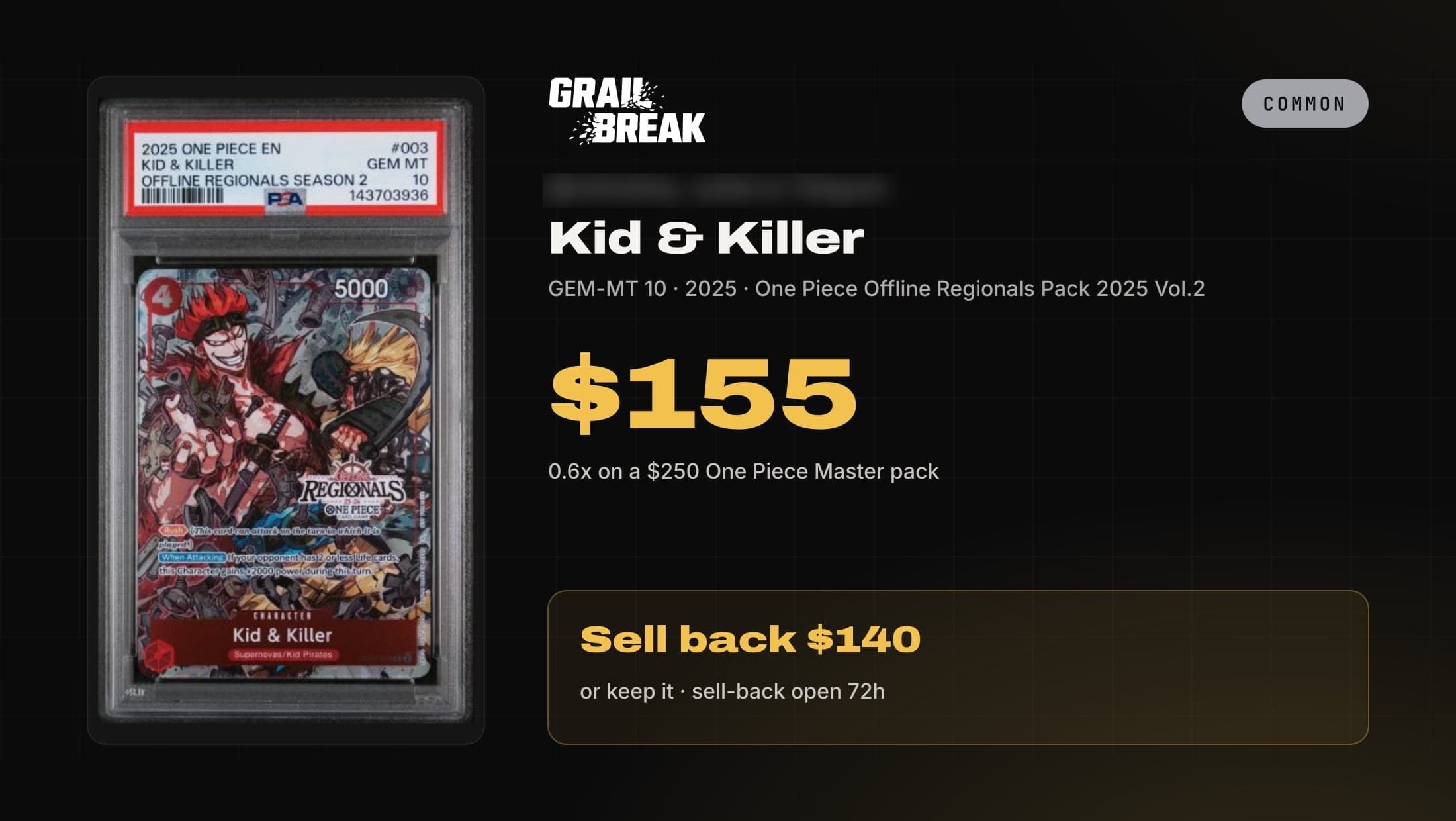
Kid and Killer, PSA 10: $155, buyback $140
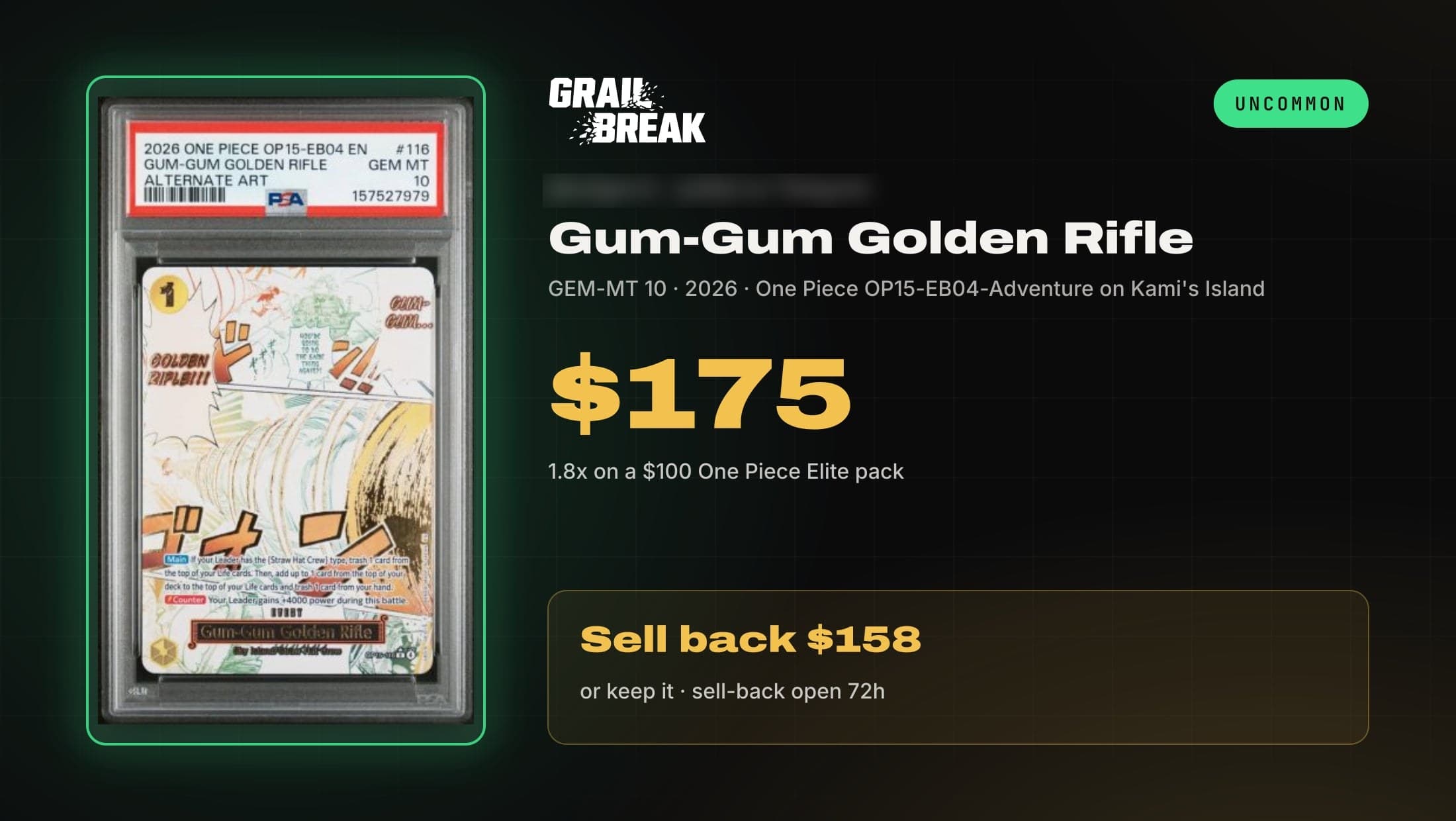
Gum-Gum Golden Rifle, PSA 10: $175, buyback $158
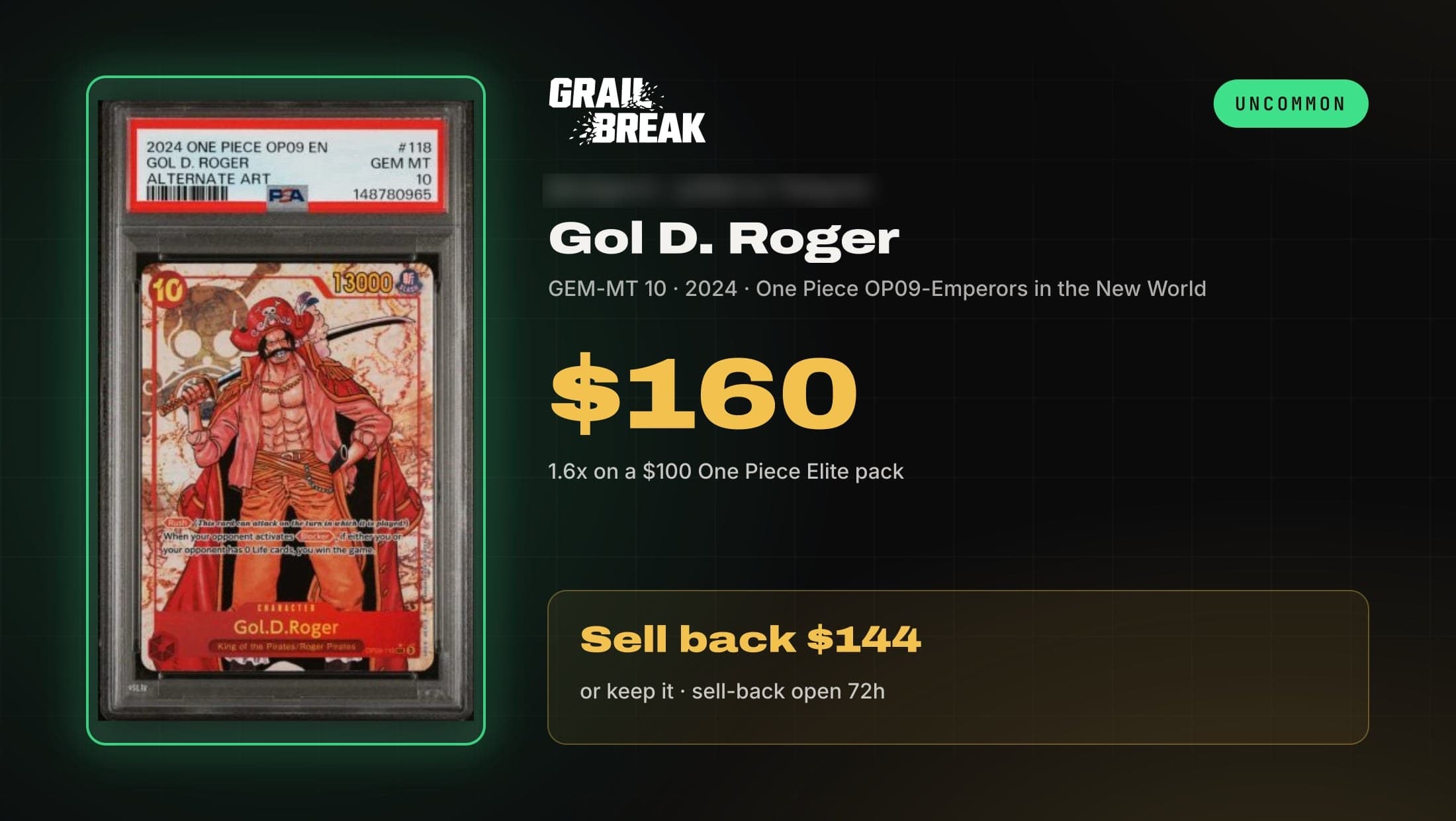
Gol D. Roger, PSA 10: $160, buyback $144
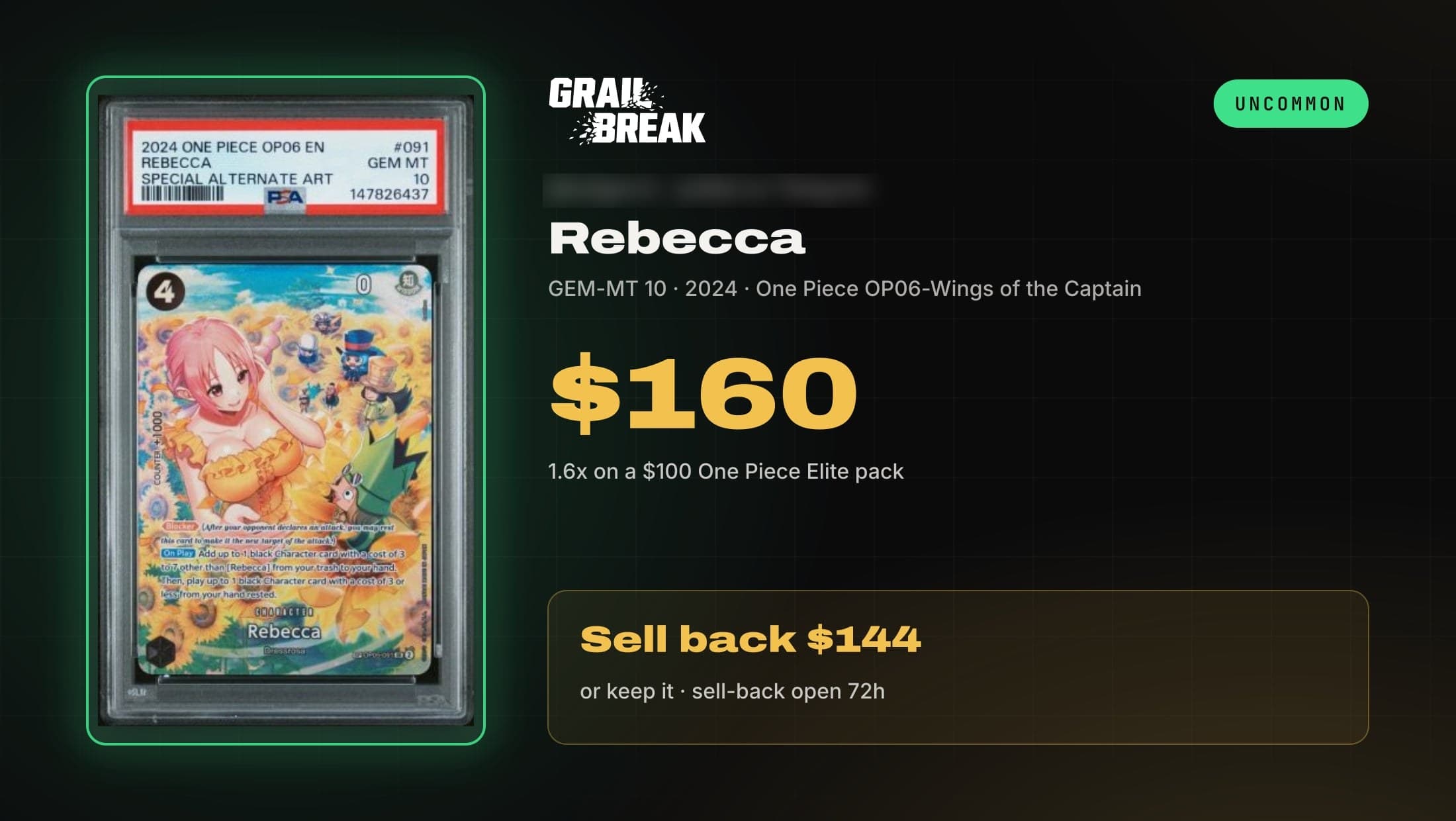
Rebecca, PSA 10: $160, buyback $144
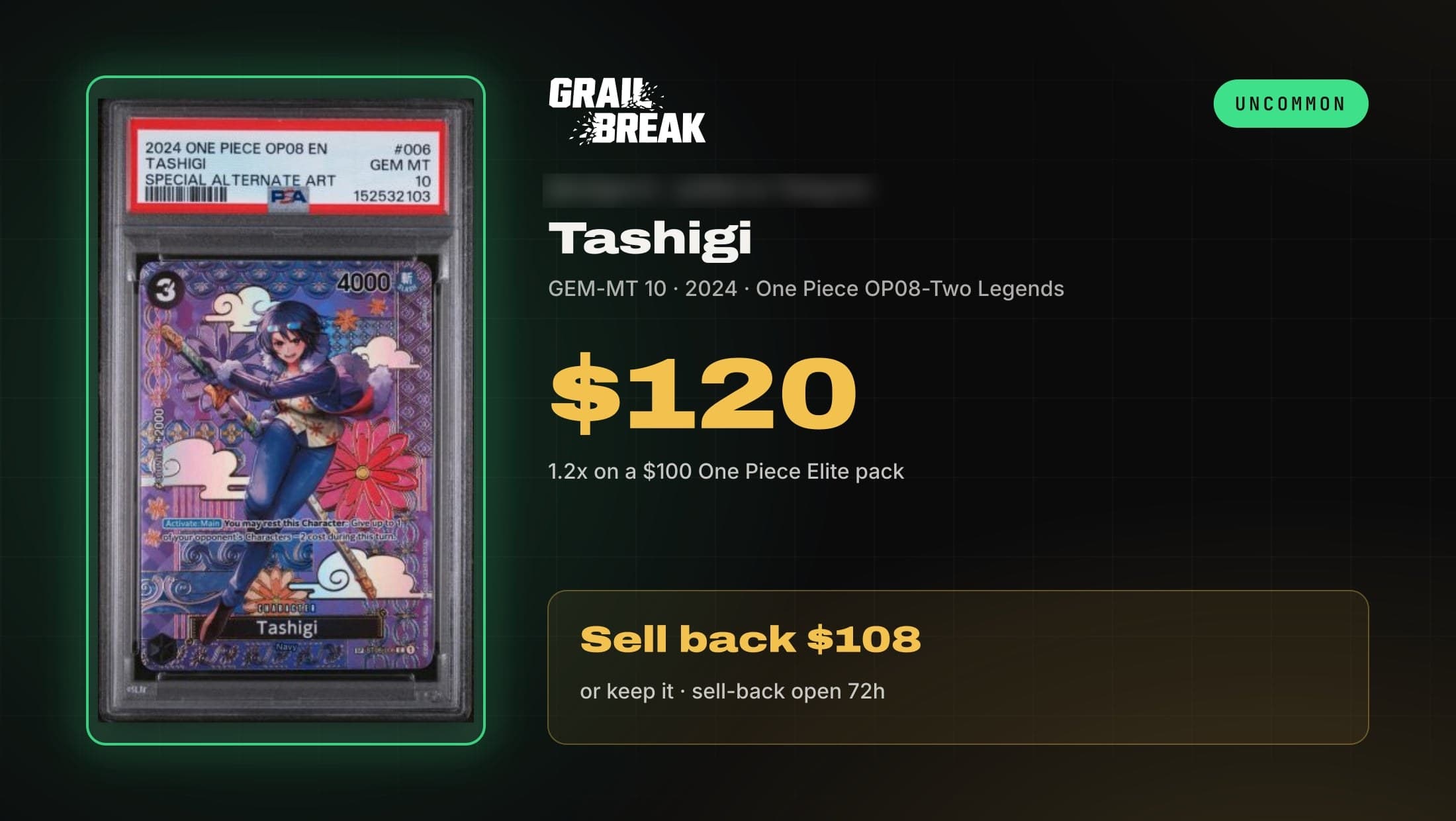
Tashigi, PSA 10: $120, buyback $108
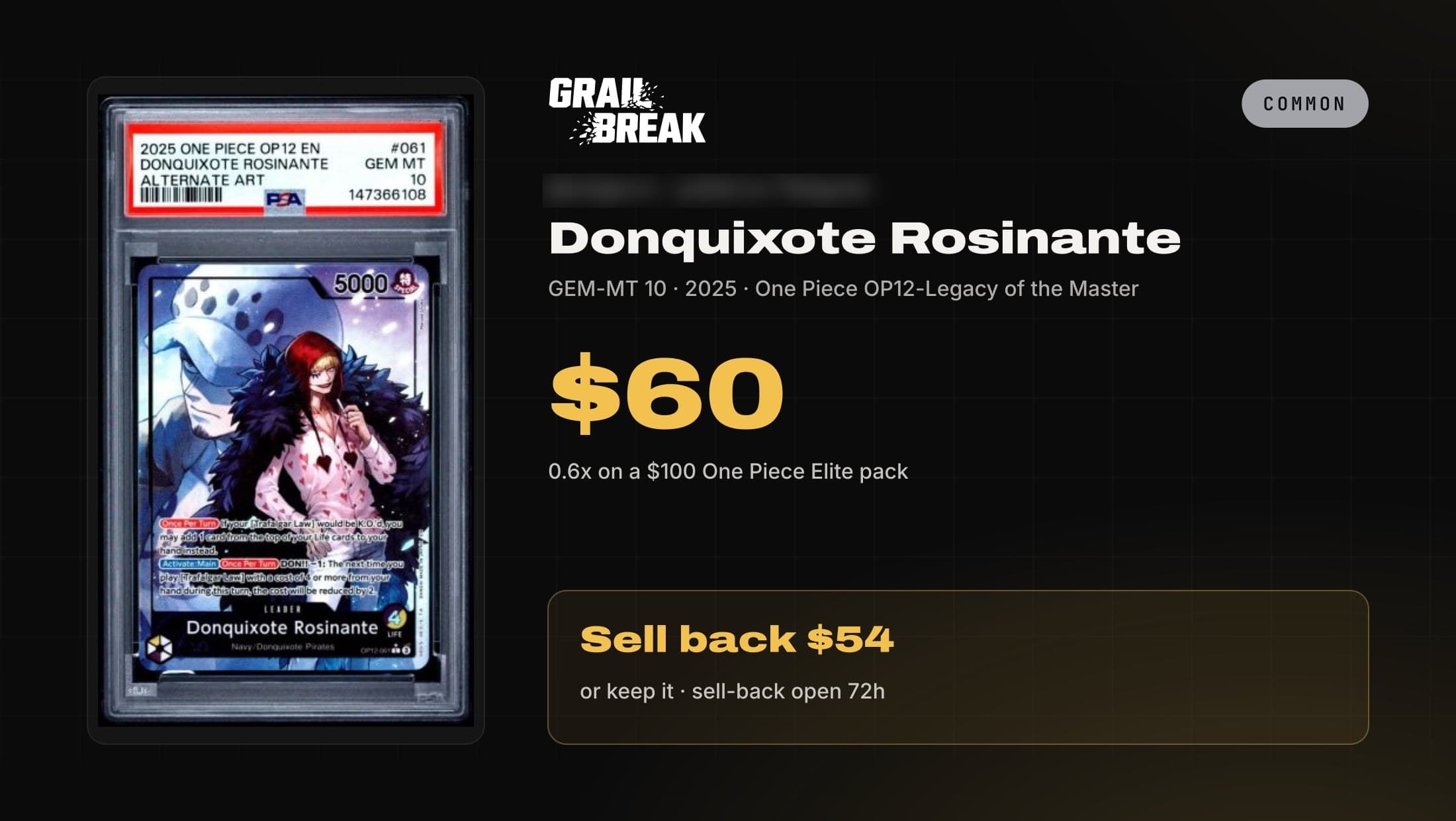
Donquixote Rosinante, PSA 10: $60, buyback $54
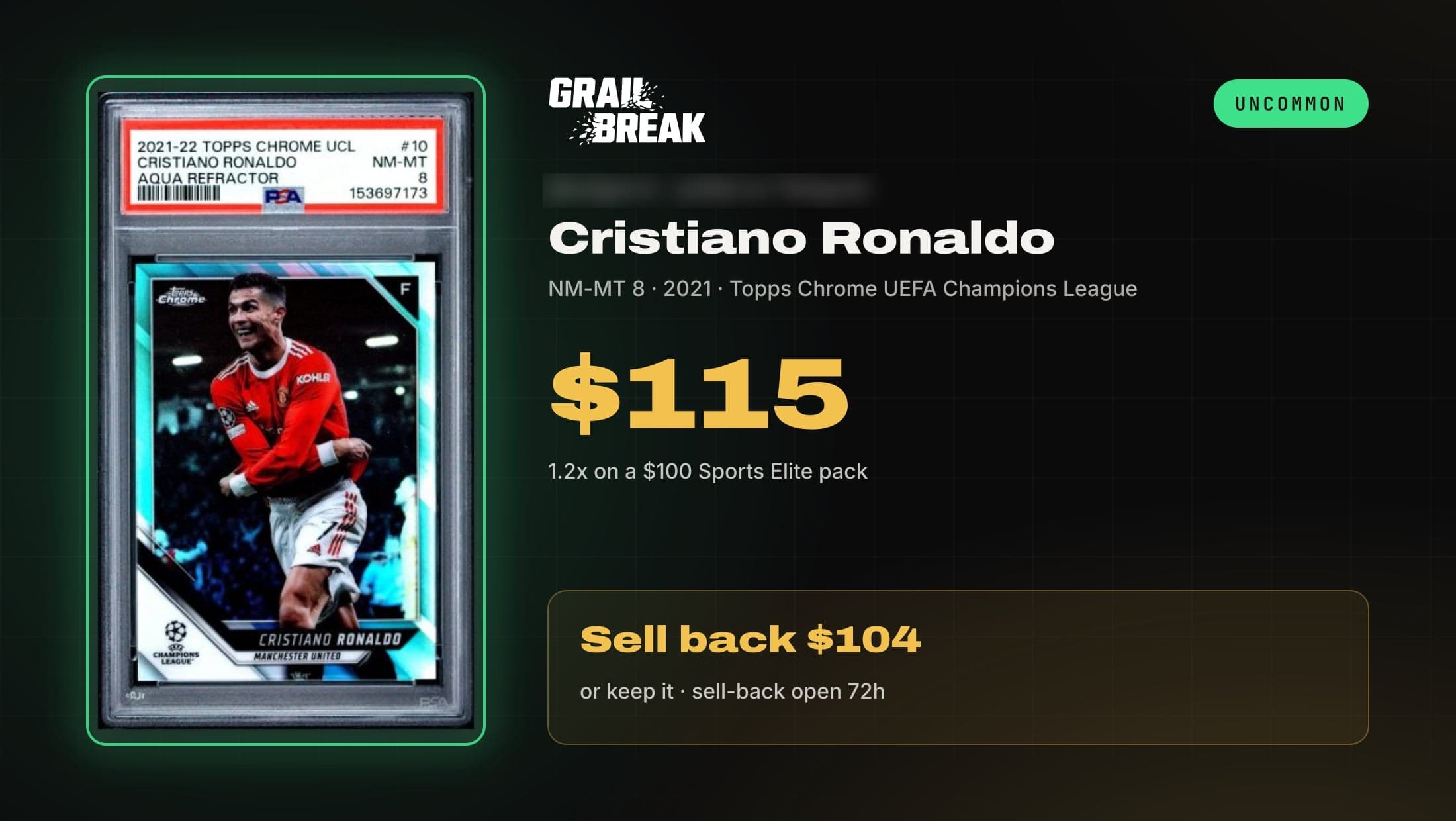
Cristiano Ronaldo, PSA 8: $115, buyback $104
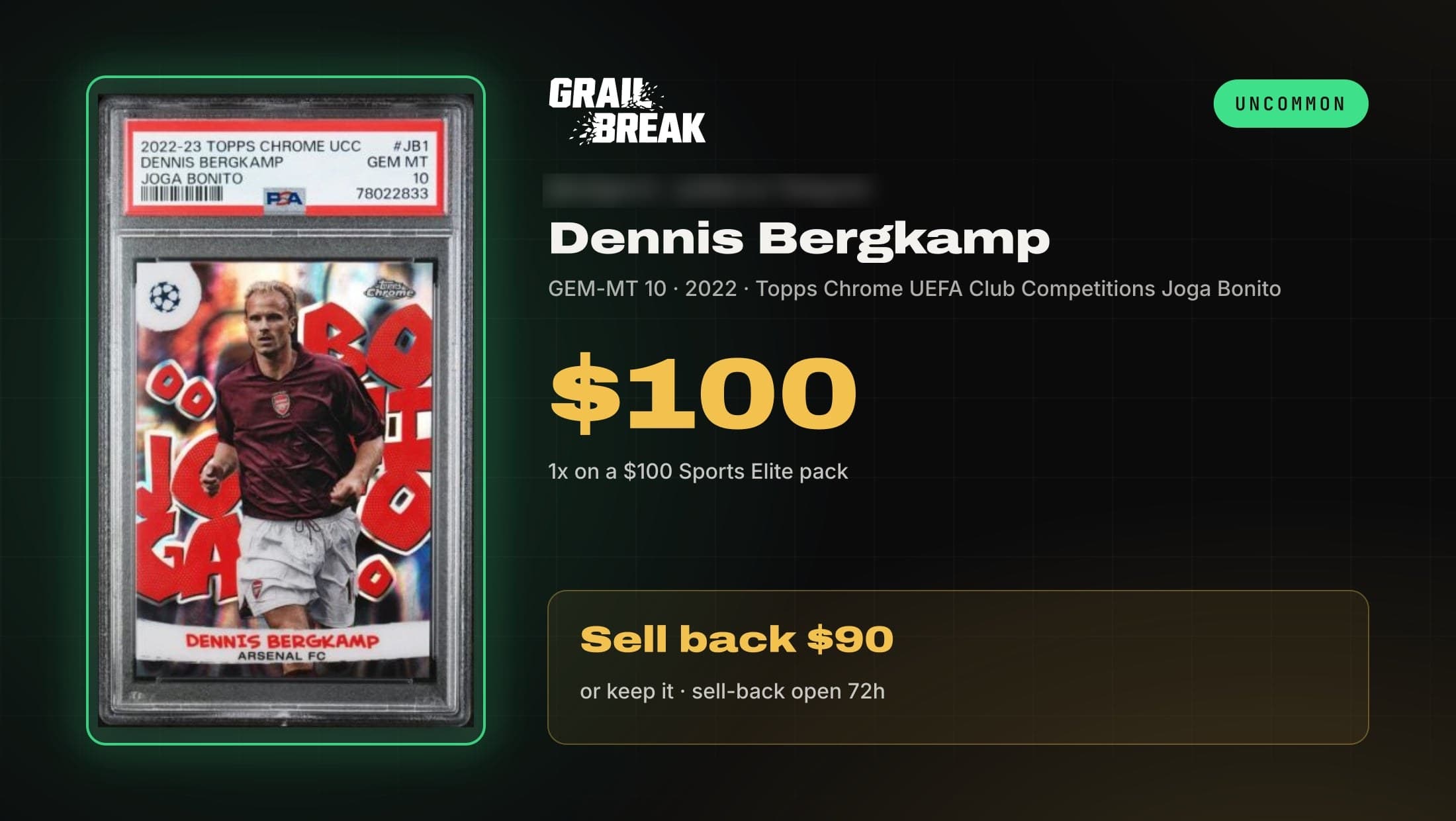
Dennis Bergkamp, PSA 10: $100, buyback $90
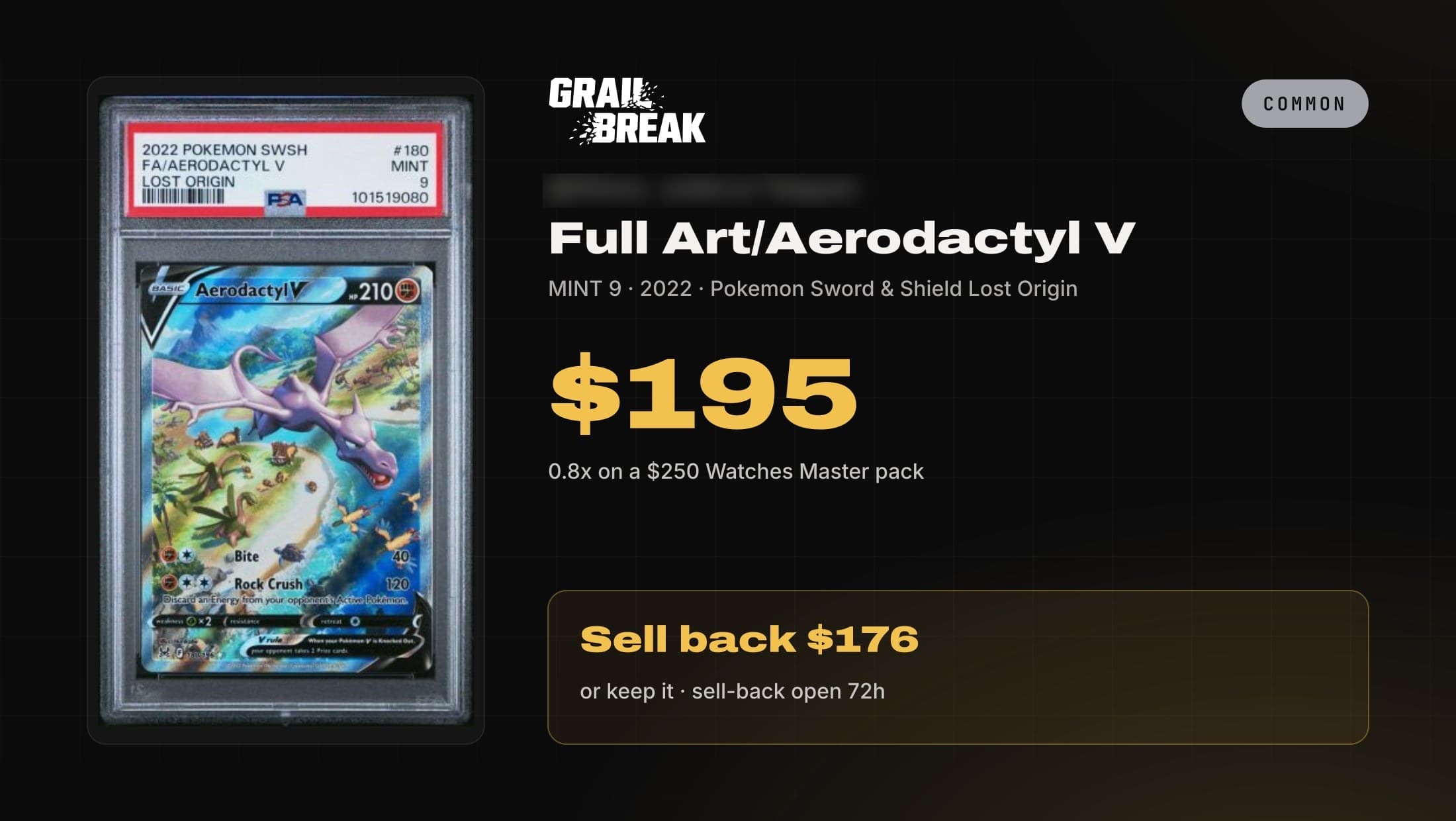
Aerodactyl V full art, PSA 9: $195, buyback $176
Grail Break lists the Flareon at $45,000. The card's last three PSA 10 sales at Alt, Fanatics Collect and eBay this past week ran $21,101 to $28,714. When I checked four of the biggest pulls against their last three sales, Grail Break listed every one above the middle sale.
How I'd play it
I'd treat a Grail Break pack like any other rip. Most of the time you pull less than you paid. The buyback helps because Collector Crypt pays 85% to 93% of the value Grail Break lists. If I pulled the Flareon, I'd take the buyback in a heartbeat. Even at 85%, it beats all three of the card's last PSA 10 sales. On a smaller hit, I'd check the last few sales first and keep the slab whenever the market beats Grail Break's number. For a shot at a grail without spending $1,000 on one pack, I'd grab a seat in a group break built around a Grail pack.