
Nobody Is Running Out of Charizards
The Pokemon card market is priced as if supply ended in 1999. It did not. We explore what's really keeping Pokemon prices so high.
Are you primarily buying a Charizard, or its grade?
A 1999 Base Set Charizard in a PSA 8 was valued at about $1,305 on PriceCharting in August 2026. The same card in a PSA 10 was valued at $20,061.1
The difference is not the character, the set, or the year. It is the grade.
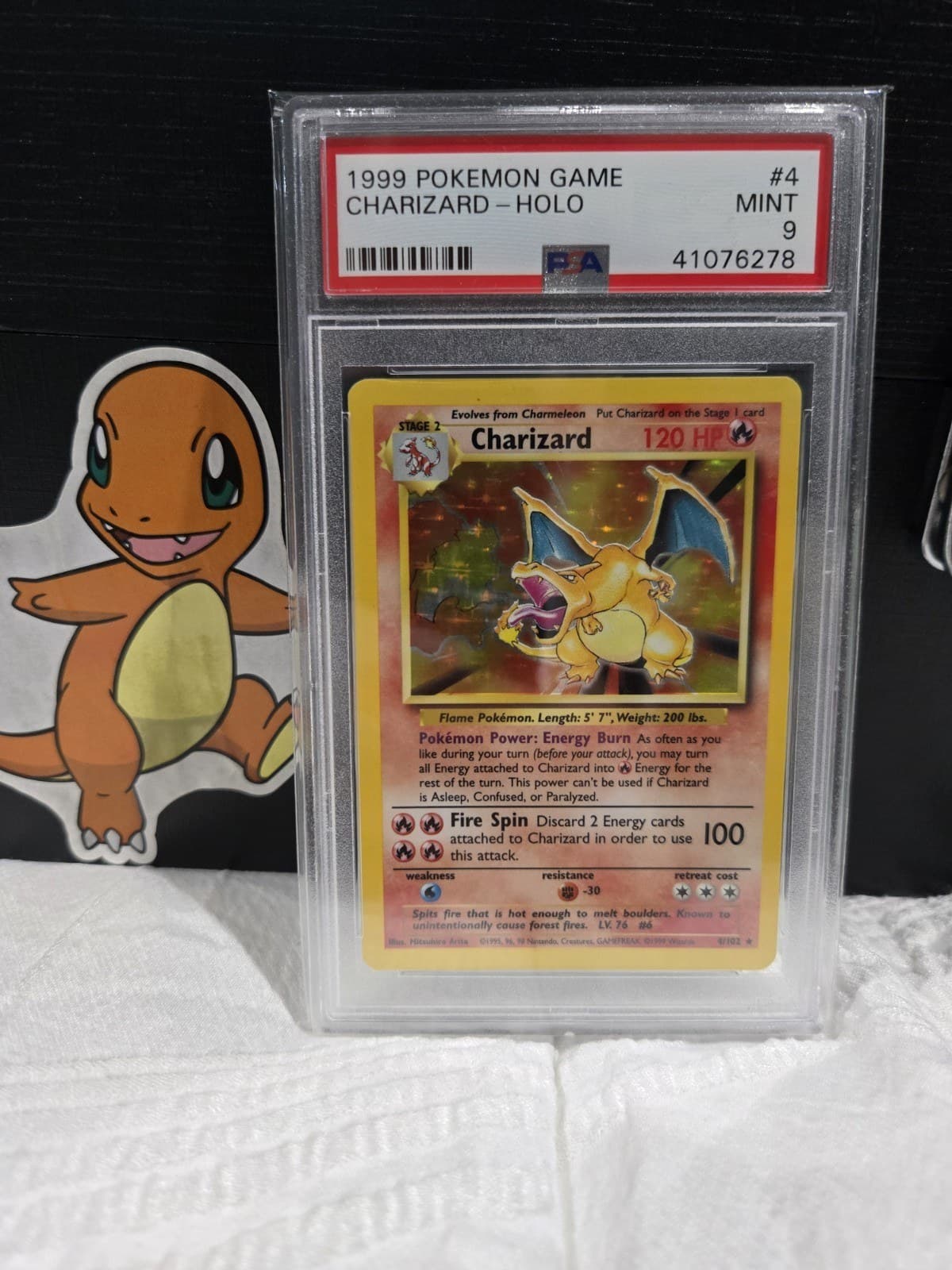
That is the strange thing about the modern card market. You may think you are buying a scarce Charizard, but much of what you are actually paying for is the scarcity of a particular grade.
And that scarcity works differently from the scarcity of the card itself.
A 1999 Charizard cannot be printed again. But a PSA 10 is not something that has existed since 1999. It is a designation awarded today by a private grading company to cards submitted for review. Every ungraded Charizard sitting in a collection is, at least theoretically, another potential PSA 10.
That distinction becomes more important as grading scales up. PSA graded about 2 million items in 20202 and 19.26 million in 20253, is spending $200 million to double its physical footprint4, and is now processing roughly 70,000 cards a day5. The pool of cards feeding that system is growing even faster. The Pokémon Company printed about 10 billion cards from March 2025 through March 2026.6 Roughly 60 percent of all Pokémon cards ever produced were printed in the last five years7, and the company has committed to increasing production when demand outstrips supply.
So when someone says Pokémon cards hold their value because they are scarce, the useful question is: scarce in what sense?
For older cards, the original print run may be fixed. For newer cards, even that assumption is increasingly difficult to make. But in both cases, the graded population can continue to grow as more cards are submitted.
The card may be scarce. The population report is not necessarily finished.
Nobody is running out of cardboard
The Pokemon Company publishes a cumulative production figure once a year.6
| FY ending 31 March | Cumulative | Printed that year |
|---|---|---|
| 2020 | 30.4B | |
| 2021 | 34.1B | +3.7B |
| 2022 | 43.2B | +9.1B |
| 2023 | 52.9B | +9.7B |
| 2024 | 64.8B | +11.9B |
| 2025 | 75B | +10.2B |
| 2026 | 85B | +10.0B |
Before 2019 the company printed something like 1.5 to 2 billion cards a year.8 It now prints five times that, and the last five fiscal years account for 59.9 percent of everything ever made.
A vintage holder will reasonably say the modern flood is irrelevant to them. Perhaps. The issuer's posture still matters, because it is the best available evidence of what the issuer does the next time one of its cards gets expensive. Here is that posture, on its own support site as of 26 May 2026:
"We are actively working to print more of the impacted Pokemon TCG products as quickly as possible and at maximum capacity … we will continue to reprint impacted products to replenish stock at participating retailers."9
That statement has been reissued in nearly identical language at least three times since January 2025, each time a set sold out. That is not a criticism. It is a toy company, and it would like more children to be able to buy toys. But anyone holding these as an investment holds an asset whose issuer has committed in writing, repeatedly, to making as many as it can. And they are living that vision.
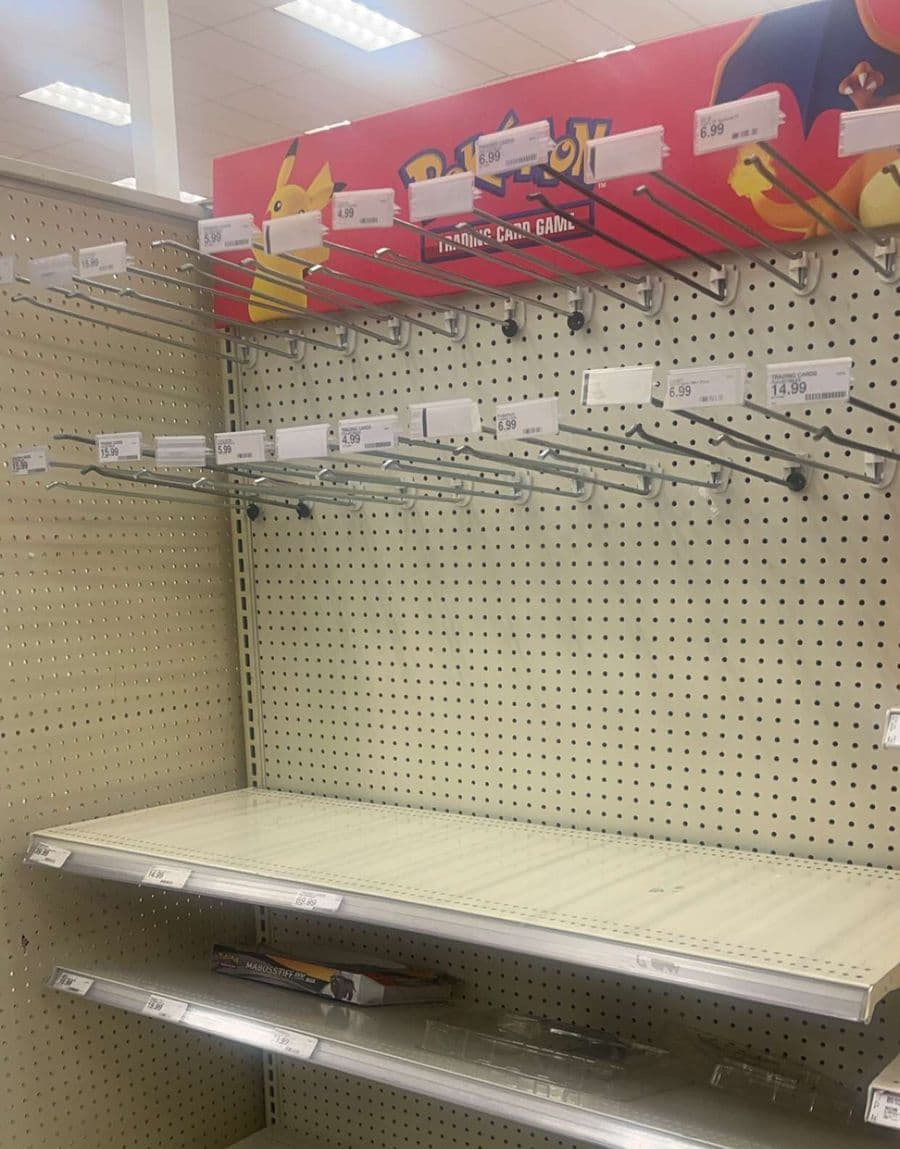
Pokemon Card 151 was treated as scarce and then reprinted or re-released at least four times in 18 months10; Prismatic Evolutions got a reprint announcement two days before launch11; the Van Gogh Museum Pikachu went from scarcity phenomenon to free-with-purchase at more than 1,000 Dutch retail locations12.
One constraint is genuine and physical: the company bought its own printer in 2022 and its new 1.27 million square foot campus does not reach full operation until late 2028.13 Until then, printing capacity limits how much new product reaches shelves.
The company that sets the number
PSA is owned by Collectors Holdings, which also owns two of its three largest competitors.14 A live antitrust complaint puts their combined share at roughly 80 percent of every card graded anywhere; Collectors calls the claim devoid of substance and the case is undecided.15 In 2025 the majors graded 26.6 million cards, an all-time record. 16.1 million were Pokemon, more than every sport combined.3
The acceleration matters more than the level. PSA graded 15.3 million items in 2024, 19.3 million in 2025, and is on pace for 25.7 million this year. Print runs do not change shape that fast. Throughput does. June 2026 was the biggest grading month ever recorded, and July beat it.16
On 2 June 2026 PSA closed all four of its cheap service tiers to new submissions, because the backlog was, in its own words, "rapidly approaching 10 million" cards.17
| Date | Backlog | Stated target |
|---|---|---|
| 28 May 2026 | ≈10.0M | 5.0M |
| 30 June 2026 | ≈12.0M | 5.0M |
| 14 July 2026 | 11.0M | 5.0M |
| 28 July 2026 | 12.4M | 5.0M |
| 11 August 2026 | 11.85M | 5.0M |
Two and a half months in, with two consecutive record output months behind it, the backlog is 19 percent larger than when the closure started.18 Beckett has suspended its two cheapest tiers as well.19 PSA's posted Regular estimate went from twenty-five business days in February to seventy or eighty in August 2026.2021 Price rationing failed, so PSA moved to quantity rationing, and that failed too.
This is a company that cannot slab cards fast enough. And it is building: $200 million, a doubled footprint, roughly 1,000 hires, a sixth grading hub opening in Frankfurt.2
One thing cuts the other way. Published population counts overstate distinct physical cards, because people crack slabs and resubmit; Collectors has launched a "Pop Report Hygiene" program specifically to address duplicates, which is an institutional admission that the numbers are inflated.22 Population data is still the best supply signal available. It is not a census.
There are two Pokemon markets and only one of them is scarce
The commonly quoted figures, that modern cards gem around 60 percent and vintage around 1023, hide the more important metric: Gem Mint yield per submission.24
| Card | Gem rate |
|---|---|
| Typhlosion, Neo Genesis (2000) | 0.11% |
| Vintage average, pre-2003 | 9.9% |
| English chase cards, 151 and Prismatic | ≈30% |
| Modern average, 2023 onward | 60.3% |
| McDonald's Pikachu, Japanese promo (2025) | 87.8% |
| Mega Starmie ex, Japanese (2025) | 94.83% |
A range of roughly 860 to 1. Computing an average across this distribution and calling it "the Pokemon gem rate" is a category error. These are Pokemon cards in the same sense that a Fabergé egg and a chicken egg are both eggs.
The distinction splits even the two Base Set Charizards. The 1st Edition has actual scarcity: in seven years its Gem Mint population went from 120 to 125.25 That scarcity is genuine, durable and physical, and nothing in this analysis threatens it. The Unlimited printing looks like the same card, but its graded population grew from 10,165 to 99,246 over the same seven years, and its Gem Mint count rose by 83 copies.
The modern side moves faster. The Prismatic Evolutions Umbreon ex added 33 percent to its Gem Mint population in under six months, on a set that had a limited print.26
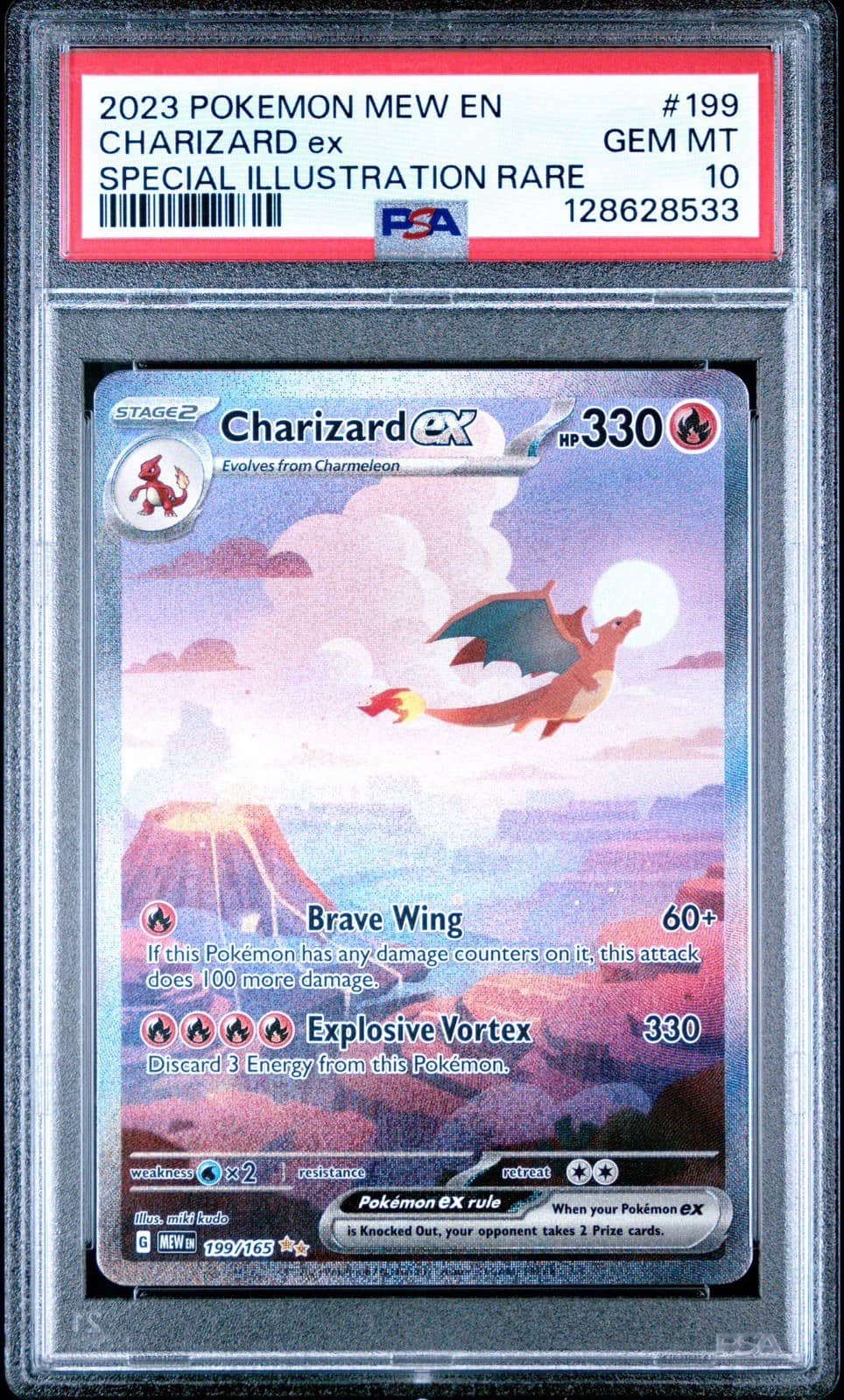
One wrinkle cuts against the lazy version of this argument. The English chase cards people actually speculate on are not easy grades: the 151 Charizard ex Special Illustration Rare gems at 29 percent.27 That does not save them. It means their supply expands through volume rather than yield: 90,000 submissions at 29 percent still produces 26,443 Gem Mint copies, 54 times the entire Gem Mint population of Base Set Charizard.28
Which raises the question the whole argument turns on: as the Gem Mint population grows, does the top-grade premium compress?
So far, the published evidence does not prove it.29
So we measured it
522 completed eBay auction sales of PSA-graded Pokemon cards, three cards at two grades, 15 weeks from 10 May to 24 August 2026.30 Every record is a dated, completed auction carrying a structured PSA grade. No fixed-price listings, no lots, no duplicates. This is a small number of cards over a short window. It is also more transaction-level evidence on the grade premium than has been published anywhere.
| Card | PSA 9 sales | Median | PSA 10 sales | Median | Multiple | 95% CI |
|---|---|---|---|---|---|---|
| Charizard ex SIR #199, 151 (2023) | 111 | $425 | 91 | $1,590 | 3.74× | 3.67–3.85 |
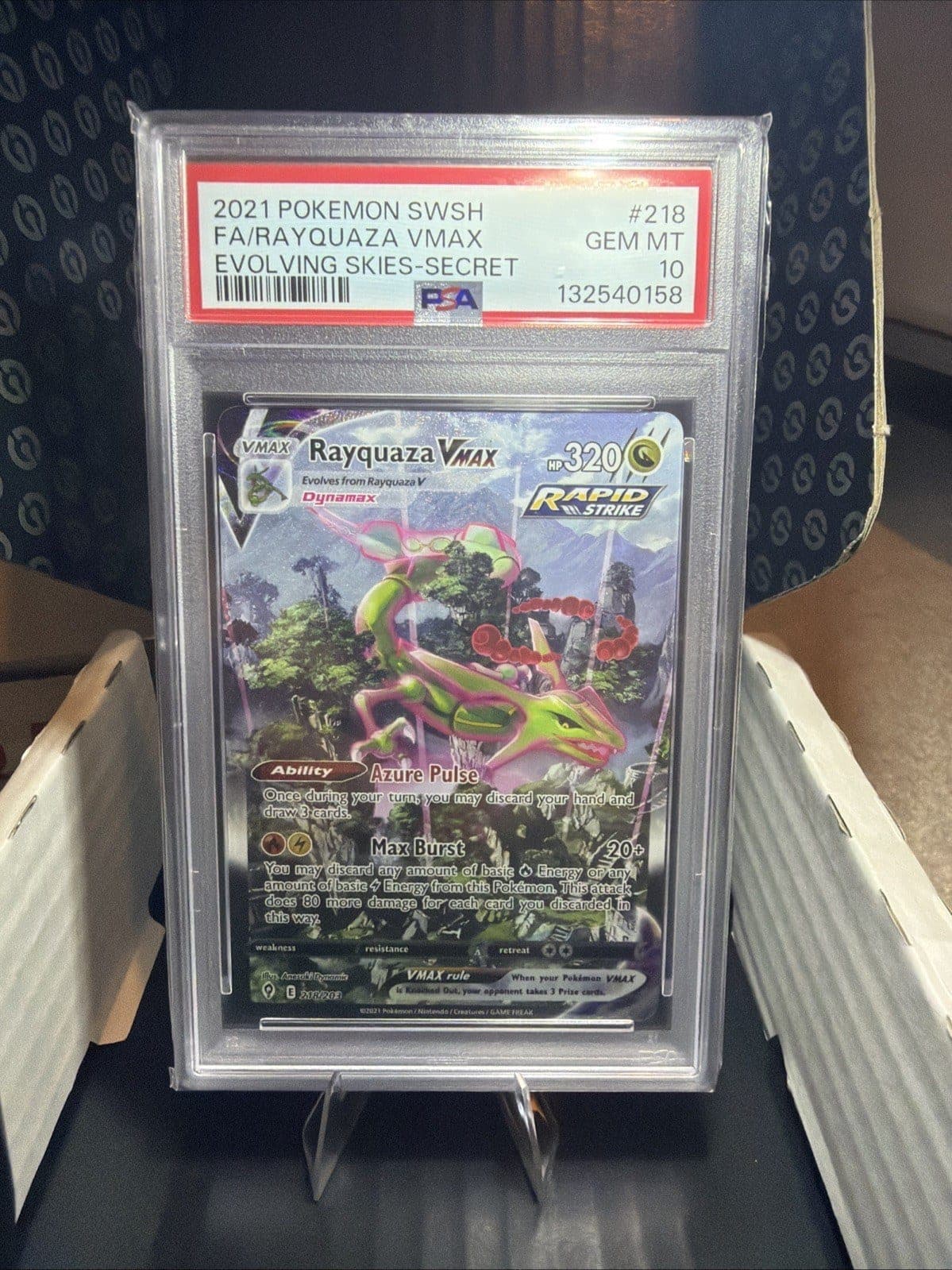
| Rayquaza VMAX #218, Evolving Skies (2021) | 34 | $1,204 | 114 | $2,800 | 2.33× | 2.29–2.45 |
| Umbreon VMAX #215, Evolving Skies (2021) | 32 | $2,078 | 140 | $4,301 | 2.07× | 2.01–2.13 |
The multiple tracks the gem rate, not the population
The expectation going in was that the premium falls as Gem Mint population rises. The data says otherwise. The 151 Charizard ex has the largest Gem Mint population of the three, 26,443, and the largest premium, 3.74×.31 Ranked by gem rate instead, the relationship is clean: 29 percent gems buys 3.74×, 68.8 percent buys 2.33×, 70.0 percent buys 2.07×. Extend the line backwards and the 1999 Charizard, which gems at 0.49 percent, carries 7.45×.1 That last figure is a price-guide ratio on a single certification, while the other three are medians of auction sales, so it is a reference point beside them.
What a PSA 10 buyer pays for is not that the card is rare. It is that the grade is difficult to obtain. The premium is the market price of a conditional probability, and difficulty is a property of the grading standard, which PSA controls directly, every day.
Prices fell across the window, in 5 of 6 series
| Card and grade | Sales | Per week | First 3 weeks | Last 3 weeks |
|---|---|---|---|---|
| Charizard ex #199, PSA 10 | 91 | −0.91% | $1,675 | $1,484 |
| Charizard ex #199, PSA 9 | 111 | −0.69% | $420 | $390 |
| Umbreon VMAX #215, PSA 10 | 140 | −0.37% | $4,400 | $4,150 |
| Umbreon VMAX #215, PSA 9 | 32 | −0.75% | $2,225 | $1,925 |
| Rayquaza VMAX #218, PSA 10 | 114 | −0.28% | $2,750 | $2,605 |
| Rayquaza VMAX #218, PSA 9 | 34 | +0.75% | $1,150 | $1,232 |
This end of the market is more liquid than the headline stories suggest
The Umbreon VMAX PSA 10 sold 140 times in 15 weeks to August 2026, and the middle 70 of those completed auctions landed within $250 on a $4,300 card.30 That is a genuinely liquid market. Compare the 1st Edition booster box at 6 sales a year, or the Pikachu Illustrator, of which exactly one PSA 10 exists32 and which sold for $16,492,000 in February 2026, the most anyone has paid for a trading card.33 The modern high-population cards have excellent prices and questionable economics. The vintage top-grade cards have terrible prices and real scarcity. They are not the same asset.
What this does not show
Three cards is three cards and 15 weeks is 15 weeks. The window is too short to test whether an individual card's multiple compresses as its own population grows. The causal version requires dated population snapshots against price history, card by card, over two years or more. That work has not been published by anyone.
The monopoly has substitutes now
For most of its life Pokemon had no serious competitor for the thing it actually sells, which is not gameplay but the feeling of opening a pack.
That is over.
On TCGplayer's Q1 2026 seller ranking Pokemon sits second behind Magic: The Gathering,34 which did $1.72 billion in 2025 and then posted its first half-billion-dollar quarter.35 One Piece has outsold Yu-Gi-Oh! for two straight quarters.36 Riftbound launched on 31 October 2025 and debuted at number five.37
Lorcana is the cautionary tale, because the manufacturer said sales fell 5.9 percent in 2025 and the company explained that buyers "with a primary interest in investment" had left.38 Hype, investment money, normalization, investment money leaves. This is not a prediction that Pokemon follows Lorcana. The point is narrower: the wallet share Pokemon captured in 2024 and 2025 now has four or five plausible places to go, which was not true in 2021.
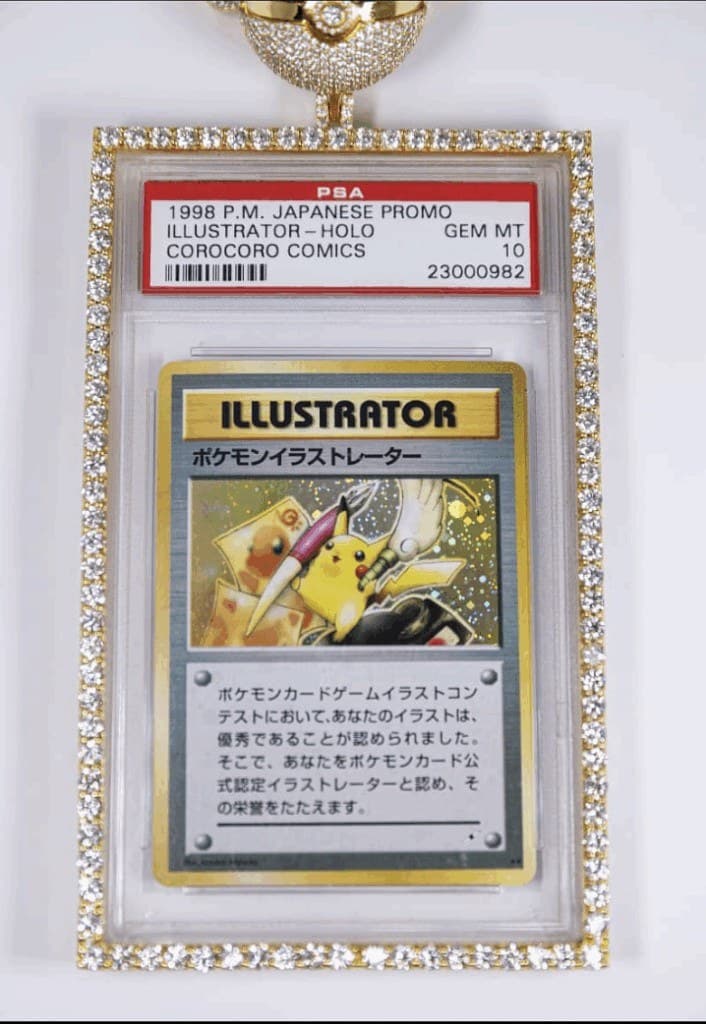
A price for a top-tier Pokemon asset is typically derived from fewer than 10 transactions a year, on a population of a few dozen, reported by venues that are commercially entangled with the companies publishing the price.32 That entanglement deserves spelling out:
| Parent | Grading | Marketplace / auction | Price data |
|---|---|---|---|
| Collectors Holdings | PSA, SGC, Beckett | The eBay Vault | Card Ladder, PSA Auction Prices Realized |
| eBay | eBay, Goldin, TCGplayer | ||
| Fanatics | PWCC, Fanatics Collect | ||
| Blackstone | CGC |
Read the first row twice. The company that assigns the grade also owns two of its three largest competitors, the auction price database, and the index everybody quotes, and as of this year Card Ladder indices appear directly on eBay listing pages.39 A congressman has asked the FTC to investigate.40 a private antitrust action seeks divestment of SGC and Beckett; Collectors has moved to dismiss.15
Then there is what it costs to trade. Heritage charges buyers 25 percent of hammer41; Goldin charged 24 on the Illustrator.42 On those, August 2026 rates a buyer at a $100,000 hammer pays $125,000, and after a 5 percent consignor commission43 the card has to hammer at $131,579 next time, 31.6 percent above where it last sold, before that buyer breaks even. eBay runs about 13.6 percent on the sell side.44 None of that includes grading fees, shipping, insurance, or the months the capital sits in a queue.
The tape itself has been disputed: eBay removed more than 71,000 PWCC listings in 2021 over shill bidding,45 and Alt later sued PWCC over bid handling;46 PWCC denied wrongdoing in both matters and neither produced an adverse finding. The relevance is not the merits. It is that the price history everyone extrapolates from includes those years.
September 16
The Pokemon Company reprints Base Set Charizard again on September 16th, inside the 30th Celebration set,47 as card two of a thirty-card Classic Collection.48 This is the second time in five years.49
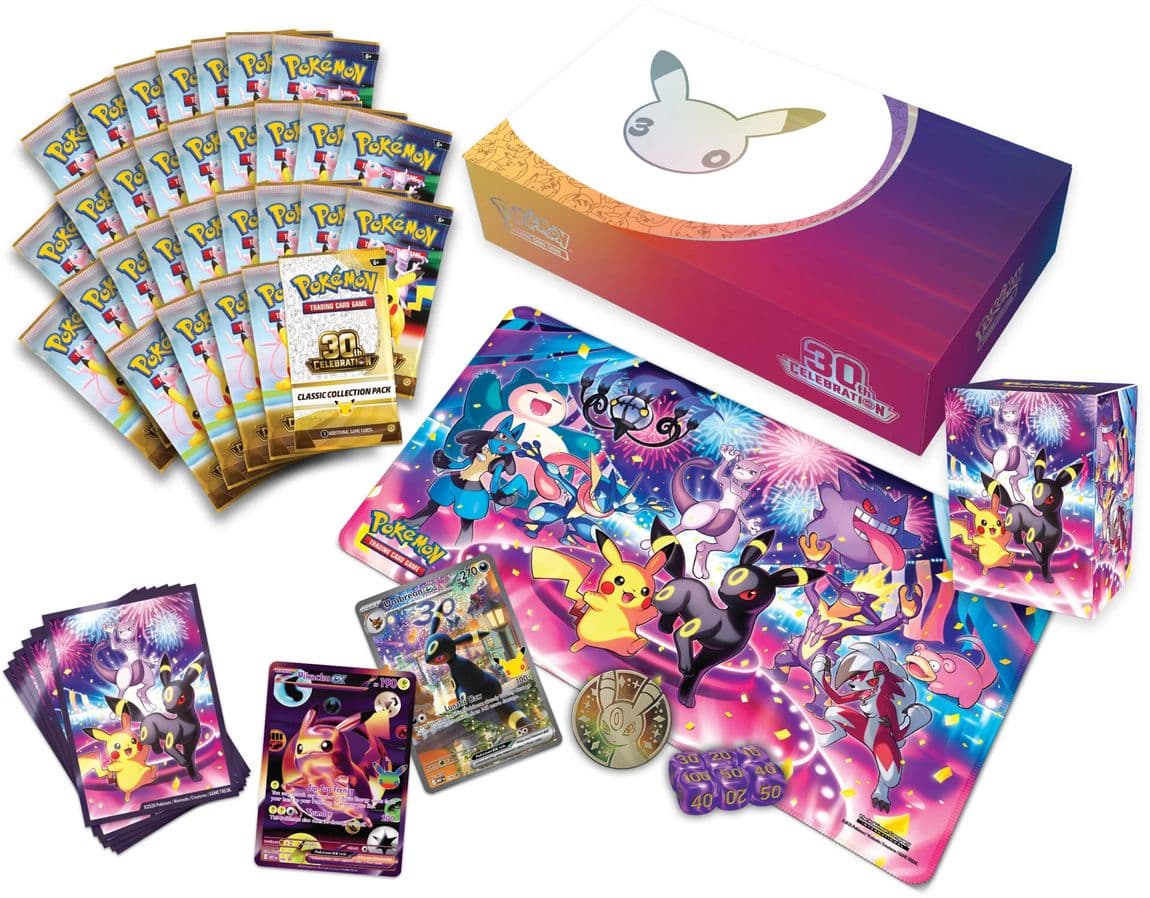
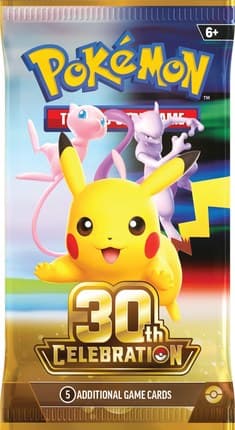
The mechanics run in the direction of less bad than it sounds: the reprints carry a "30" Pikachu stamp and a distinct holofoil treatment, and they are not tournament legal.50 Nobody will confuse a stamped 2026 reprint for a 1999 holo. It matters anyway, because the 1st Edition Charizard is worth what it is worth partly through condition scarcity and partly through iconic status. Condition scarcity is untouchable. Iconic status is not, and every reprint makes the image slightly more available, slightly less singular, and slightly more like a logo than a relic. The effect is small per event. But It compounds.
The more consequential autumn move is almost undiscussed. At Nintendo's shareholder meeting in June, president Shuntaro Furukawa said The Pokemon Company would introduce made-to-order sales, buyer identity verification, and stricter retailer agreements, beginning August 2026 and centered on the anniversary release.51 Made to order means supply expands to meet demand by construction. Identity verification narrows the pool toward end consumers. Every one of those measures is designed to take the speculator out of the pipeline, and the issuer is now openly trying to suppress the bid that has been setting the price.
The ways this gets worse faster
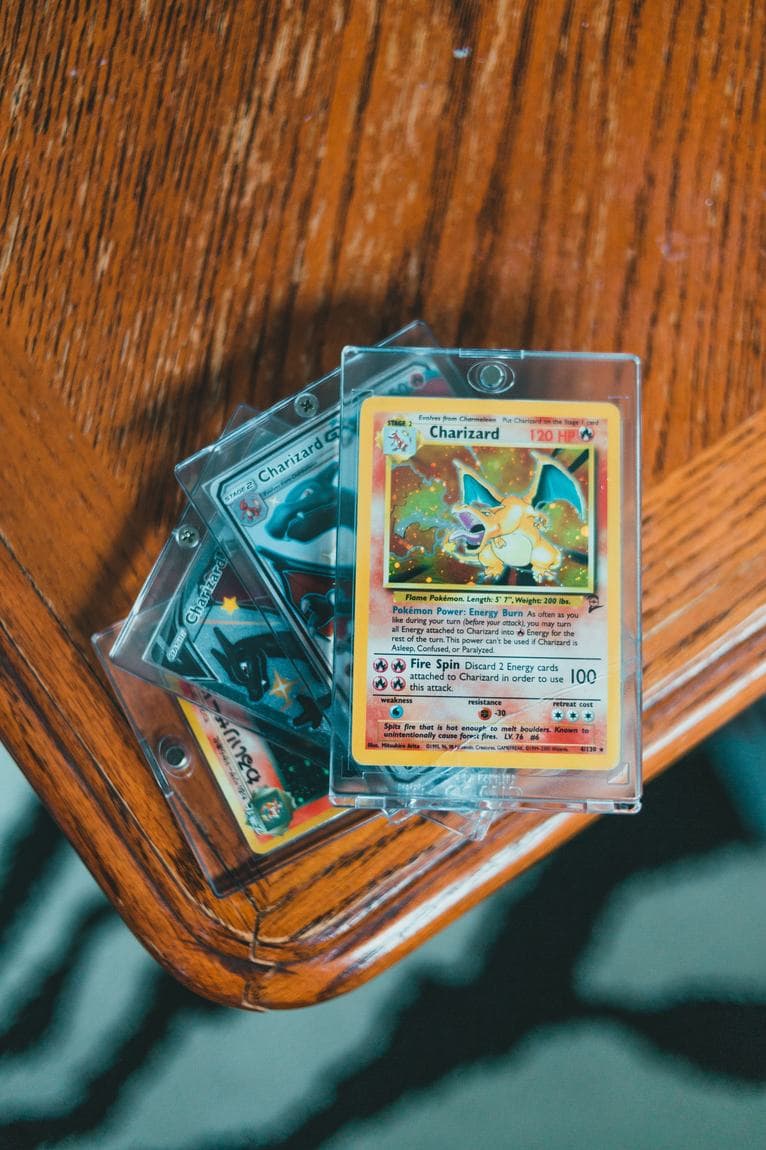
The counterfeits are winning on volume. PSA's 2025 fraud report found counterfeit Pokemon submissions up over 125 percent year over year,52 and every one of the ten most-altered cards it saw was a Pokemon card.53 The president of PSA: "There are things you can only detect physically, the feel of the cards or the smell."54 The last line of defense is a human touching cardboard, at a company processing 70,000 cards a day.
The slab is the attack surface. In January 2026 Anthony Curcio was convicted in a scheme exceeding two million dollars, built not on counterfeit cards but on genuine PSA labels reprinted with fabricated grades and certification numbers.55 PSA's own buyer's guide concedes its holders are tamper-evident rather than tamper-proof. Verifying a certification number confirms the number exists. It does not confirm the slab in hand is the slab it was issued to.
Japan is looking at regulating this. A caucus within Japan's ruling party began examining trading card regulation in July, citing counterfeiting, scalping, organized theft and money laundering, in a domestic market that grew 90 percent in four years.56 "Portable, high value, difficult to authenticate, traded internationally between anonymous parties" is a description that attracts a specific kind of regulatory attention, and it is now attracting it in the market's home country.
Where the bear case breaks
- The multiple stops tracking the gem rate. Extend the cross-section to the 20 most-graded modern cards and find the relationship breaks, or track individual cards for two years and find multiples flat while populations grow, and the mechanism here is wrong.
- PSA's expansion does not reach the cards that matter. If output doubles and the top 20 English chase-card populations barely move, then increasing supply does not apply downward pressure on price.
- The issuer changes posture. A public commitment to limited print runs would weaken the whole supply argument. It is the least likely of the four and would matter most.
Two objections do not falsify it. The 1st Edition population has barely moved, correct, and stated above: that card is genuinely scarce. And prices at all-time highs at the very top is what the top of a supply expansion looks like from the inside; the 2001 version of this market saw Hasbro's Pokemon revenue fall by $469 million in a single year.57
What to do about it
Ordered by how strongly the evidence supports it.
- Stop treating "Pokemon cards" as one asset class. There are at least four: pre-2003 top grade, pre-2003 mid grade, modern English chase, modern mass promos. The gem-yield range across them is 8.9 to 1, from 9.9 percent for pre-2003 cards to 87.8 percent for mass promos. A blended Pokemon return is the average of a rock and a balloon.
- Read the population and its date before buying anything graded, then find what it was two years ago. Both numbers are free. With only one of them, the purchase is a guess rather than a position.
- Compute the round trip before the upside. Roughly 30 percent at auction, 13 to 14 on eBay., 20% at card shows. A thesis that does not survive a 20-30 percent haircut is not a thesis.
- Treat every price source as an estimate produced by an interested party. None of that makes them wrong. It means a single number is not a price.
- On high-population modern cards, name the actual bet. It is a bet that demand grows faster than PSA can slab. That is a real position and may be a good one. It is a different position from the one most holders believe they have.
- Expensive raw cards are the worst risk-adjusted purchase in this market. Counterfeit Pokemon submissions are up over 125 percent year over year,52 and the last line of detection is a person handling cardboard.
Pokemon is here to stay, but the mechanics for collecting have changed.
Nothing here says Pokemon cards are going to zero. The brand is thirty years old, it posted its best financial year on record in the year to February 2026,58 and the vintage top-grade tier is genuinely and permanently scarce in a way almost nothing else in collectibles is.
The claim is narrower. The scarcity story applied to the whole market is true if only for a sliver of it. The supply of the thing most people are actually buying is manufactured continuously by a private company expanding as fast as capital allows. The demand catalyst is down more than 90 percent from its first full month.59 The price data is bad in ways that are documented and structural. And the issuer has committed in writing to printing more.
All of that can be true while Pokemon cards remain worth owning. The question is what they are owned for, at what size, and what kind of ROI a collector can expect from a round trip.
Notes
- The Pokemon Company, "Pokemon in Figures," corporate.pokemon.co.jp, figures as of 31 March 2026. Reported by PokeGuardian, "Pokemon Cards Continue Strong Sales as Total Production Hits 85 Billion," 27 May 2026, and PokeBeach, "Pokemon TCG Printed 10 Billion Cards in 2025," 27 May 2026. ↩
- PSA, 14 May 2026 announcement: $200 million over 18 months, a doubling of physical footprint, roughly 1,000 new hires, following a prior $100 million investment. PSA states capacity is up fivefold since 2021 and that it graded roughly 2 million items in 2020. The ordinal comes from PSA's own July 2026 release on the Plano opening, which calls it the company's fifth global grading facility and names Frankfurt as the next, making Frankfurt the sixth; PSA writes New Jersey rather than Jersey City for the eastern site. Also Sports Illustrated, "PSA Opens New Texas Facility," 28 July 2026, on the Plano hub, with Frankfurt announced for summer 2026. ↩
- GemRate 2025 Year in Review, reported by Ben Burrows, cllct, January 2026. Industry total 26.6 million; PSA 19.26 million; CGC Cards 4.92 million; SGC 1.42 million; Beckett 824,000; TAG 440,000. Pokemon 16.1 million against 10 million for all sports categories combined. ↩
- PSA, "$200 Million Investment in the Grading Experience," psacard.com, 14 May 2026; PSA Backlog Tracker, psacard.com/info/backlog-tracker, entry dated 11 August 2026. ↩
- GemRate, PSA 30-day daily average of 70,444 cards as of 24 August 2026. ↩
- Derived from the company's published cumulative series: 34.1 billion as of 31 March 2021 against 85 billion as of 31 March 2026, a difference of 50.9 billion or 59.9 percent. The company rounds, so the annual deltas carry roughly half a billion of rounding error each. Full series compiled by PokeBeach, 22 May 2025, and reproduced independently by ComicBook.com, 28 May 2026. ↩
- Derived from the company's published cumulative series: 34.1 billion as of 31 March 2021 against 85 billion as of 31 March 2026, a difference of 50.9 billion or 59.9 percent. ↩
- PokeBeach, "Pokemon TCG Printed 10.2 Billion Cards in 2024, Less Than the Previous Year," 22 May 2025, which carries the full historical series back to 2004. ↩
- Pokemon Support, "Update on Pokemon Trading Card Game Product Availability," support.pokemon.com, page last updated 26 May 2026. Substantially identical language was issued on 15 January 2025 for Prismatic Evolutions and on 27 March 2025 for Journey Together. Nintendo Life documented the repetition in "Huh, The Pokemon Company's Statement On TCG Shortages Sure Looks Familiar," 28 March 2025. ↩
- Japanese reprints shipped 18 April 2024, 16 June 2024 and December 2024; English re-releases via the 5-Pack Mini Tins Bundle on 21 October 2024 and the Blooming Waters Premium Collection in February 2025. SNKRDUNK Magazine, 27 March 2024, and subsequent product announcements. ↩
- PokeBeach, "TPCi Promises to Print More Prismatic Evolutions Amid Unusual Demand," 15 January 2025. The set launched 17 January 2025. ↩
- PokeBeach, "Van Gogh Museum Cancels Pikachu Promo Distribution," 13 October 2023; TheGamer, "Pokemon's Van Gogh Pikachu Card To Be Printed En Masse For Upcoming Re-Release," 5 February 2024. The Netherlands re-release ran from 10 February 2024 across seven chains, free with any in-store purchase of €29.99 or more. Volume estimates of 100,000-plus cards are PokeBeach's, not an official figure. ↩
- PokeBeach, "The Pokemon Company International to Buy Millennium Print Group," 18 April 2022; WRAL, "Pokemon card maker to fill 1.3 million-square-foot North Carolina factory," 18 December 2025; PokeBeach, 31 December 2025. Millennium officials state upfit of existing buildings begins in early 2026, construction completes in 2027, and full-scale operations begin in late 2028. ↩
- Collectors Holdings acquired Collectors Universe, PSA's parent, at $92.00 per share, roughly $853 million, completed early 2021, in a group led by Nat Turner with D1 Capital Partners and Cohen Private Ventures. It acquired Card Ladder in December 2021, SGC in February 2024, the eBay Vault in 2024, and Beckett in December 2024. eBay acquired Goldin in April 2024 in the same transaction that sold it the Vault, and owns TCGplayer. Fanatics acquired Topps in January 2022 and PWCC in May 2023. Blackstone took a majority stake in CGC's parent in 2021. ↩
- Michael Rasmussen v. Collectors Holdings, Inc. et al, US District Court for the Central District of California, case number 8:26-cv-00897, filed 14 April 2026 before Judge John W. Holcomb, docketed as an antitrust action. The complaint alleges roughly 80 percent combined grading share and seeks divestment of SGC and Beckett. Collectors filed a motion to compel arbitration and a motion to dismiss on 8 June 2026, describing the complaint as "long on rhetoric but devoid of substance" and arguing that expanding capacity through acquisition amid surging demand is "a textbook example of a procompetitive response, not an antitrust violation." Both motions were calendared for hearing on 11 September 2026. Docket via Justia; motion practice as reported by Value Added Resource. ↩
- Sports Illustrated, "20 Million Cards Were Graded in 2024," 3 January 2025, reporting PSA TCG volume of 6.23 million, flat year over year; Sports Illustrated, "Pokemon Powers 2025, PSA's Biggest Grading Year in Company History," 4 January 2026, reporting more than 11 million TCG cards of nearly 20 million total. ↩
- PSA, "Service Level Update," psacard.com, 28 May 2026: "Effective Tuesday, June 2, 2026 … Value Bulk, Value, Value Plus, and Value Max will be closed to new submissions." The announcement cites a backlog "rapidly approaching 10 million" and a target of 5 million units, "with our current projections anticipating it will take up to four months to achieve this goal." ↩
- PSA Backlog Tracker, psacard.com/info/backlog-tracker. Entries: approximately 12.0 million on 30 June 2026; 11.0 million on 14 July; 12.4 million on 28 July; 11.85 million on 11 August 2026. ↩
- Beckett Base and Standard tiers suspended for new online submissions, with reopening targeted for 15 September 2026. CardGrade.io, "BGS Grading Cost Breakdown," 5 August 2026. ↩
- PSA, "An Update on Pricing and Services at PSA (February 2026)," psacard.com/info/submission-updates, applying to new submissions from 10 February 2026; archived 26 February 2026 at web.archive.org/web/20260226055936, because the live slug is evergreen and PSA has edited it since. Prices: Value Bulk $21.99 to $24.99, Value $27.99 to $32.99, Value Plus $44.99 to $49.99, Value Max $59.99 to $64.99, Regular $74.99 to $79.99. The same announcement raised the posted Estimated Turnaround Times, the Regular tier from 20 to 25 business days, and the service levels page archived 15 February 2026 lists Regular at $79.99 with a 25 business day estimate. PSA's stated rationale as reported by DK Network, 10 February 2026. ↩
- PSA, Trading Card Grading service levels page, psacard.com, retrieved August 2026: Regular at $79.99 with a 70 to 80 business day turnaround, and a notice that value services are temporarily paused. ↩
- Ryan Hoge, President of PSA and Collectors, describing the "Pop Report Hygiene" program addressing duplicate submissions from cards flipped between services and holders, reported by Ben Burrows, cllct. ↩
- PokeInvest gem rate data, pokeinvest.io/gem-rates, updated 24 August 2026, built from PSA population data covering 15,339,436 graded cards. Modern (2023 onward) 60.3 percent; vintage (pre-2003) 9.9 percent; all-era 43.9 percent; highest Mega Starmie ex #111, Japanese Nihil Zero, at 94.83 percent; lowest Typhlosion #17, Neo Genesis, at 0.11 percent. Corroborated at the category level by GemRate, which put first-half 2025 TCG gem rates at 50 percent and ultra-modern at 59 percent. ↩
- Misprint, "Most Graded Pokemon Cards," 22 March 2026, from PSA data: 2025 Japanese McDonald's Pikachu M-P Promo #020 at 273,159 graded and 239,939 Gem Mint, an 87.8 percent gem rate. Base Set Charizard Unlimited at 94,731 graded and 488 Gem Mint at that date. ↩
- September 2019 and September 2020 figures from the Elite Fourum pop-tracking thread on Base Set Charizard. August 2026 figures from PriceCharting population pages. 1st Edition: 2,202 total and 120 Gem Mint in 2019, against 5,191 and 125 now. Unlimited: 10,165 total and 403 Gem Mint in 2019, against 99,246 and 486 now. ↩
- PokeInsider, "Prismatic Evolutions PSA Population Report," 4 March 2026, reporting 4,418 Gem Mint of 14,276 graded for Umbreon ex #161. PriceCharting, August 2026, reporting 5,880 of 18,811. ↩
- Pokemon 151 chase cards from Pikawiz PSA population data: Charizard ex #199 at 29.2 percent, Blastoise ex #200 at 31.4 percent, Venusaur ex #198 at 30.7 percent. Prismatic Evolutions from PriceCharting: Umbreon ex #161 at 31.3 percent, Pikachu ex #179 at 26.6 percent, Leafeon ex #144 at 35.2 percent. PokeInsider reports a 32 percent blended gem rate across the set's forty highest-value cards. ↩
- Misprint, 22 March 2026: Pokemon 151 Charizard ex Special Illustration Rare #199 at 90,861 graded and 26,443 Gem Mint. ↩
- The mechanism is widely described. See for example Business of Card Grading, "Understanding Gem Rates and Multiples," 18 January 2026. No published quantitative study regressing the 9-to-10 multiple against population growth over time for Pokemon could be located. ↩
- CardWire dataset. Completed eBay auction records only, PSA as grading company, structured grade values of 9 and 10, retrieved 24 August 2026. 524 records across four target cards, of which 522 are used here; the fourth card returned a single sale at each grade and was dropped. No duplicate listing URLs, no fixed-price listings, no other grading companies, and no records flagged for lots, quantities, altered slabs, proxies or reprints. Multiples are ratios of medians; confidence intervals are the 2.5th and 97.5th percentiles of 20,000 bootstrap resamples. Drift figures are ordinary least squares of log price on date, per card and grade, reported per week and deliberately not annualized. ↩
- Populations and gem rates for the three cards. Pokemon 151 Charizard ex Special Illustration Rare #199: 26,443 Gem Mint of 90,861 graded, a 29.1 percent gem rate, per Misprint from PSA data, 22 March 2026. Evolving Skies Rayquaza VMAX Alt Art #218: 14,492 Gem Mint of 21,060 graded, a 68.8 percent gem rate, per PriceCharting, August 2026. Evolving Skies Umbreon VMAX Alt Art #215: 20,819 Gem Mint of 29,737 graded, a 70.0 percent gem rate, per PriceCharting, August 2026. Population reports are updated monthly and were current as at retrieval. ↩
- PSA census for Pikachu Illustrator: one PSA 10, fifteen PSA 9, roughly 47 copies PSA has handled in total, per cardsnpacks, 18 February 2026. 1st Edition Base Set Charizard: 5,325 graded with 124 at PSA 10 at the time of the December 2025 record sale, per cllct; PriceCharting shows 5,191 and 125 in August 2026. Booster box volume per PriceCharting. ↩
- 1996 Japanese Base Set No Rarity Charizard PSA 10 at $1,700,000 on 3 March 2026, the first Charizard above $1 million, per Card Ladder data compiled by Sports Illustrated, 3 April 2026. Pikachu Illustrator PSA 10 at $16,492,000 at Goldin on 16 February 2026, the most expensive trading card ever sold at auction, per CNN and Guinness World Records. ↩
- TCGplayer, "Bestselling Trading Card Games Q1 2026," published 15 April 2026, covering 1 January to 31 March 2026; and the Q4 2025 report published 17 December 2025. TCGplayer publishes ordinal rankings by sales volume and does not publish share percentages. ↩
- Hasbro fourth quarter and full year 2025 results, 10 February 2026: Magic: The Gathering revenue of $1,720.1 million, up 59 percent. Hasbro second quarter 2026 results, 21 July 2026: $545.3 million, up 32 percent, the first quarter above $500 million in the game's history. Prior years: $1,072.5 million in 2023 and $1,039.6 million in 2024, per ICv2, 24 February 2025. ↩
- TCGplayer quarterly reports, Q4 2025 and Q1 2026. ↩
- ICv2, "Riftbound Launch Driving Traffic, Sales," 7 November 2025. Riftbound launched in China in August 2025 and globally in English on 31 October 2025, published by UVS Games under Riot Games license. ↩
- BoardGameWire, "Disney Lorcana Sales Fell In 2025, Settle At High Level After Initial Hype," 28 January 2026; ICv2, same period. Ravensburger total 2025 sales €744 million, down 5.9 percent, its first decline since 2022, while core games, puzzles and books grew 3 percent. ↩
- eBay second quarter 2026 results commentary, 5 August 2026, noting Card Ladder indices on view-item pages and a record quarter at Goldin. ↩
- Representative Pat Ryan, press release, patryan.house.gov, 19 December 2025. ↩
- Heritage Auctions terms of sale: 25 percent of the hammer price, minimum $49 per lot. ↩
- Derived from the sale itself: $13,300,000 hammer producing a $16,492,000 total, which is 24 percent. CNN, 16 February 2026; Hypebeast, February 2026. ↩
- The Hobby Wire, 11 August 2026, on Goldin consignor terms; commission is negotiable at six figures and above. ↩
- eBay Collectible Card Games final value fees: 13.6 percent up to $7,500 and 2.35 percent thereafter for non-store sellers, plus a per-order fee. Store subscribers pay 12.35 percent up to $2,500. eBay seller fees page. ↩
- Axios, "eBay suspends PWCC over shill bidding," 20 August 2021. eBay removed more than 71,000 listings; PWCC had generated over $200 million in eBay sales the prior year and denied wrongdoing. ↩
- Alt v. PWCC, Supreme Court of the State of New York. Alt alleges shill bidding, breach of auctioneer duties, and access to confidential maximum bid information, and states it spent more than $10.7 million on cards between 2021 and 2023. PWCC, now owned by Fanatics, has called the claims baseless. Reported by Sports Collectors Digest, 1 May 2025. ↩
- PokeBeach, "30th Celebration TCG Set Officially Revealed for Worldwide September Release," 1 June 2026. Roughly 150 cards after secret rares, six-card all-foil packs, one of thirty illustrator Pikachus per pack, and a new "Futuristic Rare" rarity by the artist YOSHIROTTEN. ↩
- PokeBeach, "All 30 Classic Collection Cards from 30th Celebration Likely Revealed," 1 June 2026. The full thirty-card list was assembled from a promotional video rather than a published checklist; the inclusion of Base Set Charizard is separately confirmed in PokeBeach's main reveal coverage and in product imagery. ↩
- Celebrations released in English on 8 October 2021 with a 25-card Classic Collection reprint subset including Base Set Charizard as 4/102, carrying a 25th anniversary stamp and etched holofoil, and not Standard legal. PokeBeach, 7 October 2021; Bulbapedia. ↩
- PokeBeach, "30th Celebration Full English Product Lineup Revealed," 30 June 2026. The Ultra-Premium Collection at $179.99 releases 6 November 2026 and contains 29 regular packs plus one three-card Classic Collection pack; those packs also appear in regular boosters as rare chase pulls. The main set releases 16 September 2026. ↩
- Shuntaro Furukawa, President of Nintendo, at Nintendo's annual shareholders meeting, 26 June 2026, reported by Sports Illustrated, 12 July 2026. ↩
- PSA 2025 Fraud Report, published May 2026. Pokemon counterfeit submissions up over 125 percent year over year; overall counterfeit submissions up 45.3 percent; more than $200 million in fraudulent collectibles intercepted; 19.2 million cards examined. Reported by Sports Collectors Daily, 7 May 2026, and ICv2, 8 May 2026. Note that the frequently repeated "56 percent of counterfeits are Pokemon" figure is a misreading: 56.3 percent is the entire trading card game category, against 43.1 percent for sports. ↩
- ICv2, 8 May 2026, reporting the PSA fraud report finding that all ten of the most-altered cards in 2025 were Pokemon cards. ↩
- Ryan Hoge, quoted in USA Today syndication, 7 May 2026. ↩
- United States Attorney's Office, Southern District of New York, "Perpetrator of Nationwide Sports and Pokemon Trading Card Fraud Convicted," conviction 28 January 2026. Charges were unsealed 23 May 2024 against Anthony Curcio and Iosif Bondarchuk, who pled guilty. The scheme exceeded $2 million; documented sales include a 1986 Fleer Michael Jordan rookie at $170,000 in May 2022, resold three separate times under different forged grades. ↩
- Bloomberg, "Japan's Government Weighs Regulating Pokemon Cards Amid Trading Mania," 23 July 2026; Japan Times, 23 July 2026; figures as reported by IBTimes UK, 24 July 2026. The caucus is chaired by Seiji Kihara. Japan's domestic trading card market is put at ¥338 billion, roughly $2.1 billion, with the global industry at $13 to $15.8 billion. The growth figure traces to the Japan Toy Association's annual series, whose card category ran ¥177,646 million in fiscal 2021 against ¥338,414 million in fiscal 2025, a gain of 90.5 percent. ↩
- Hasbro Form 10-K405 for fiscal year 2001, filed 2002: Games segment revenue declined $469 million, primarily trading cards, with further declines of $71 million in US Toys and $288 million internationally. Hasbro total revenue fell from $3.79 billion in 2000 to $2.86 billion in 2001. ICv2, 8 May 2001, reports first quarter US Games division revenue falling from $398 million to $190 million year over year. ↩
- The Pokemon Company, fiscal year ending 28 February 2026: net sales ¥531 billion, up 29.3 percent; operating profit ¥144 billion, up 43.0 percent; net profit ¥120 billion, up 70.7 percent. Compiled from Japanese gazette filings by Dr. Serkan Toto, 1 June 2026. ↩
- PocketGamer.biz, 30 April 2026, for the six-month periods; Mobilegamer.biz, 19 August 2026: "IAP earnings dipped further in June and July, averaging under $20m for the first time since launch in late 2024," against a 2025 average of $40 to $45 million a month. All figures are AppMagic estimates. ↩