
The Value of Most Patch Cards Is Going To Zero
The hobby is producing relics faster than collectors can care about them.

There is no limiting factor to most patches
Every scarcity story in collectibles rests on a physical constraint. Print runs end. Populations are finite. Jersey cards have no such constraint. Beckett's census counted 738,395 distinct memorabilia cards through 2010.1 with output peaking at 78,954 issues in 2005.
Start with the harvest. Each spring roughly forty NFL rookies attend the NFLPA Rookie Premiere in Los Angeles; the NBA and NHL run equivalents with similar headcounts. The publicly stated purpose is photography and autographs. The other purpose is inventory.
One format, three assets
| Tier | Price | What is being priced | Verdict |
|---|---|---|---|
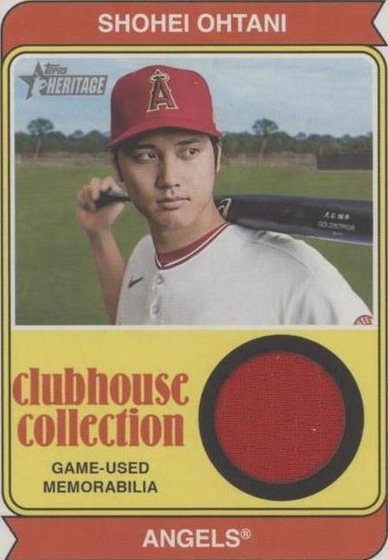 Plain swatches, unnumbered Plain swatches, unnumbered |
$1.28–$20 | Unlimited supply; the maker disclaims any link to the player; nobody authenticates the fabric | No investment case |
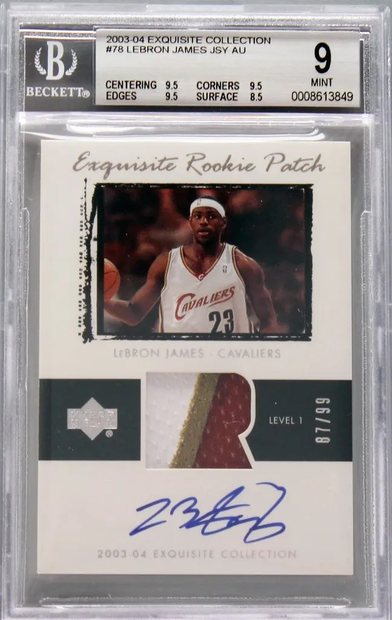 Patch and logo, the mid-market Patch and logo, the mid-market |
$500–$5,000 | Priced as if the patch left the factory. Graders disclaim it in writing and no factory image exists before mid-2025 | Should carry a fraud discount, and does not |
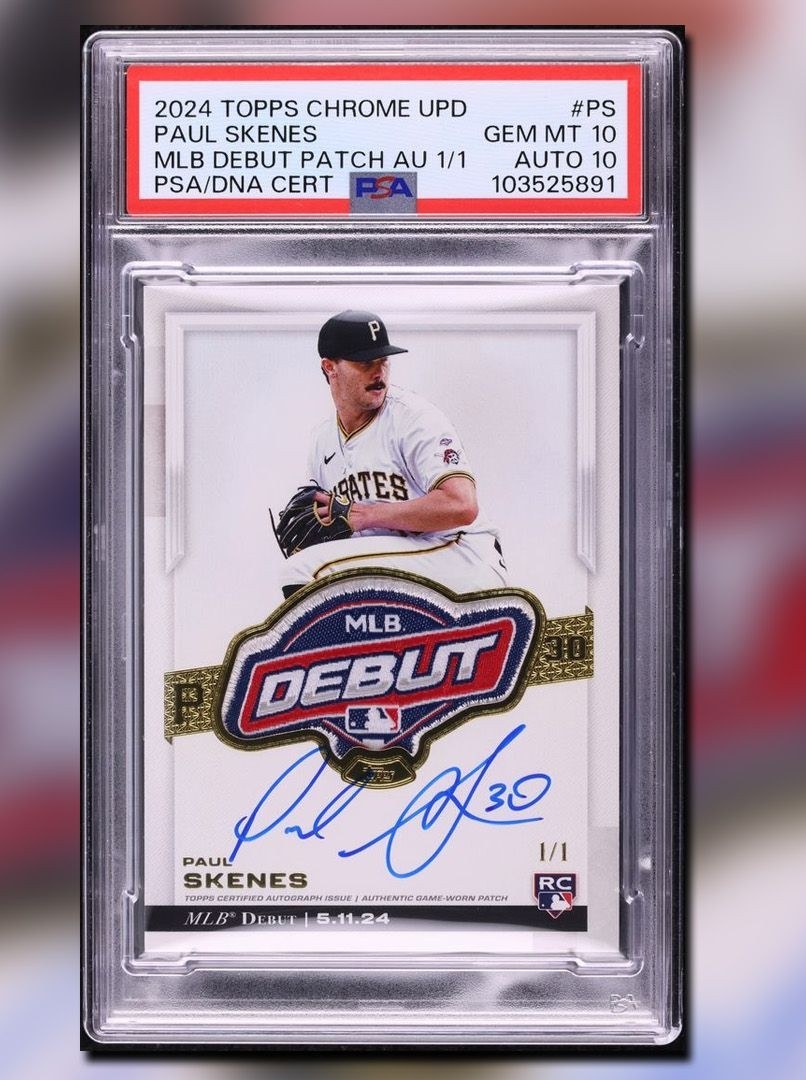 Authenticated provenance Authenticated provenance |
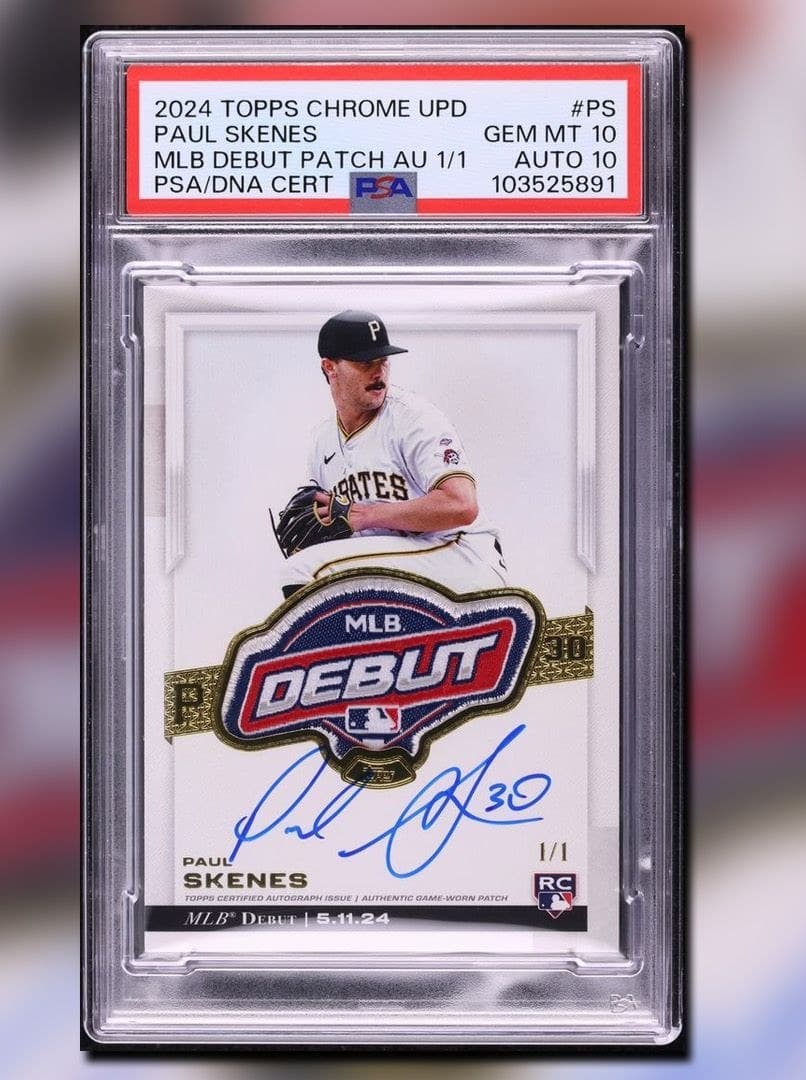
$4,600–$12.9M | One debut per career, on-field custody, a public register | A different asset. Scarcity is real here |
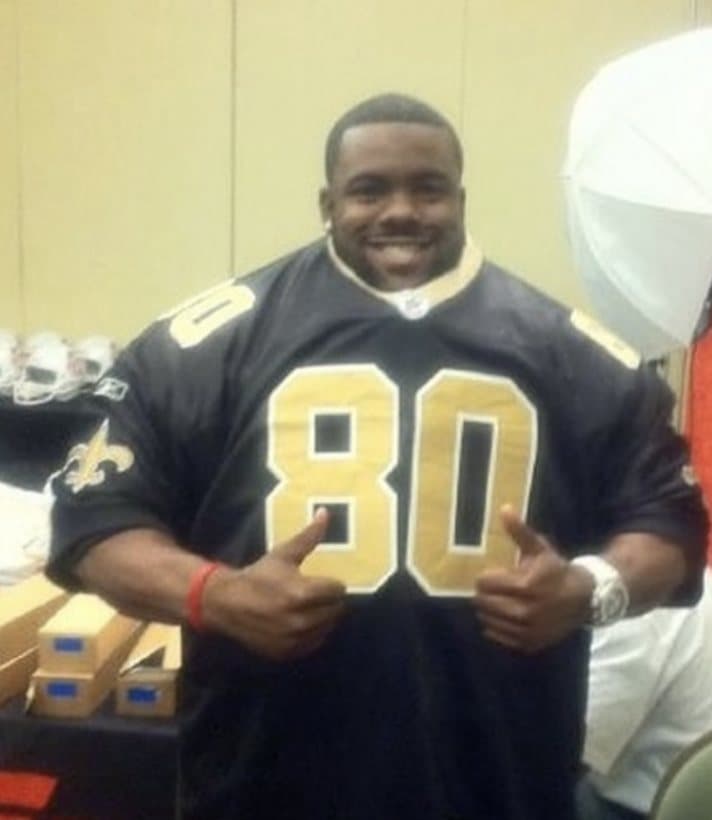
Exhibit A. Beckett, reporting a rookie's own tweet from the 2011 Rookie Premiere.
Haha I'm at the #rookiepremiere and I have on like 17 Saint[s] jerseys.
Mark Ingram, New Orleans Saints. Beckett's accompanying report describes players wearing "dozens of jerseys" in bulk before the official shoot, after which "the event-worn jerseys are chopped into swatches for card inserts."
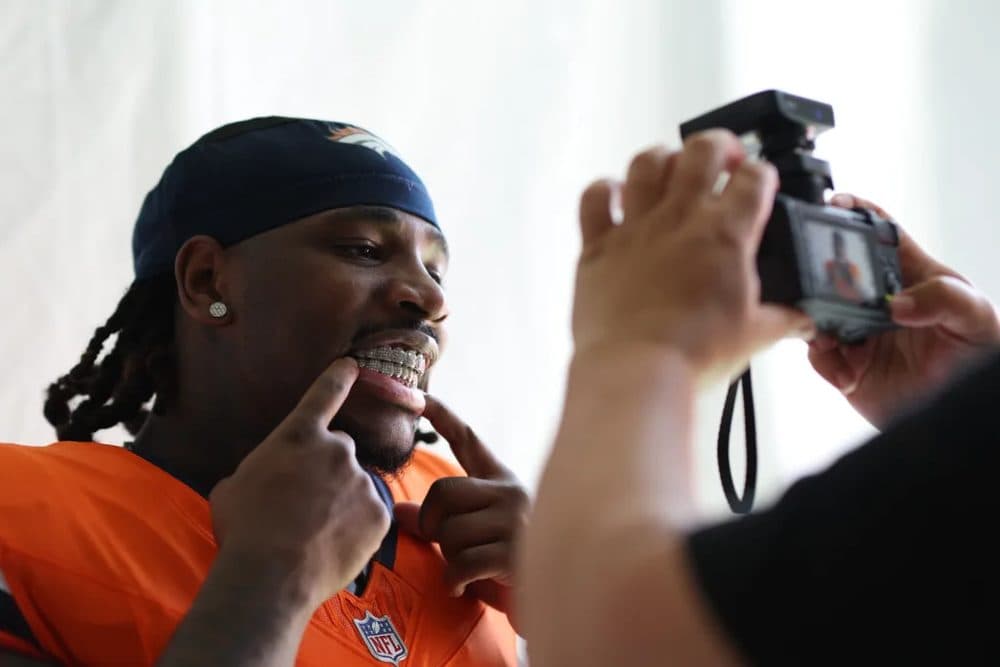
Upper Deck, in its own marketing for the NHLPA Rookie Showcase: rookies "tried on a variety of authentic NHL jerseys from their respective teams that will be utilized in upcoming Upper Deck hockey card products as event-worn jersey memorabilia cards."2
Sports Illustrated's hobby desk calls these "layered jersey sessions, where players throw on multiple uniforms to fulfill quotas."3 The garment is never used for anything. It is worn for seconds so that a card can later say it was worn.
The arithmetic of one jersey
One jersey yields several hundred swatches.4 That covers more swatch cards than a manufacturer issues on a player in a year. Logos, nameplate letters and tags run on a different arithmetic: each jersey carries exactly one set, and a set does not divide.
More patches require more jerseys.
The number is a decision
Under MLB's tightly controlled gold logo program, six award winners wear a gold patch all season and, per MLB's own announcement, "ten authenticated gold logo patches from each player will be used to create Topps trading cards."5 Ten per player, under the most tightly policed program in sport.
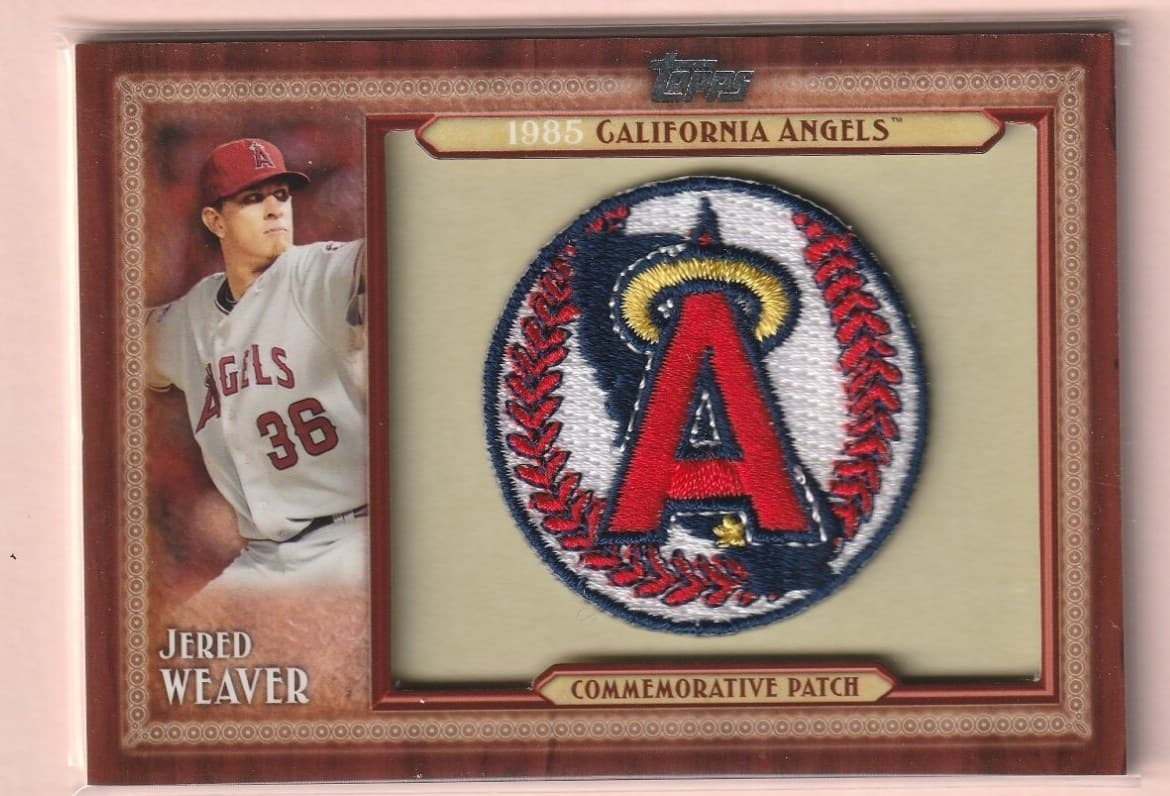
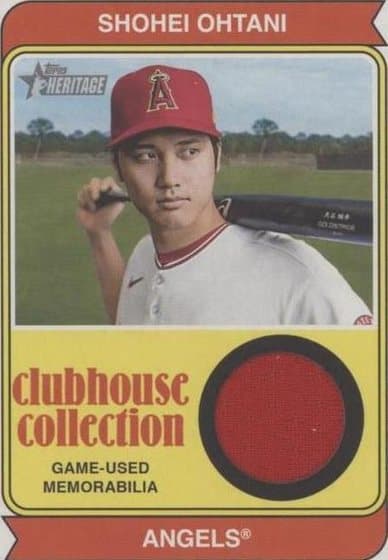
Roughly a third of the patch content in Topps' flagship baseball line was never worn by anybody at all: manufactured commemorative patches, embroidered for the card, have run continuously since 2008, and the 2023 flagship checklists count 375 real jersey relic issues against 205 manufactured.6
Every revision names less
The most damning document is the back of the card. Over twenty-five years its language grew steadily more generic.
| Year | Card-back language |
|---|---|
| 1997 Upper Deck | "an authentic piece of a game-worn jersey from an official 1996 Major League Baseball game" |
| 2004 Upper Deck | "an authentic piece of a jersey worn by Steve Nash as a member of the Dallas Mavericks in an NBA game " |
| 2008–09 Upper Deck | "a piece of memorabilia that has been certified to us as having been used by Kevin Garnett" |
| 2010 Playoff Absolute | "cut from an Authentic Jersey personally worn by Mike Kafka on 5/22/10 at the NFL PLAYERS Rookie Premiere " |
| 2011 Topps | "The relic on this card is not from any specific game, event or season " |
| Panini, recent | "The enclosed officially licensed material is not associated with any specific player, game or event" |
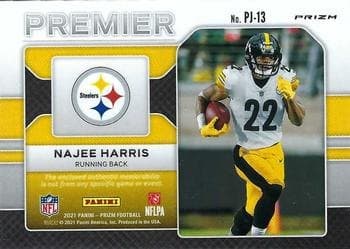
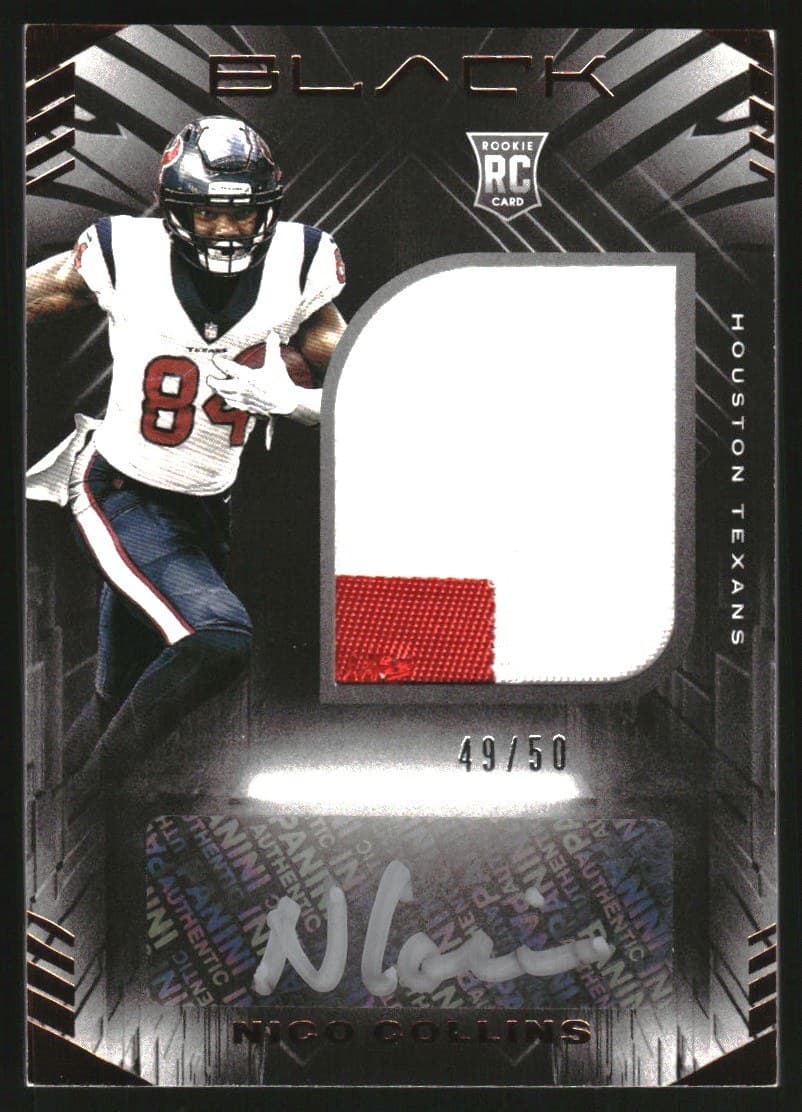
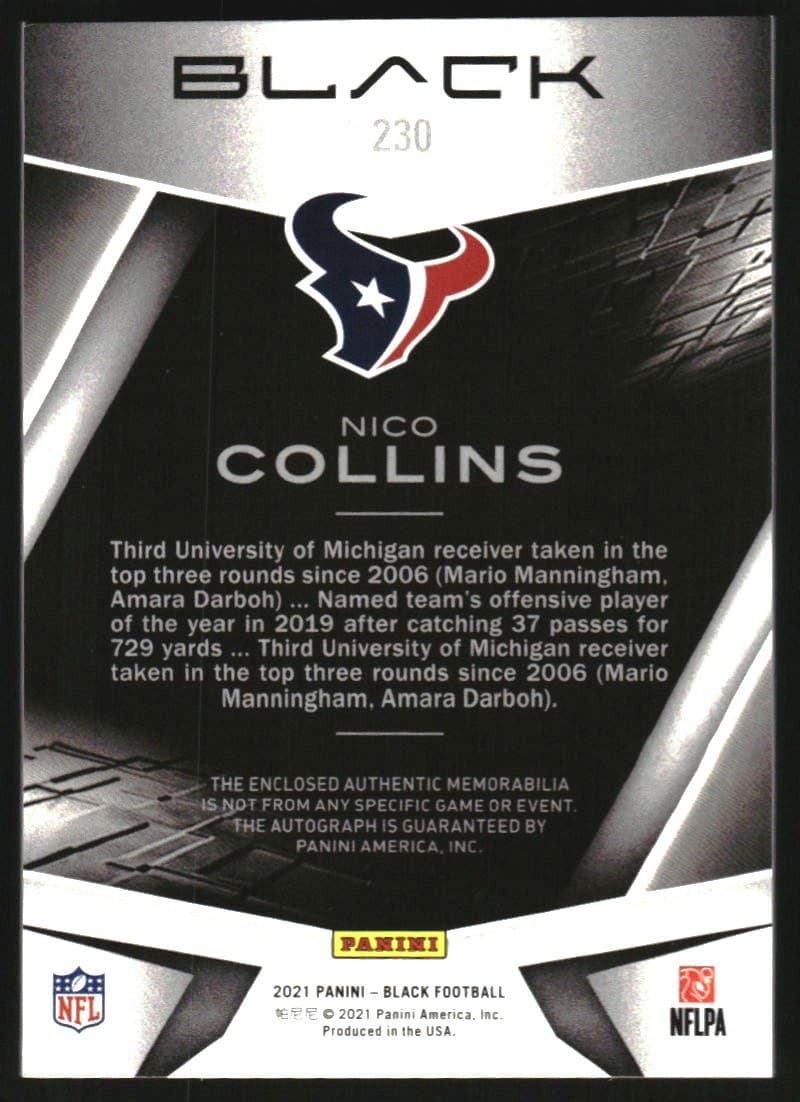
Collectors have tested this the direct way, by cutting their own cards open on camera. Sports Illustrated documented a Washington Commanders card whose swatch backing carried only a team name and no player attribution.7 A separately catalogued case describes a Dak Prescott patch found inside a Tony Romo card.8
For a large share of modern relic cards, "is this swatch authentic?" is not a well-formed question. A card whose manufacturer disclaims any link to the player is not a forgery risk; it is simply a piece of licensed fabric with a photograph attached.
The swap
Where a claim is made, the price gap between plain swatch and patch is the incentive.
Three cases are documented.
| Card | What happened | How it surfaced |
|---|---|---|
| 2008 Exquisite Matt Ryan RPA, 19/99 | Patch swatches switched out; reached $3,000 on eBay before the sale died.9 | A Beckett editor compared archived photos of the same serial number |
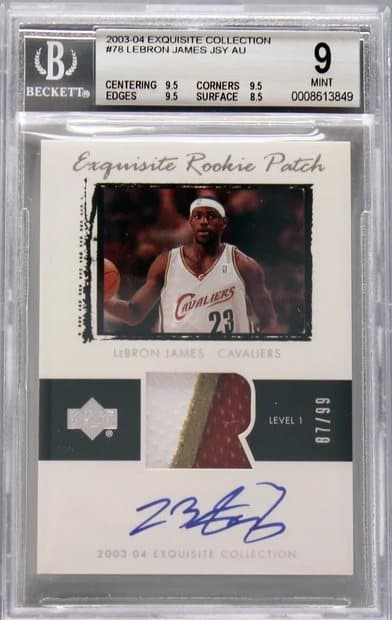
| 2003–04 Exquisite LeBron James RPA | Graded Mint 9, then confirmed altered and reslabbed "Authentic Altered".10 | SGC investigated when informed and owned the error publicly |
| Rockford jersey ring, 2001–09 | Retail jerseys doctored to simulate game use, sold to Upper Deck, Donruss and Topps; claimed losses over $11 million.11 | Federal prosecution; four sentenced in 2013 |
Of the 99 copies of that LeBron issue, a crowd-sourced database has documented 11 as altered.12 That is 11% of the print run. The caveat: famous cards get checked the most, so the most-checked issue in the hobby is exactly where you would find the most swaps.
And the material itself was compromised upstream
The most consequential case involved no swapping at all: a federal fraud prosecution in Rockford, Illinois, in which the card manufacturers were the victims.
Exhibit B. Paraphrased from U.S. Department of Justice charging and plea documents, N.D. Illinois; sentencing announced 25 October 2013.11
Defendants bought retail and game-issued jerseys, then altered them to simulate game use by roughening, scuffing, dirtying, and in some instances replacing the name and number on a jersey from one player to another more noteworthy player, added forged certificates of authenticity, and sold them to collectors and to trading card manufacturers, knowing they would be cut up and sold to consumers as game-used relics.
One detail from the court papers deserves wider circulation. Card company executives allegedly asked the sellers for one blanket certificate of authenticity to cover every "game-worn" jersey delivered in a thirty-day span. A certificate written for a month of deliveries verifies none of them. If the allegation is right, the companies cutting these jerseys into swatches were not checking them either; the certificate existed so the file had paperwork in it.
Nobody is checking
This does not rest on investigation. It rests on the graders' own published terms.
Exhibit C. PSA, Terms and Conditions of the Authenticity and Grade Guarantee.
The Guarantee does not apply to the authenticity or grade assigned to Cards with memorabilia pieces including, but not limited to, jersey swatches, logo patches, game-used bat relics, etc.
Exhibit D. CGC, Certification Guarantee.
Some Collectibles contain additive or embedded features ("Additive Features"), such as patches, pieces of uniforms or bats, or other memorabilia… Guarantor DOES NOT guarantee the authenticity of Additive Features.
The slab certifies the cardboard and explicitly disclaims the only thing the card is sold for.
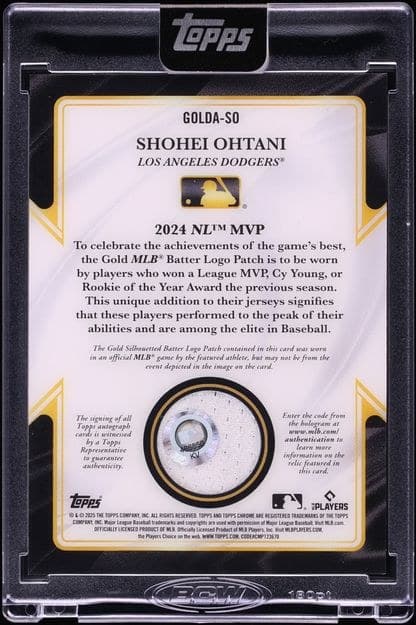
PSA excludes both authenticity and grade for memorabilia cards; CGC excludes only the material's authenticity. Beckett publishes no equivalent language, and SGC's terms could not be retrieved, though its conduct in the LeBron case was the most collector-favourable any grader has shown. The marketplace layer inherits the gap: eBay's Authenticity Guarantee inspects the holder and the label, and the swatch is never examined by anyone at any point in the chain.
No check exists at any price
Photo-matching needs a mark that only one garment carries, like a pine-tar smear or the way mesh holes sit against a stitched letter. A three-quarter-inch swatch has no such mark. Everything visible on it is true of thousands of identical jerseys, which is why no photo-matching service accepts cards or swatches.13 The laboratory route dead-ends the same way: fiber analysis can tell you the swatch is polyester mesh, and it cannot tell you which jersey it was cut from.
| Item | Cost | What it tells you about the swatch |
|---|---|---|
| Typical mass-market relic card | $1.28 – $20 | n/a |
| PSA Value grading tier | $32.99 | Nothing. Excluded by the guarantee. |
| Round trip with shipping and insurance | ≈ $45 – $55 | Nothing. |
| Photo-match research fee | $75 – few hundred | Not offered for swatches at any price. |
| Forensic fiber analysis | none located | Names the fabric type, never the jersey it came from. |
Grading a relic card can be rational, but the PSA 10 premium is paid for centring and corners. Nothing in the transaction touches the fabric.
What a buyer can actually do
No service will check the swatch, so the only checks are the ones a buyer runs alone. In the order worth trying them:
- Read the back before the front. A card that says its material is "not associated with any specific player, game or event" is selling you licensed fabric, whatever the front implies.
- Search the serial number, not the card. Completed-listing archives and the altered-card database are both indexed by serial. If the same serial shows up in an older photo wearing a different swatch, you have your answer.
- Hold it up to a light. A factory die-cut has straight edges. If the silhouette behind the window looks irregular, or the material does not sit flush, professionals treat that as the strongest physical tell.
- Distrust the mismatch. The classic red flag is a worn window frame around a pristine, unusually attractive patch. The card has been handled and the patch has not.
- Ask whether the patch could exist at all. Documented fakes have been caught on this alone, like a league mark that postdates the player's retirement.
- On a 2025-or-later Upper Deck rookie patch auto, scan the code. It opens factory photographs of that exact card, which settles the question on the spot.
How to track provenance for patches
Tracking a patch's provenance takes one thing: a photograph of the card at the factory, filed against its serial number. The industry has had thirty years to build that file and mostly has not, though not none at all.14 Panini announced exactly this fix in March 2014, and there is no evidence it ever shipped. Upper Deck delivered it in May 2025, slabbing, photographing and serial-numbering its Rookie Auto Patch cards with a QR code that opens the factory images; its president called patch swapping "an epidemic" the day he announced it.15 For every relic card outside that one program, no card-specific factory record exists publicly.16 The provenance question has no document to check.
The market already decided
For anonymous material, the premium going to zero finished happening around 2010.
Where fraud actually lives
Nobody can fake a Skenes debut patch into existence. The top of the market is protected by provenance, not by security. And nobody bothers with a plain Mike Trout swatch, which sold for $7 in the completed sales this piece documents through August 2026.
The fraud lives in the middle. A single-colour rookie patch auto is cheap enough to buy in volume, the same card with a multicolour or logo patch sells for many times more, and factory imagery almost never exists in that band.16
What the industry did about it
Fanatics concluded that undifferentiated material was finished and provenance was the sellable product. In March 2023 it launched the MLB debut patch.
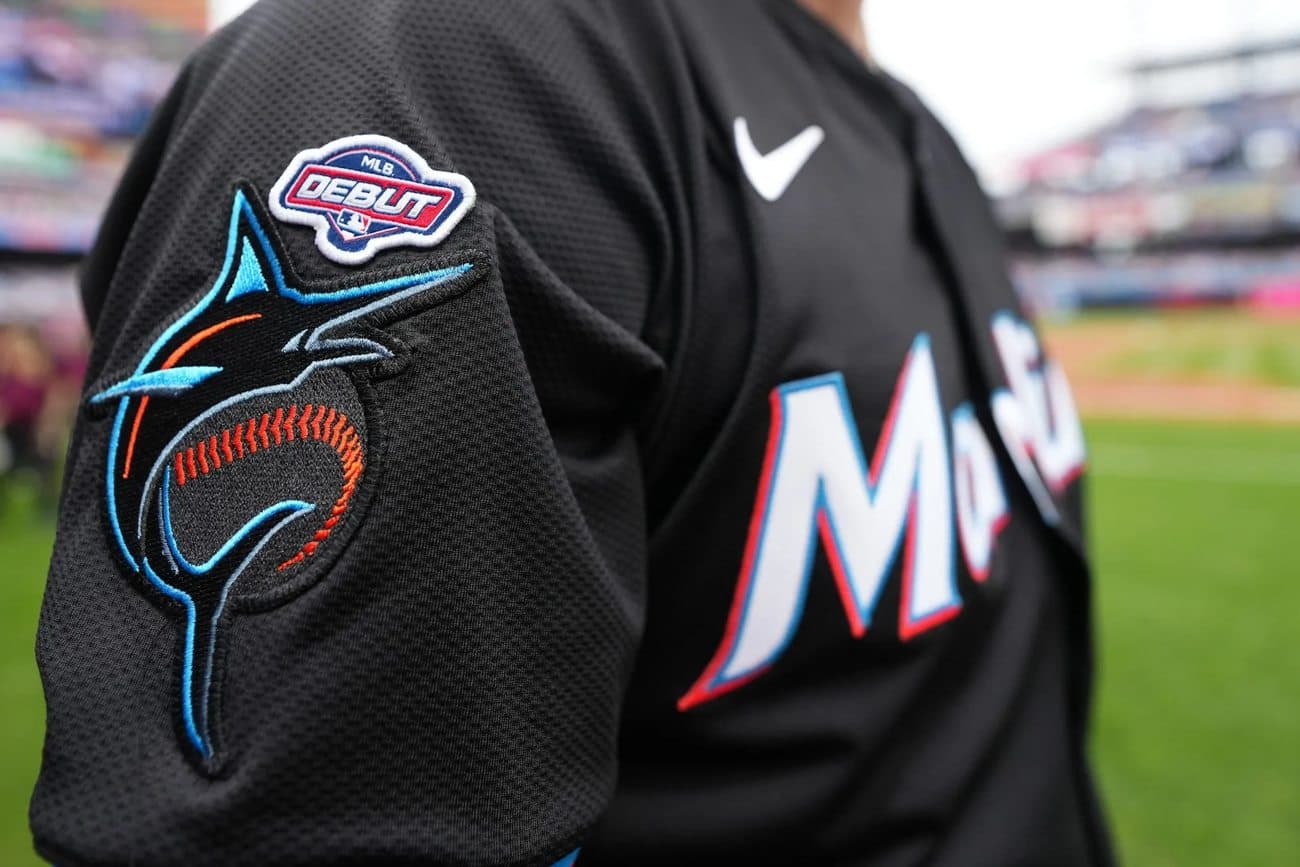
An MLB authenticator, typically a current or former law-enforcement officer, affixes the patch before a rookie's first game, keeps it under continuous supervision, removes it afterwards, applies a tamper-proof hologram, and ships it under lock and key. One patch per player. One debut per career. Verifiable against a public database.
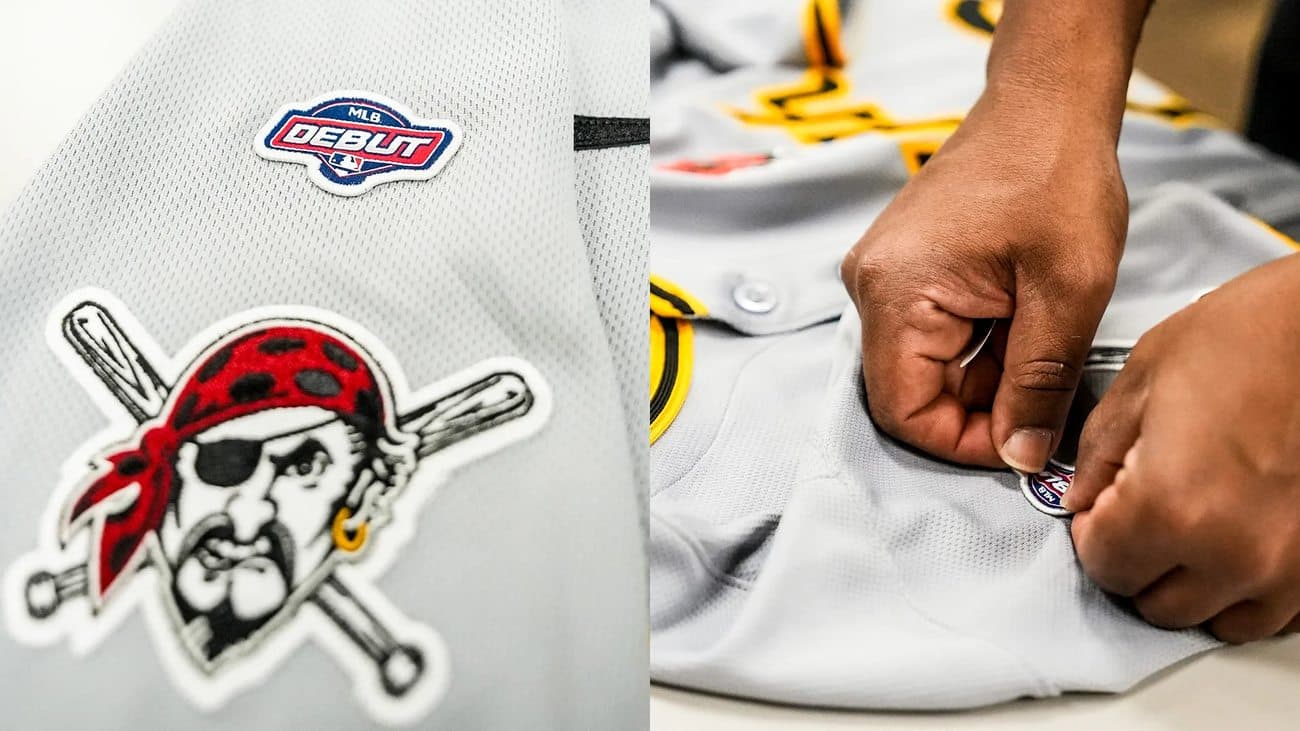
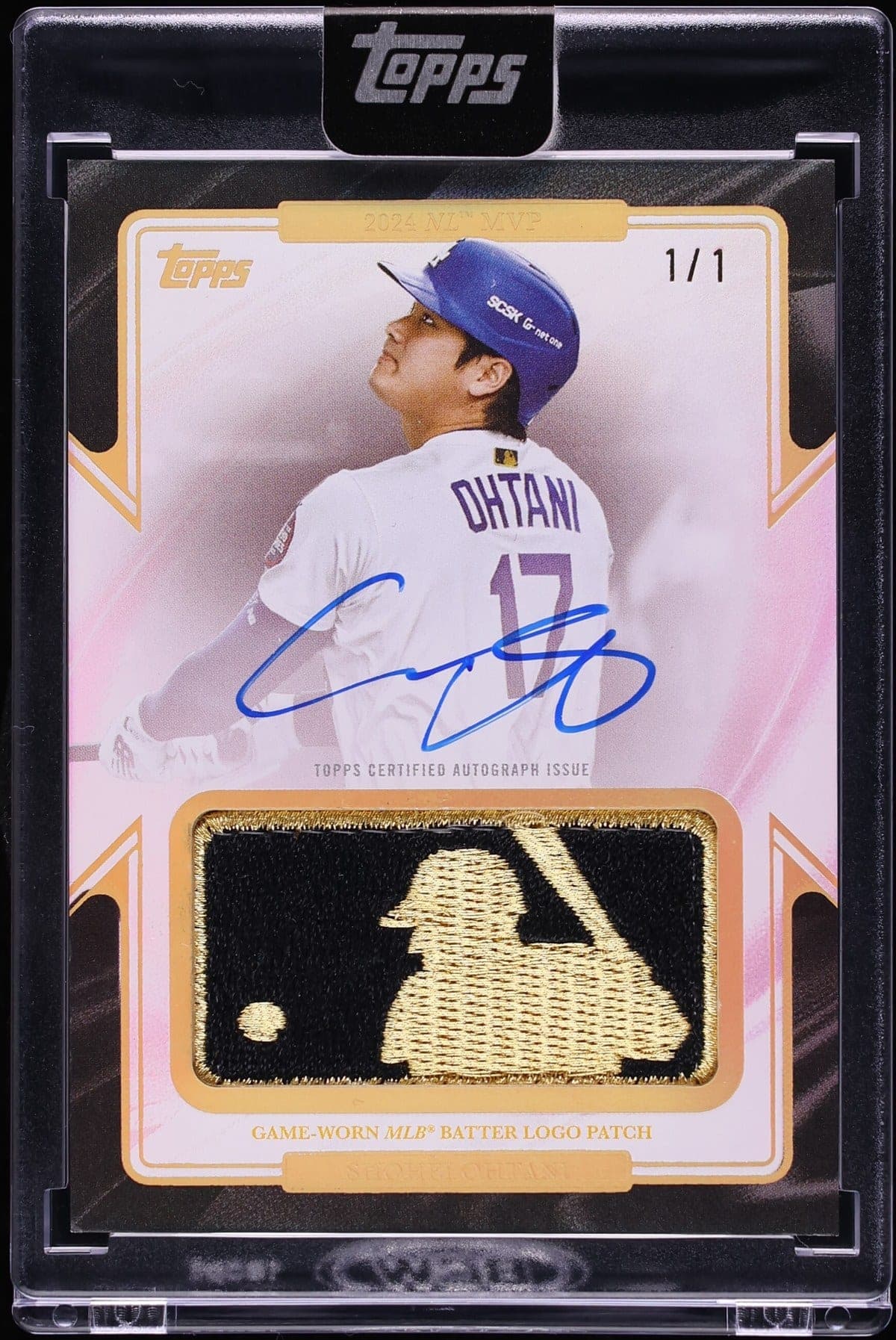
The model has extended to MLS, WWE and the UFC, and reaches the NBA when Topps' basketball license begins in October 2026.17 The one-of-one logoman patches that sit at the top of it have sold for $2.4 million and $3 million.18
The position
- Plain swatches trade in the low single digits to low tens of dollars.
- Supply is unbounded, and the manufacturer disclaims the athlete.
- No one authenticates the fabric.
- The residual $5–$10 is a packaging floor.
Commodity swatches have a floor, not a recovery thesis.
- This band is the exact target of swapping.
- The market prices these cards as though the patch is original.
- Graders disclaim patch authenticity in writing.
- No service will check it, and no factory image exists before mid-2025.
Mispriced, because fraud risk is not discounted.
- One debut per career is a hard, physical, un-gameable constraint.
- Backed by on-field custody and a public register.
- Most price guides distort the category by putting them in the same bucket.
A separate asset class, not a better relic.
Bundling anonymous swatches, mid-market patches and authenticated programs into one relic category hides the impairment, ignores the fraud risk, and overstates the category's health.
- The 11 of 99 on the LeBron issue is the only per-issue rate anywhere.
- The issues people scrutinise most are the likeliest targets.
- Swapping may be concentrated in a few famous print runs and rare elsewhere.
Fraud risk is real; its prevalence is unknown.
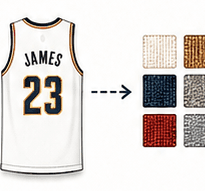
- No manufacturer publishes the yield.
- Several hundred and several thousand support the same argument.
- It is not a sourced figure; do not quote it as one.
The argument does not depend on an exact yield.

- 738,395 is Beckett's December 2011 count.
- No later census exists.
- The figures circulating today are usually that one, unattributed.
Today's supply is unknown; the old census is stale.
- If Fanatics and Panini adopt what Upper Deck shipped in 2025, the mid-market fraud discount collapses.
- Patch cards become verifiable for the first time in their thirty-year history.
- It is a records program, and it costs a camera. Panini announced it in 2014 and never delivered.
Verifiability, not better grading, is what changes the market.
The unknowns are real, and they do not rescue anonymous material; only universal factory reference imaging would materially change the conclusion.
Notes
- Beckett, "Numbers crunching: Memorabilia Cards Have Made Their Mark on Hobby," 20 December 2011: "The exact number as of today? Just 738,395." beckett.com/news/memcards. No later Beckett census has been published. ↩
- Upper Deck, "NHLPA Rookie Showcase: Get Your Skates On." upperdeck.com ↩
- Sports Illustrated, "The truth about patch cards." si.com ↩
- Assumes a standard swatch window of about three-quarters of an inch, roughly 1,200–1,600 square inches of usable single-layer fabric per adult jersey, and 35% waste. Swatch dimensions per Jersey cards. No manufacturer publishes a yield figure. Halving the estimate does not change the argument. ↩
- MLB.com, "MLB, Topps, Fanatics team up for gold MLB logo patch." mlb.com ↩
- Distinct issues, not print runs. Counted from the 2023 Topps Series 1 and Series 2 checklists at BaseballCardPedia. ↩
- Sports Illustrated, "Panini, we have a problem: collectors are cutting up patches." archived copy ↩
- Reported by Cardlines, "Why are people tearing up their patch cards?" cardlines.com. Claims also circulate about practice-squad material and cross-sport swatches. Neither has a documented case behind it. ↩
- Beckett, "That's one way to ruin a 2008 Upper Deck Exquisite Matt Ryan rookie patch autograph." beckett.com ↩
- Reported by Sports Collectors Daily from the Tiffany Cards altered-card database. sportscollectorsdaily.com ↩
- Dave & Adam's, "SGC shares news of altered LeBron James Exquisite RPA," January 2024. dacardworld.com ↩
- DOJ, N.D. Ill., "Four men sentenced for fraud involving sports memorabilia," 25 October 2013. justice.gov. Detail on the card companies as recipients from Sports Collectors Daily. ↩
- Resolution Photomatching, Sports Investors Authentication and MeiGray accept jerseys, bats, helmets, shoes and gloves. None lists cards or embedded swatches. resolutionphotomatching.com ↩
- Not none at all. Beckett reported in January 2017 that Leaf had documented some of its cards, and that Upper Deck had photographed the 2015-16 The Cup Connor McDavid rookie cards together and posted the picture to social media: a single group shot rather than a per-card archive. beckett.com ↩
- Press-release wording from Upper Deck, 28 May 2025. upperdeck.com. "Epidemic" is from Masherah's interview with Sports Collectors Digest the same day: "It's been an epidemic for quite a while." sportscollectorsdigest.com ↩
- The transactions cited above are a cross-section of current sales, not a time series. Establishing the rate and timing of the decline would require repeat-sales data on matched issues, which has never been compiled for this category. ↩
- Debut-patch expansion: MLS per SI, "Topps Announces Major League Soccer Rookie Debut Patches" si.com; WWE per SI, "Topps to Launch Auto 1/1 WWE Patch Cards for WrestleMania and More" si.com; UFC per cllct/Yahoo, "Topps Debut Patch Program expands to UFC" yahoo.com; NBA debut and gold logoman patches from the October season start per Beckett, "Topps Announces Rookie Debut Patches, Gold Logomen Coming to the NBA" beckett.com. ↩
- LeBron triple logoman, Goldin, June 2022, $2.4M inc. premium, ESPN. Ohtani gold logoman 1/1, Fanatics Collect, December 2025, $3M. Ohtani 2026 Topps Chrome back-to-back dual gold logoman, sold privately 31 July 2026 for $11M, MLB.com, SCD. The $11M was a private transaction, not an auction result. The record for any logoman remains the 2007-08 Jordan/Kobe dual at $12.9M. ↩