George Washington Has a Rookie Card That Came Out 153 Years After He Died
Sellers call his 1952 Topps Look 'n See card a rookie. Cards of Saddam Hussein and Osama bin Laden carry the same label.

What a rookie card is can be confusing. George Washington, the first United States President, has a card in the 1952 Topps Look ‘n See set. The card is often considered his ‘rookie,’ but how can someone who died in 1799 have a rookie card 153 years after his death? I think that’s the opposite of what a rookie card is. This card isn't the most liquid on the market, and neither are any of the cards mentioned in this article, but if you’re going to collect history, you might start with George Washington. There were 16 sales of the George Washington Look ‘n See card between March 12 and Oct. 10, with the median being about $47, with sales ranging from $23 to $148. In a PSA 5, this card has one recorded sale: $230 at auction on July 13.
The abbreviation RC signifies the beginning of a player’s career. In this case, George Washington was not an athlete, but if we were to hold the same standards for this card, why can’t the card just be considered what it is? He ‘played’ his career. He died. It is just a card of George Washington. Call it his “first card,” but calling non-athlete cards rookies, especially if produced after death, makes the RC title lose its meaning, and I am not saying the card should be worth less; I am just saying calling a non-athlete’s first card a ‘rookie’ should leave the hobby lingo.
When tobacco cards were first produced, even before the post-war era, the idea of any card being worth a fortune seemed far-fetched. They were simply picture cards that came with tobacco, then eventually gum, to sell more of that product. The picture cards were a bonus. When sports cards started to gain value, and the idea of the rookie card as a long-term hold took hold, we started applying the term to non-sport cards too. Besides George Washington, former Iraqi leader Saddam Hussein and Osama bin Laden have cards that have sold for incredible amounts of money because their cards are deemed ‘rookies.’
Let’s take a look at a card of another United States President: Barack Obama. How does recency bias affect a modern card of a recent President?
2008 Topps #C08-BO Barack Obama Campaign 2008 Insert
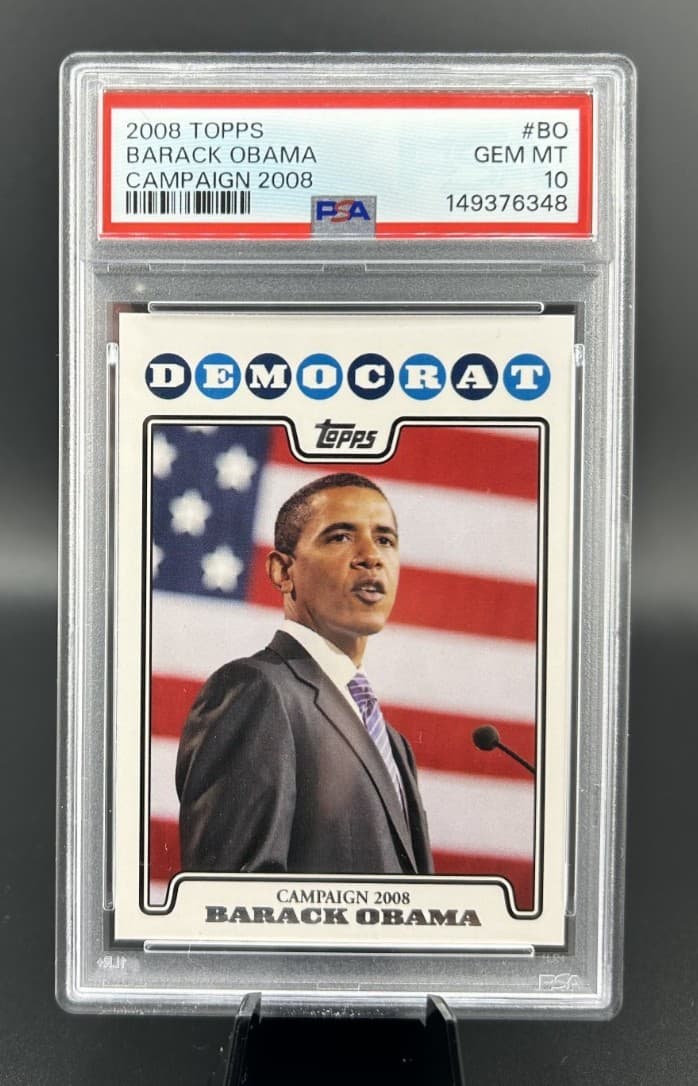
While more modern cards have higher print runs, even this card, a relatively high-print-run insert, sells for a decent amount of money in a PSA 10. This insert set highlighted the candidates in the 2008 United States Presidential Election and makes for a great piece of Americana. Between March and October of this year, six PSA 10 sales have gone for as low as $127 and as high as $395 in Buy It Now sales and auctions. PSA 9s go for considerably less; between May 2025 and September 2026, four sales ranged from about $44 to just under $100.
2001 Topps Enduring Freedom #19 Osama bin Laden
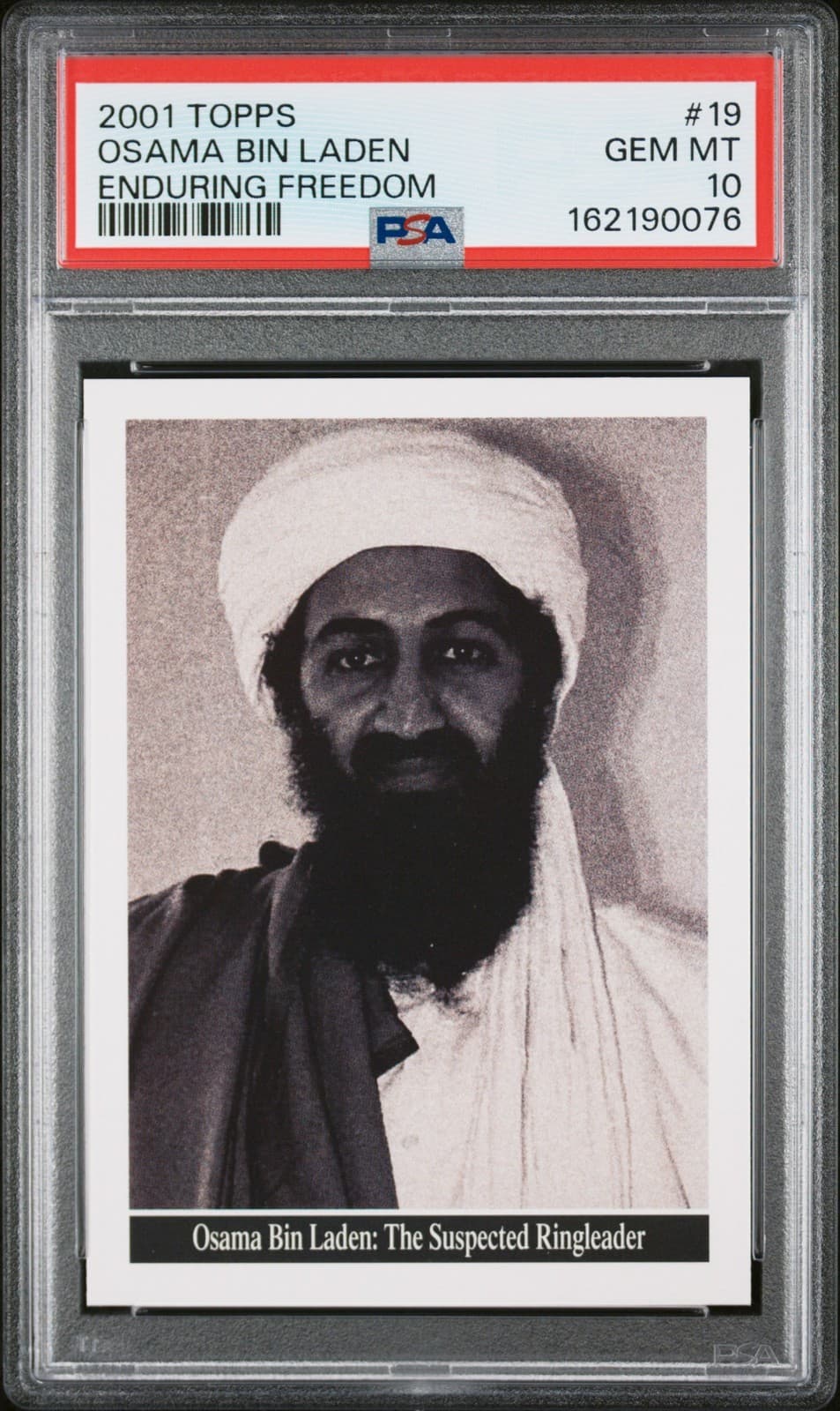
For example, the 2001 Topps Enduring Freedom Osama bin Laden PSA 10 copies consistently sell for well over $1,000. Recent sales ranged from around $1,350 to $1,950 on September 111. Even raw copies sell for around $280. The card also labels him as “Osama bin Laden: The Suspected Ringleader.” Topps produced this set to cater to history buffs with a deep interest in war, alongside military patches. His cards have held their value, showing the importance of non-sports cards in relation to history and war.
1991 Topps Desert Storm #189 Saddam Hussein
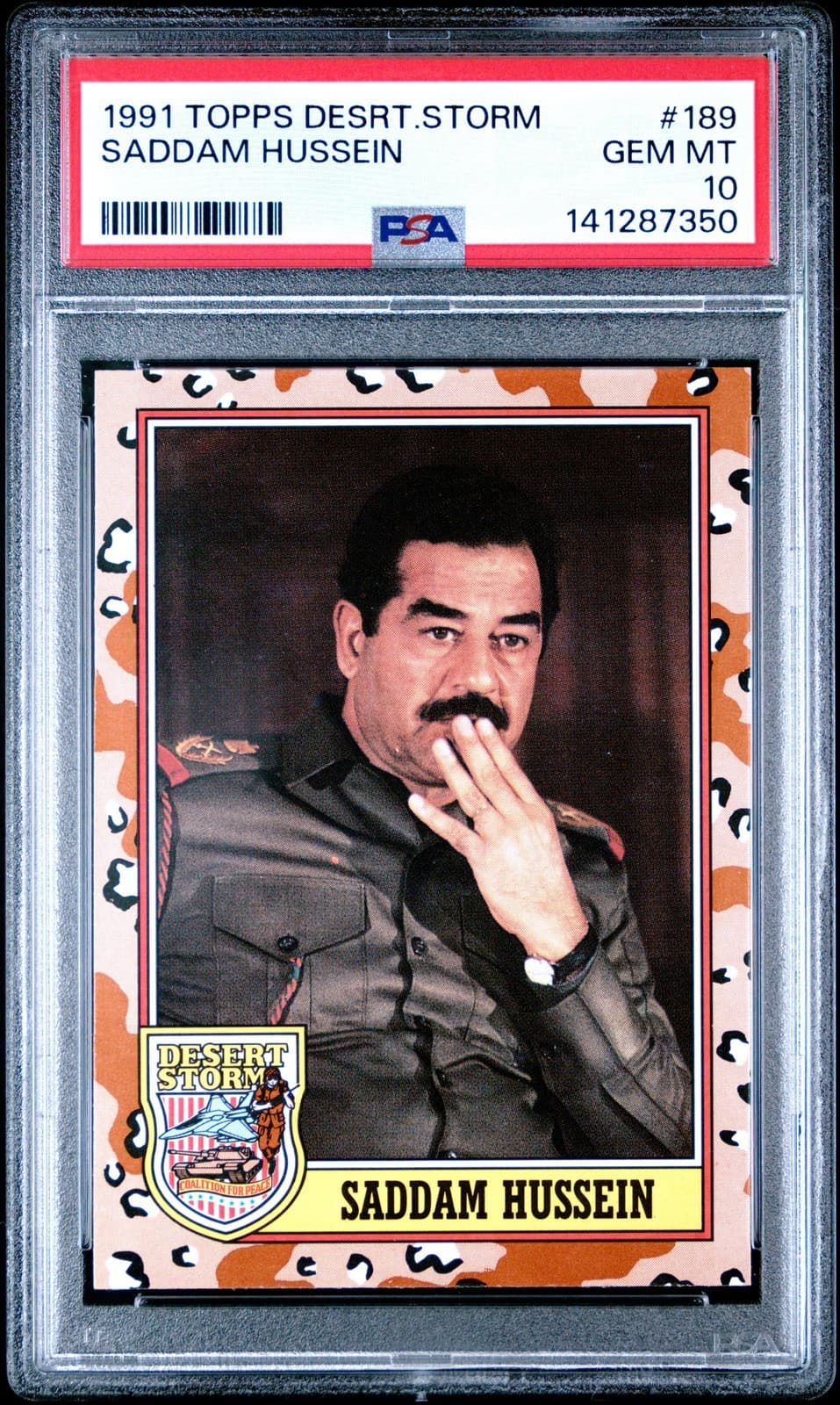
The former leader of Iraq, Saddam Hussein, also has a card that can be quite pricey. From the 1991 Topps Desert Storm set, this card sold for as much as $5,000 on September 162. Another PSA 10 example sold at auction the same day for $4,050. PSA has graded 26 of the 435 copies as Gem Mint 10s, per GemRate3. This card's price jumped from $650 on July 5 to $991 on July 13, before the September 16 sales. Half of the 20 raw copies of this card that have sold since September 27 had some sort of rookie signifier (rookie or RC) in the listing and sold for about $19 each, not adding any value because it is a rookie card. The ‘junk wax’ era printed so many of these cards that raw copies are everywhere. Only the 26 PSA 10s bring the big money.
1956 Topps Elvis Presley #1
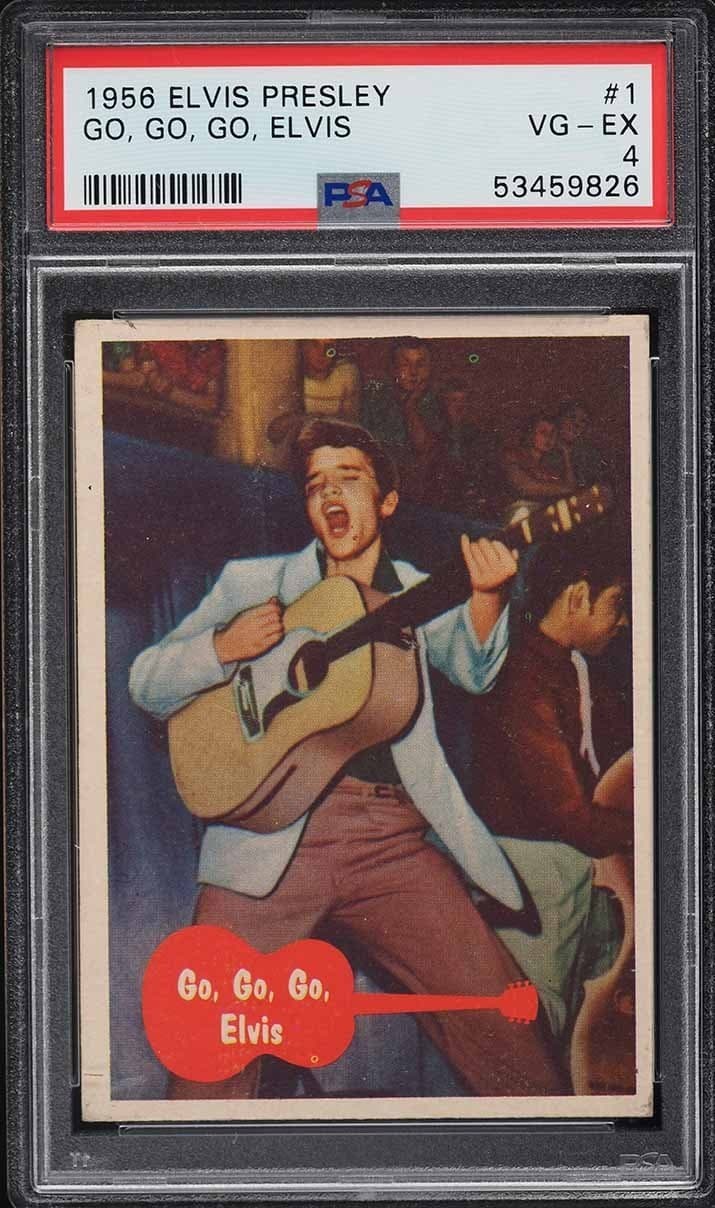
At the other end of the spectrum of world leaders, we have Elvis Presley. In 1956, Topps released its own Elvis Presley-dedicated set, with card #1 as the most valuable. There is not a lot of definitive sales data on the card. A raw copy sold for $761 on October 6 of this year, and a PSA 4 sold for $866 on October 23. Elvis is one of the best-known American musicians of all time, so these high sales aren't surprising to me.
What Does This All Mean?
History collectors, especially Americana collectors, have a place in the hobby, even if the cards picture notorious figures. Whether the card is the 1952 Topps Look ‘n See George Washington card or the 2001 Topps Enduring Freedom Osama bin Laden card, worth $200 raw or as high as $1,950 in a PSA 10, there is something in the collecting hobby for everyone, no matter the detrimental impact the person pictured on the card had on the world. After all, the card is only worth what people will pay for it. If collectors keep buying ‘rookie’ cards of non-athletes, they will keep selling them on the market and could very well see prices rise over time. As for the Elvis card, prices are high because he was a beloved musician; his cards attract not only regular card collectors but also classic rock and Elvis fans, and they bring in music memorabilia collectors, showing there is truly something for everyone in this hobby.