
Private Equity Has Entered the Collectible Space
Private capital now owns grading, marketplaces, price data and vaults. Card shops are next.
The collectible business is being consolidated from the outside in.
In 2021, grading, marketplaces, price data, vaulting, and local card shops were mostly separate businesses. Today, much of the card industry sits inside a handful of private-capital-backed groups. Fanatics manufactures cards and owns a marketplace and a vault; Collectors owns PSA; and eBay owns TCGplayer and Goldin. Institutional money has also started moving into physical card stores, one of the last areas of the hobby that still allows the buying and selling of cardboard to be treated like an actual hobby.12345
Some of that money pouring into the industry is from private equity. Some from family offices, venture investors or strategic corporate buyers. Whether the money comes from private equity, venture capital or another institutional investor, the pressure is similar: build scale, standardize operations and capture more of the customer relationship. Capital is moving toward the tollbooths around collectibles because those businesses can make money every time a card is graded, stored, priced, bought, sold or traded.
Who owns card grading now?
Two private-capital groups own almost all of it. An investor group led by Nat Turner, D1 Capital Partners and Cohen Private Ventures took Collectors Universe, the parent of PSA, private in 2021 in a transaction Houlihan Lokey put at approximately $853 million. Collectors later acquired SGC and Beckett, and its own brands page now lists Card Ladder, PSA Vault and financial services for collectible assets.1
Using 2025 grading volume as a benchmark, the brands now under Collectors accounted for roughly 80% of major card grading. PSA alone graded 19.26 million cards that year. SGC graded 1.42 million and Beckett 824,000. CGC accounted for another 18% of the market, and its parent company, Certified Collectibles Group, has been majority owned by Blackstone since July 2021, when CCG announced the stake sale.23
That concentration is unusual because grading does more than process an asset. It helps create its market value. The difference between a PSA 9 and a PSA 10 can be hundreds, thousands or millions of dollars, and we have put a number on that premium. The company assigning the number therefore sits much closer to the economic heart of the asset than a shipping company or a payment processor.
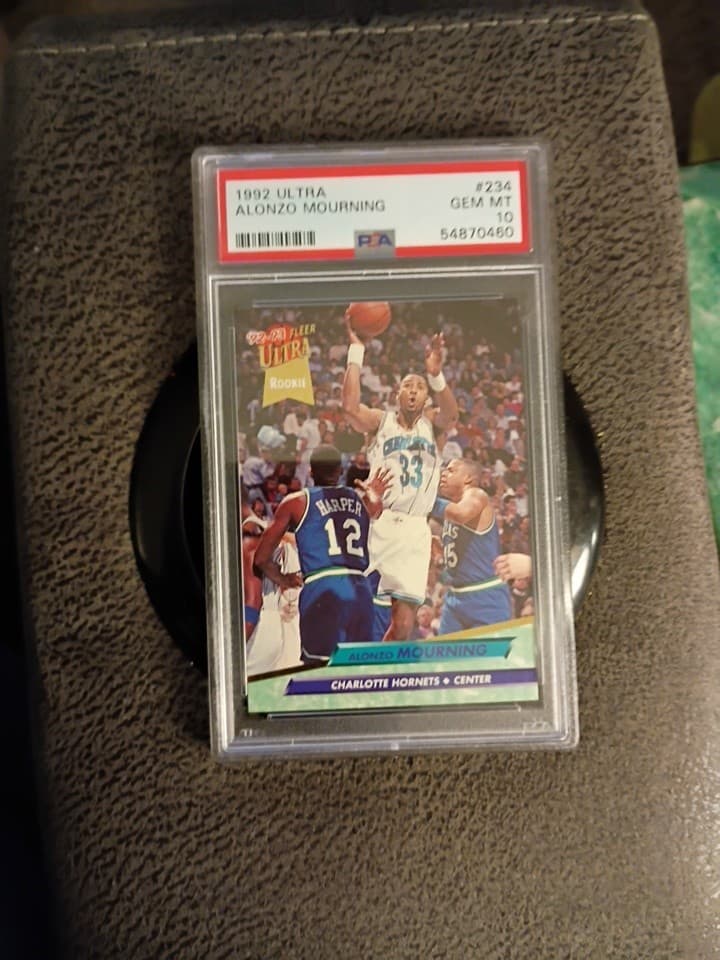
Collectors also owns the pricing platform Card Ladder and the PSA Vault. A card can be graded, valued through affiliated data, stored in the company's vault and then listed on eBay from that vault without returning to the collector's hands.1 In December 2025, Congressman Pat Ryan's office asked the Federal Trade Commission to investigate Collectors' grading consolidation and specifically pointed to the combination of grading capacity, pricing analytics and transaction infrastructure.6 A request is not a finding.
The concern is not theoretical market share. It is how much of the collector's path one company can eventually own.
The same thing is happening around the card
Fanatics announced each step itself: long-term trading-card rights, Topps in 2022, PWCC Marketplace and its vault in 2023, and the marketplace folded into Fanatics Collect in 2024. It also operates Fanatics Live, where cards can be sold through live breaks.4
eBay took another route. It bought TCGplayer for up to $295 million, then acquired Goldin in 2024 while selling its vault business to PSA and entering a commercial integration with Collectors, all three announced by eBay and Collectors together in April 2024. The resulting system makes it easier to move a card from grading to storage to sale without leaving the connected platforms.5
None of these steps is irrational. Friction is expensive. Collectors want one account. Sellers want liquidity. Investors want trusted pricing. Companies that eliminate handoffs can deliver all of that.
They can also capture the economics that used to leak out to independent businesses at each handoff.
The collectible itself changes hands. The infrastructure gets paid every time it moves.
The local card shop is next
Retail remained fragmented longer because local card shops are difficult to scale. Their inventory is inconsistent. Their owners buy collections differently. Their customers want different things. The good ones are part store, part clubhouse, part appraisal desk and part rumor mill.
That is beginning to look like an opportunity rather than a limitation.
In June 2026, Shamrock Capital led an investment in CardsHQ and merged it with Sports Card Investor. The combined company now includes physical retail, ecommerce, live breaking, content, pricing data through Market Movers, collection tracking and technology. Shamrock, announcing the deal in June 2026, called CardsHQ a multi-channel collectibles platform, and the investment is funding additional stores in major U.S. markets.7
CardVault by Tom Brady is building from the other direction. By August 2026 it had reached 19 locations, the Palo Alto opening ABC7 covered that month, and it has brought in a strategic investor group that includes major figures from sports, entertainment and institutional finance. Co-founder Chris Costa pitched The Toy Book a standardized experience: a collector who uses its grading, trade or sales process in one city can expect the same process in another.8
This is not yet the classic private equity playbook of buying dozens of independent stores and putting one sign above the door. There is little evidence of a nationwide acquisition spree of mom-and-pop card shops.
The consolidation can happen without buying them.
A well-capitalized chain can open in the strongest markets, secure better inventory, advertise nationally, negotiate preferred relationships, invest in breaking studios and data, and make the independent shop compete with a business that earns money from several parts of the collector relationship at once. Functional consolidation arrives before legal consolidation.
The shop is valuable because it is inefficient
The strange part is that much of what makes a great card shop valuable is exactly what a roll-up would normally try to remove.
A local owner knows which customer collects obscure 1990s inserts. He remembers that a kid has been saving for a particular player. He might hold a card for somebody until Friday. A box can sit untouched for five years and suddenly become the most interesting thing in the store.
That is terrible inventory management.
It is also the experience.
A scaled retailer sees the same room through a different set of numbers: inventory turns, gross margin, labor utilization, trade-in spread, grading submissions, break revenue, conversion rates, customer acquisition cost and lifetime value.
The more those numbers improve, the easier it becomes for the shop to stop feeling like a card shop.
The enshittification problem
Cory Doctorow coined "enshittification" to describe the way platforms become worse as operators gradually extract more value from the people using them. The term was named the American Dialect Society's 2023 Word of the Year.9
The same pattern appears in physical businesses when scale becomes the product.
Krispy Kreme is a simple example. JAB acquired the company for about $1.35 billion in 2016. Krispy Kreme now describes, in its 10-K, a capital-efficient hub-and-spoke system in which centralized Hot Light shops and factories produce doughnuts for smaller "Fresh Shops" that have no manufacturing capability, along with thousands of other delivery points.10 The doughnut can still be fresh. The brand can reach more people. But a location that receives its doughnuts from a hub is not the same experience as walking into the place where they are coming off the line.
The point is not to shit on Krispy Kreme (which has gotten worse). It is about what consolidation does to businesses whose value includes something difficult to put into a spreadsheet.
Veterinary medicine has been rolled up aggressively enough that the Federal Trade Commission in June 2022 imposed special restrictions on JAB Consumer Partners after finding that additional acquisitions could reduce competition in already concentrated regional markets.11 A 2026 study of private-equity-owned dental practices in Health Services Research, Nasseh and colleagues, found that, after acquisition, list charges rose 3.3% and the mix of care shifted away from diagnostic and preventive services toward higher-reimbursement restorative, specialty and surgical procedures.12
Different industry, same incentive. Once a fragmented service business is turned into a portfolio, the operator can measure what generates the highest return and move resources toward it. The things that are useful but hard to monetize become vulnerable.
In cards, that means the free advice, the weird inventory, the relationship with the owner, the trade night that is not really trying to sell you anything, and the kid who walks out with a handful of commons because somebody behind the counter remembers being ten.
None of those is a good performance metric.
Collectibles have already seen the first version
There is already evidence of what platform consolidation feels like from the seller side.
In August 2024, a group of trading-card-game merchants answered the Federal Trade Commission and Department of Justice request for information on roll-ups with comments about TCGplayer's acquisition of ChannelFireball and BinderPOS, followed shortly by eBay's acquisition of TCGplayer. The merchants alleged that the sequence eliminated marketplace alternatives, gave the combined platform control over important seller infrastructure and left sellers with fewer practical places to go. Those are allegations from market participants rather than government findings, and they are a useful early warning from a collectible market that has already gone through a roll-up.13
The most important part of Doctorow's idea is that no company wakes up one morning and decides to make a product bad. The degradation happens one rational decision at a time.
The process becomes easier, more consistent and more professional. Nobody objects, because nothing has been taken away yet.
More of the customer relationship moves onto the platform, so the platform is where the account, the history and the habit live.
The number of transactions, services and fees attached to that customer goes up, each one defensible on its own.
The business is optimized around extracting value from the relationship rather than preserving the reason the relationship existed.
Every step can make sense on its own. The finished product can still be worse.
What gets optimized away
A national card shop chain will probably be cleaner than the average local store. The pricing will be more consistent. The grading submission process will be easier. Inventory will be searchable. Staff can be trained. Expensive cards can be insured and transferred between stores. Parents who know nothing about cards may feel more comfortable walking in.
And the store can still become less interesting.
The random inventory gets centralized. Prices move closer to market comps. Buying becomes formulaic. Shelf space goes to products with predictable turns. Employees follow policy instead of making judgment calls. Trade night becomes programming. Breaking becomes a revenue center. Grading becomes an upsell. The store's media channels send customers back into the store, and the store sends customers into the data product, the marketplace and the break room.
The shop stops being a destination and becomes a funnel.
CardsHQ's own structure makes the strategy visible. One business now contains retail, ecommerce, media, live breaking, pricing data and collection technology.7 That is a very good business architecture. It is also a fundamentally different relationship with a collector than an owner-operated store that makes money when somebody buys a card.
This is probably bullish for cards
The uncomfortable part is that consolidation may be good for the asset class.
Institutional capital brings trust, marketing, liquidity, standardization and distribution. PSA's scale makes graded cards easier to trade globally. Vaults reduce the friction of owning expensive assets. National retailers put collectibles in high-traffic locations. Better data makes cards easier to price. Marketplaces make them easier to sell.
Those things can push more money into the market.
The companies doing the consolidating also have the better economic position. They do not need to know whether a Caitlin Clark rookie or a Charizard will appreciate. They can make money from grading it, storing it, financing it, pricing it or selling it. Autographs make the same point from the other end. Whoever controls the supply does better than whoever is betting on the object.
That is why the infrastructure is attracting capital first.
Retail is attractive for the same reason once it becomes a platform rather than a store. The physical location can acquire customers and inventory for everything else the company sells.
For investors, that is a powerful model.
For collectors, it changes what the card shop is for.
What happens to the hobby?
The independent card shop will not disappear. The better ones may become more valuable precisely because they remain independent.
But chains will win on convenience, capital, inventory depth, technology and consistency. The independent shop has to win somewhere else: taste, trust, local knowledge, strange inventory, community and the feeling that not every interaction has been designed by somebody optimizing lifetime value.
That could produce a strange split.
As cards themselves become more institutional and there is continued consolidation around their grading, data, trading and custody, we may see more value placed on the places that still allow buying cardboard to feel like a hobby. As that premium grows, ironically, do not be surprised to see more and more capital flowing into these spaces and the nature of these places to change.
Private capital can make collectibles easier to own, easier to trade and more valuable. It can also turn collecting into one long checkout flow.
Notes
- Houlihan Lokey, on the February 2021 approximately $853 million take-private of Collectors Universe by an investor group led by Nat Turner, D1 Capital Partners and Cohen Private Ventures; Collectors, current brands page listing PSA, PSA Vault, Beckett, SGC, Card Ladder and Financial Services; Card Ladder, confirming its December 2021 acquisition by Collectors Universe. ↩
- GemRate 2025 Grading Year in Review. Major graders processed 26.8 million cards in 2025: PSA 72%, CGC 18%, SGC 5%, Beckett 3% and TAG 2%. Under current ownership, PSA, SGC and Beckett together represent roughly 80% of that 2025 volume. gemrate.com ↩
- Certified Collectibles Group, July 1, 2021, announcing Blackstone's acquisition of a majority stake in CCG, the parent of CGC. ↩
- Fanatics, January 4, 2022, on its acquisition of Topps; Fanatics Global Impact Report 2023 on the May 2023 acquisition of PWCC Marketplace; Fanatics, July 16, 2024, on the launch of Fanatics Collect and the retirement of the PWCC brand. ↩
- eBay, 2022 acquisition of TCGplayer for up to $295 million; eBay and Collectors, April 10, 2024, on eBay's acquisition of Goldin, PSA's acquisition of the eBay Vault and their commercial integration. ↩
- Office of Rep. Pat Ryan, December 19, 2025, requesting a Federal Trade Commission investigation into Collectors' grading acquisitions and vertical integration. The request is not a finding of unlawful conduct. ↩
- CardsHQ and Shamrock Capital, June 1, 2026. The investment merged CardsHQ with Sports Card Investor and is funding new stores and the integration of retail, ecommerce, breaking, media, Market Movers data and technology. ↩
- CardVault by Tom Brady, 2026 press archive on national store expansion and its strategic investor group; ABC7, August 26, 2026, reporting that the Palo Alto store was the chain's 19th location; The Toy Book, 2026 interview with co-founder Chris Costa describing a standardized grading, trading and sales experience across locations. ↩
- American Dialect Society, January 5, 2024. The society named "enshittification," a term popularized by Cory Doctorow for the deterioration of platforms as value is progressively extracted from users and business customers, its 2023 Word of the Year. ↩
- Krispy Kreme and JAB, May 9, 2016, on JAB's approximately $1.35 billion acquisition; Krispy Kreme 2024 Form 10-K and 2025 Form 10-K describing the hub-and-spoke model and "Fresh Shops" without manufacturing capability that receive doughnuts from centralized hubs. ↩
- Federal Trade Commission, June 29, 2022, on restrictions and divestitures imposed in connection with JAB Consumer Partners' veterinary clinic roll-up. ↩
- Nasseh et al., "Financial Incisors: Cutting Through the Effects of Private Equity on Dentistry Market Dynamics and Care Delivery," Health Services Research, 2026. The study found post-acquisition list charges increased 3.3% and a service mix shifted toward higher-reimbursement procedures. ↩
- Trading-card-game merchants' response to the Federal Trade Commission and Department of Justice Request for Information on serial acquisitions and roll-up strategies, submitted August 2024. The merchants alleged anticompetitive effects from TCGplayer's acquisition of ChannelFireball and BinderPOS followed by eBay's acquisition of TCGplayer. These are allegations by market participants, not agency findings. ↩